

Last updated October 30, 2026
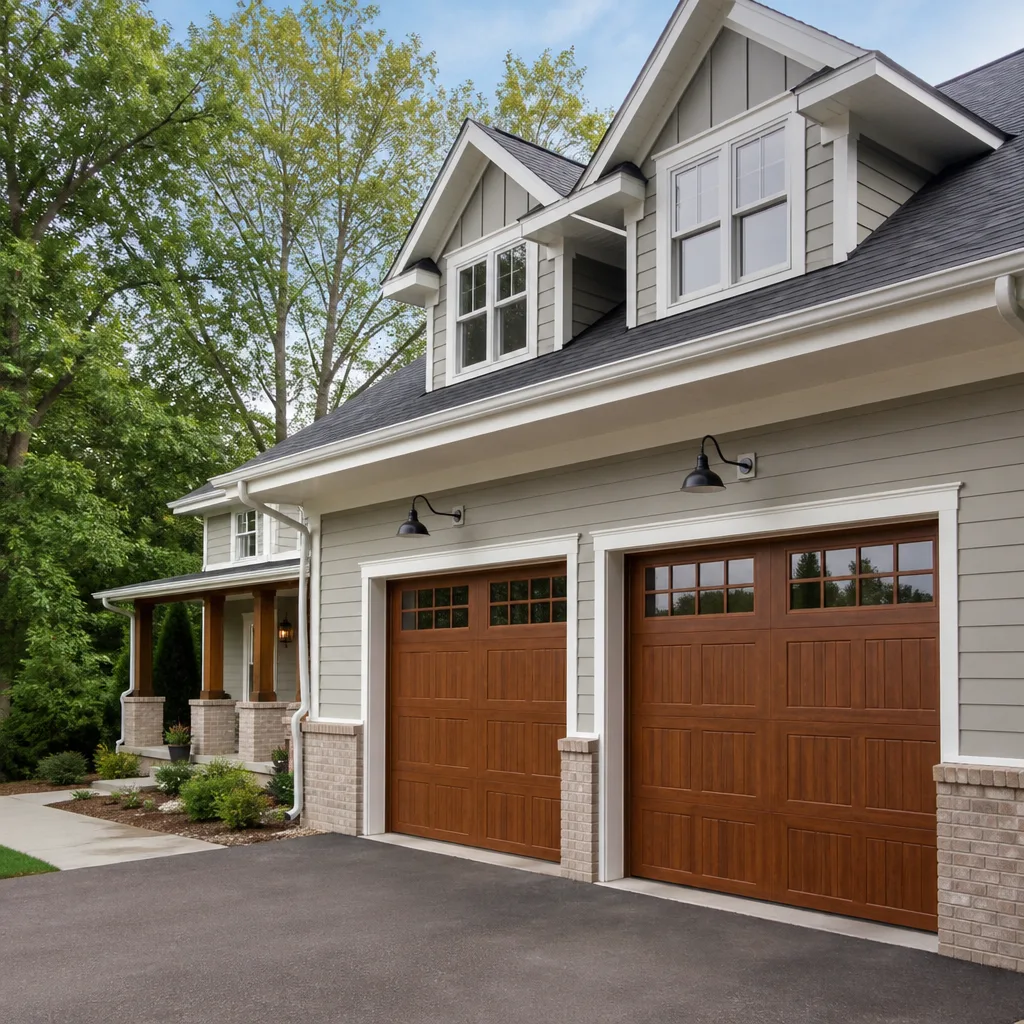
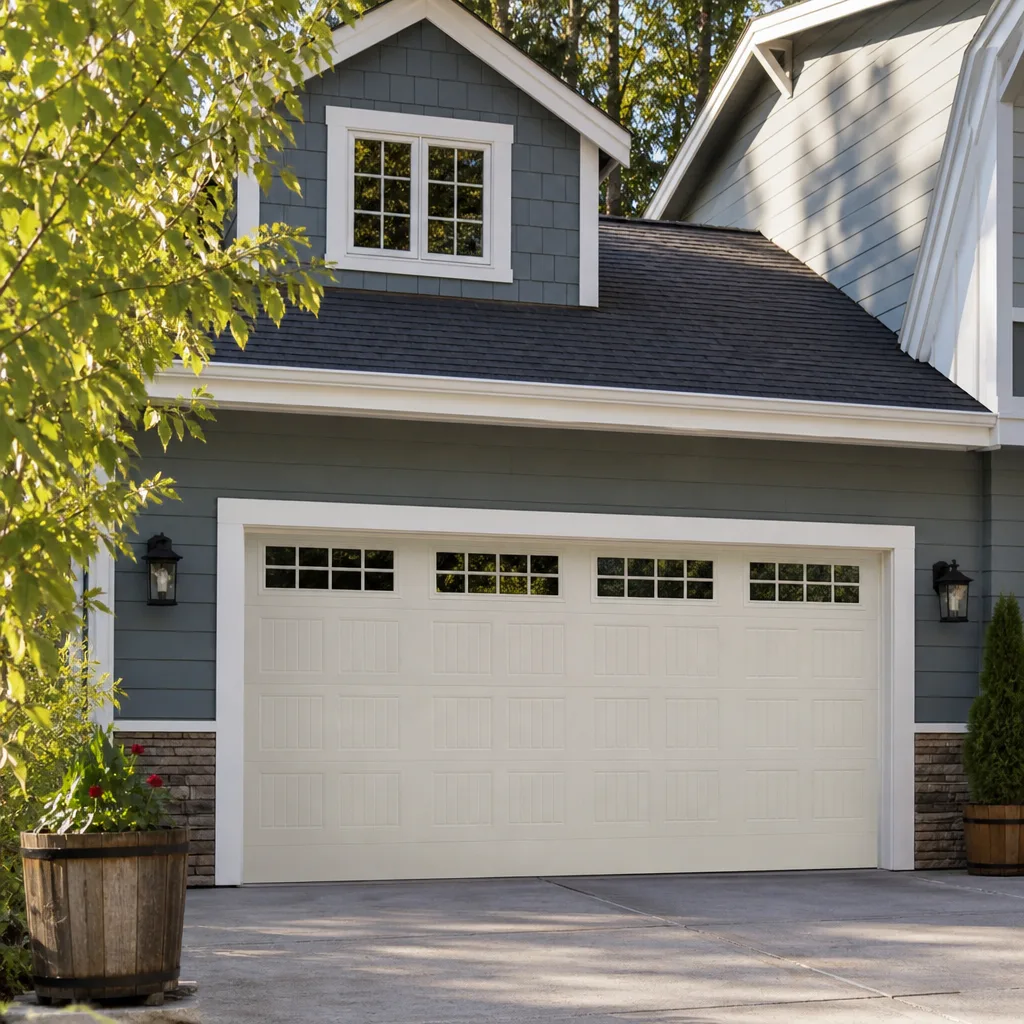
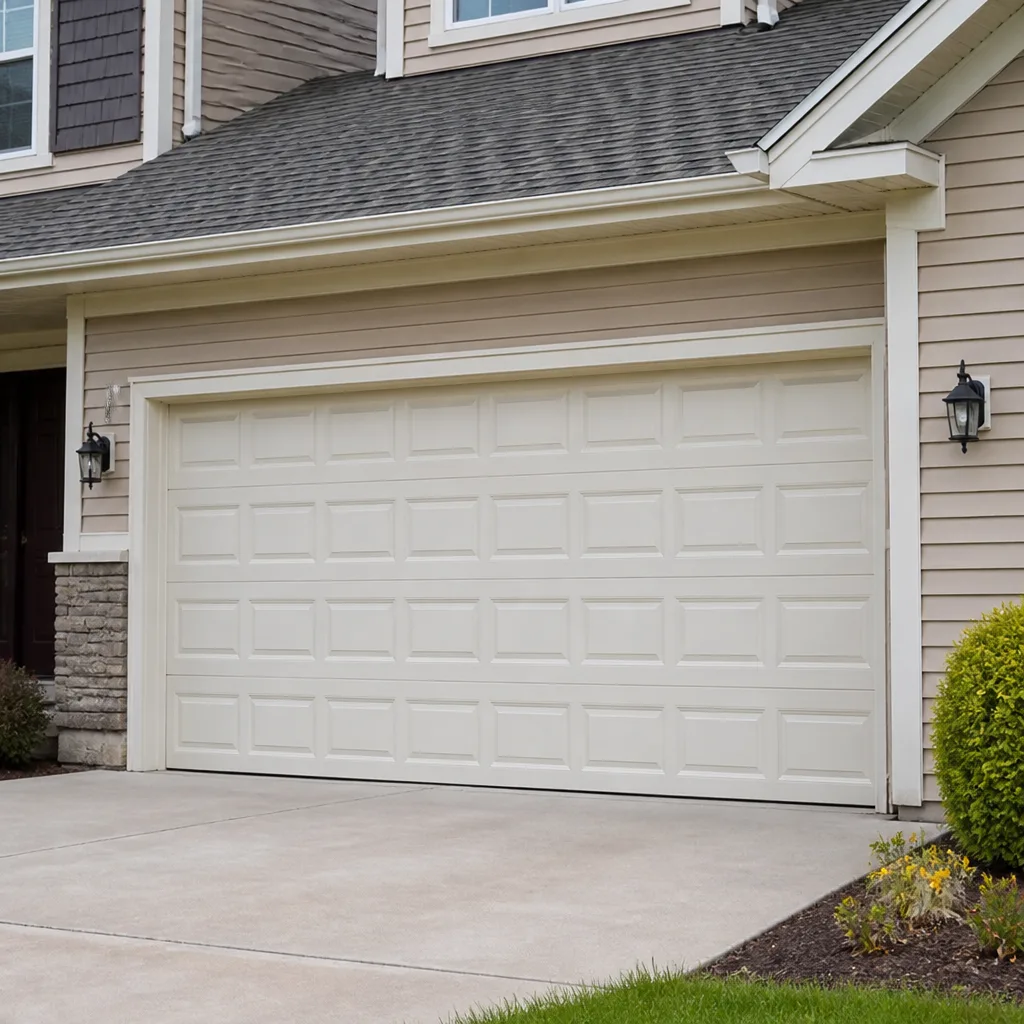 Raised-panel steel
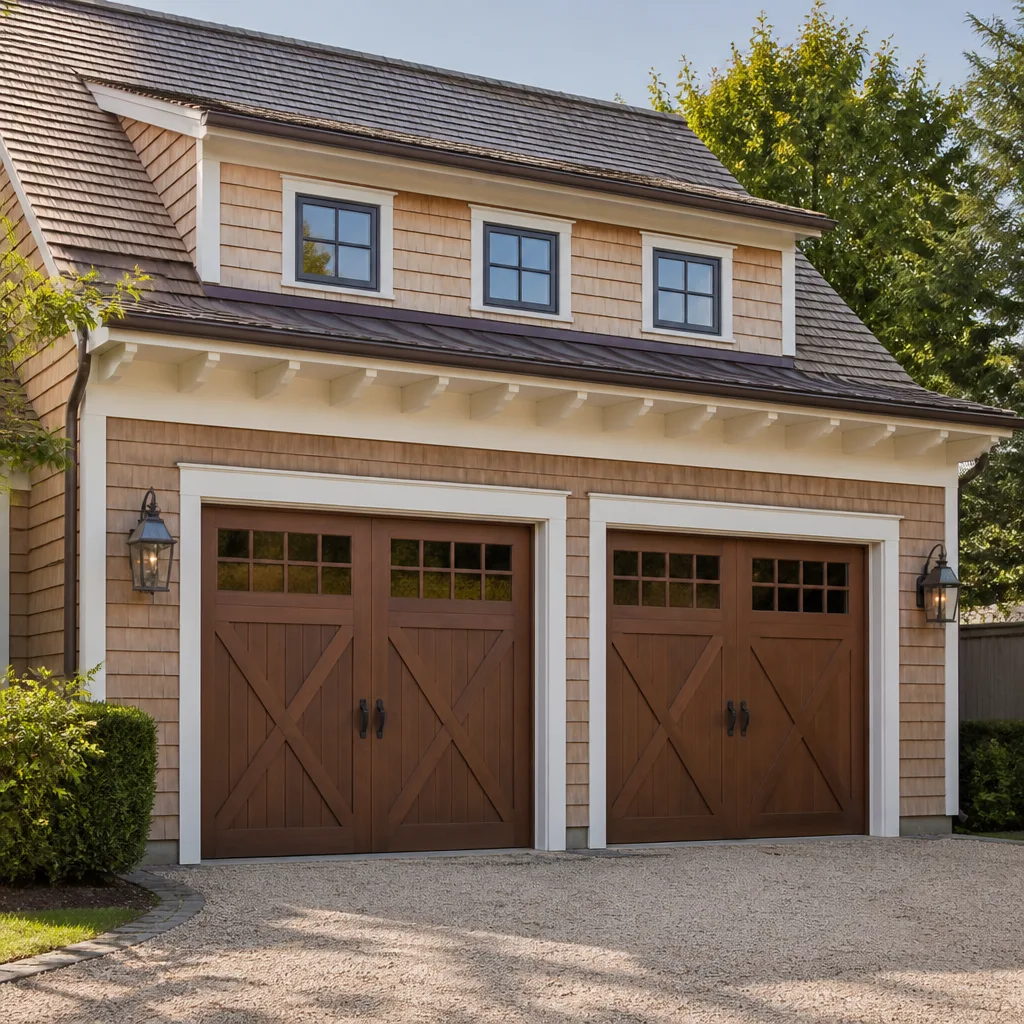 Carriage house
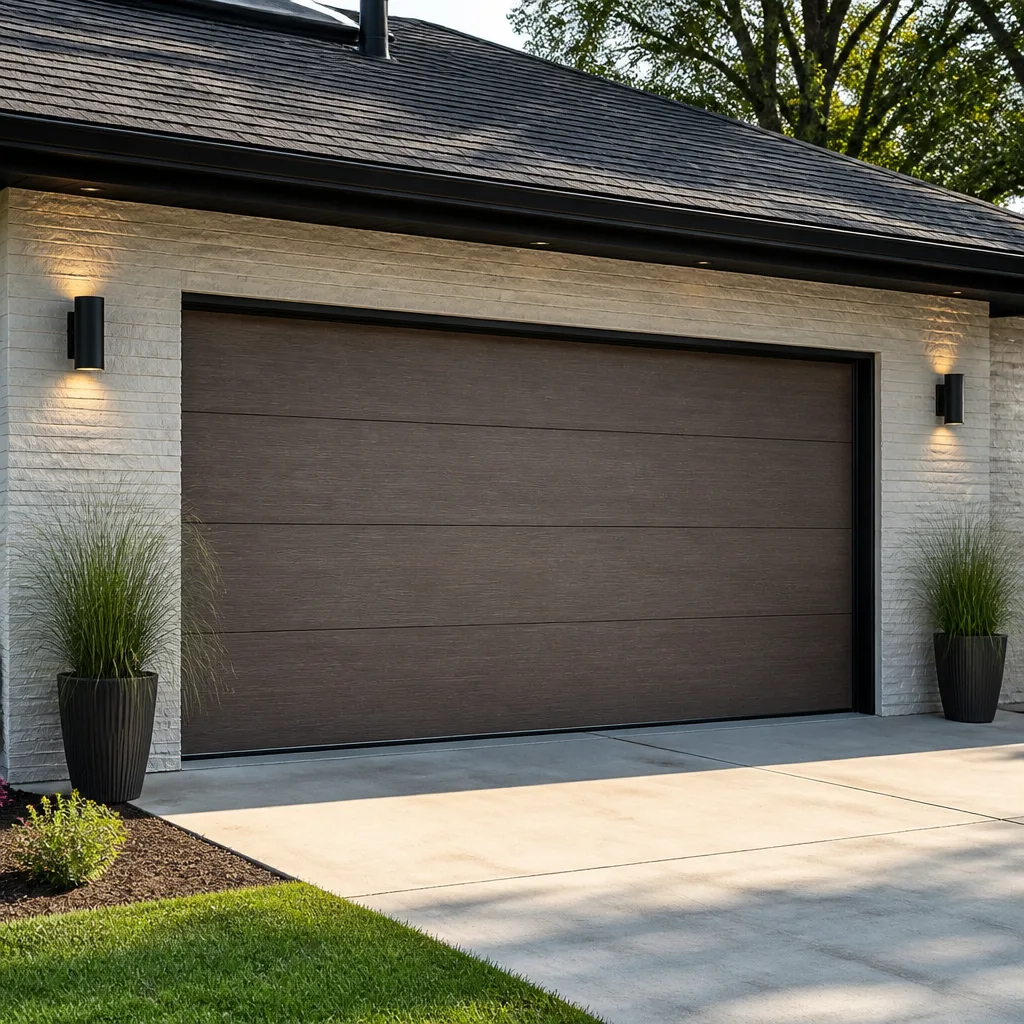 Modern flush
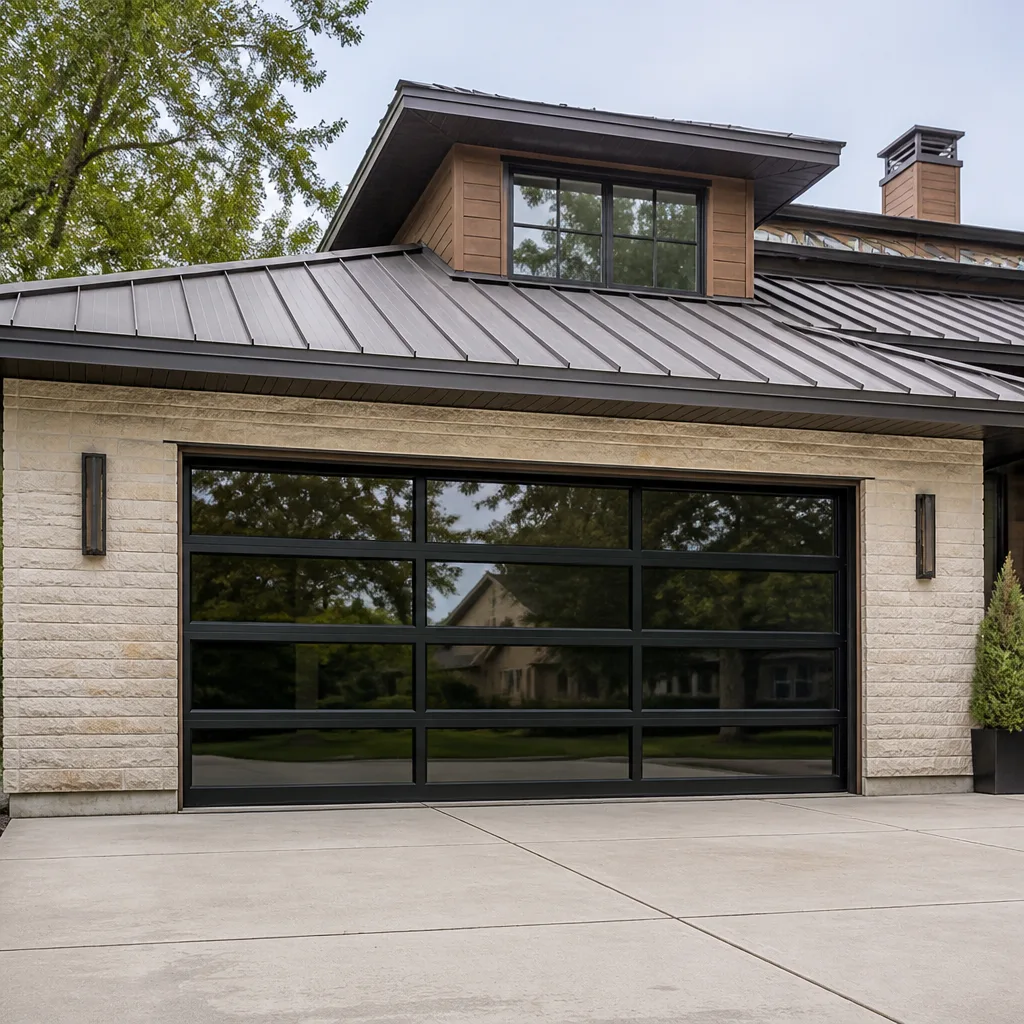 Full-view glass
 LiftMaster openers
 Chamberlain openers
Full 25-point door and opener safety check with every visit - springs, cables, rollers, tracks, and your LiftMaster or Chamberlain opener included
You get a price before we start. It does not change when the truck arrives.
Get your free estimateGarage Door Emergency Preparedness Guide for Ocala Homes
During Hurricane Idalia in 2023, a significant number of Central Florida homeowners couldn’t manually disengage their garage door opener and were effectively locked inside their own garage during evacuation. The fix takes 30 seconds to learn and practice. The cost of not knowing it is measured in hours of panic when the power is already out, wind is picking up, and the door won’t budge. This guide walks you through the two emergency scenarios Ocala homeowners actually face: tropical storm damage and power failure with the door in the closed position. You’ll learn the manual release technique that won’t send a tensioned door crashing down, how to inspect your door after a storm passes through Marion County, and how to document damage for an insurance claim that gets paid.
Quick Answer
A garage door emergency in Ocala typically means one of two things: a power outage with the door closed and no way to get a vehicle out, or storm damage that leaves the door partially open, jammed, or structurally unsafe. The solution starts with learning your opener’s manual release mechanism now, not during an emergency, and knowing how to secure a door that can’t be operated normally. Battery backup openers solve the power-outage problem but only if the battery is actually charged and the door is balanced properly. After any major storm, a seven-point inspection determines whether the door is safe to operate or needs professional repair before use; see our Garage Door Repair Maintenance Checklist for Ocala Homeowners for details.
Styles & brands we work with
Table of Contents
- How to Manually Disengage Your Garage Door Opener (Without the Door Crashing)
- What to Do When the Power Goes Out With Your Door Closed
- Post-Storm Garage Door Inspection for Marion County Homes
- Battery Backup Openers: Which Ones Actually Work in Ocala
- Storm Approaching and Your Door Is Stuck Open: How to Secure It
- Documenting Pre-Storm Door Condition for Insurance Claims
- Common Mistakes to Avoid
- When to Call a Professional
- Frequently Asked Questions
How to Manually Disengage Your Garage Door Opener (Without the Door Crashing)
Every garage door opener installed in Ocala homes has a manual release mechanism, usually a red cord hanging from the trolley that connects the opener rail to the door itself. Pulling that cord disconnects the door from the motorized drive, letting you operate the door by hand. The catch: if your door has a broken spring or is significantly out of balance, disengaging the opener removes the only thing holding the door up. A sectional door with a snapped torsion spring can weigh 150 to 250 pounds. That weight comes down fast.
Here is the correct sequence, which works on LiftMaster, Chamberlain, Genie, and Craftsman openers, the four drive-system brands we service most in Ocala:
- Confirm the door is fully closed. If it’s partially open, do not pull the release cord. A partially open door under tension can slam shut the moment it’s disengaged. Instead, call a professional.
- Identify the red release cord. It hangs from the center rail above your vehicle, near the motor head. On most models it has a red plastic handle.
- Pull the cord straight down and slightly toward the door. You’ll hear a click as the trolley disengages from the drive carriage. The cord’s name, emergency release, is literal: this is the mechanism designed for this exact situation.
- Test the door by hand before opening. Grip the bottom handle or rail, lift about six inches, and let go. The door should hold position. If it drops or feels unusually heavy, the springs are compromised. Stop and call for repair rather than forcing it.
- Lift the door fully open using both hands on the handle or bottom rail. A properly balanced door weighs only 8 to 15 pounds of effective lift force. If you’re straining, something is wrong.
- Reconnect after power returns. Pull the release cord toward the motor head until it clicks back into place, then run the opener through a full cycle to confirm re-engagement.
In our experience in Ocala, the homeowners who panic during an outage are the ones discovering the release cord for the first time in the dark with a flashlight in their mouth. Practice this sequence twice a year, the same week you check smoke detector batteries. It takes literally 30 seconds once you know where the cord is and how it feels.
One warning that applies specifically to doors with Wayne Dalton torsion systems: the release cord on these models sits higher and closer to the motor head than on Amarr or Clopay doors, and some homeowners report the handle being harder to reach without a step stool. Know your equipment before the storm, not during it. If you have a Raynor or Amarr door with an older opener, the release mechanism may require a firmer pull than newer Chamberlain and LiftMaster units.
What to Do When the Power Goes Out With Your Door Closed
Power outages in Ocala follow a predictable pattern: afternoon thunderstorms knock out power for minutes to hours, while hurricanes and tropical storms cause multi-day outages. The questions to answer in the first 60 seconds: do you need the car out now, and is your opener battery backup functioning?
If you need the vehicle out immediately, the manual release sequence above is your answer. Pull the red cord, lift the door by hand, drive out, then close the door manually from the outside by pulling it down using the handle. Be aware that a manually closed door without the opener engaged does not lock automatically. If you’re evacuating, secure the door with the slide lock on the inside track, assuming your door has one. Many newer Ocala homes have openers without a separate slide lock, which means the door can be lifted from outside once the opener is disengaged. This is a security vulnerability worth understanding before you leave your home for days during an evacuation.
If you don’t need the car out right now, leave the door closed and disengaged until power returns. Running the opener on partial battery power that may be dead, only to have it stop mid-cycle, creates a worse problem: a door stuck in the half-open position. A half-open door during a storm is the most dangerous position a garage door can be in. Wind loads multiply, water enters, and the door becomes a sail that can tear itself off the tracks.
For homeowners with a battery backup system, test it monthly by unplugging the opener and running a full open-close cycle. Battery backup units degrade silently. A two-year-old battery may hold only 40 percent of its original capacity. In our experience, roughly one in five Ocala homeowners who think they have functioning battery backup discover during an outage that the battery is dead. This is a garage door opener repair in Ocala issue that gets ignored until it’s the wrong time to discover it.
Post-Storm Garage Door Inspection for Marion County Homes
After a tropical storm or hurricane passes through Marion County, the garage door often takes more abuse than any other exterior component. Wind-borne debris, pressure differentials, and water intrusion all stress the door, tracks, springs, and opener. Before you run the opener through a cycle, perform this seven-point inspection. We recommend this checklist to every Ocala homeowner who calls after a storm; for step-by-step help, see our Garage Door Repair Troubleshooting: Common Problems and How to Fix Them.
- Stand inside and look at the door closed. Check whether the bottom panel sits flush on the ground across its full width. Gaps on one side indicate track damage or door racking.
- Inspect both vertical tracks. Look for bends, dents, or pulled lag bolts where the track attaches to the wall. Any track movement means the door has absorbed impact.
- Check all four corners of each panel for cracks or separation. Wind pressure pushes the door inward; debris impact pushes it outward. Both cause stress fractures at panel joints.
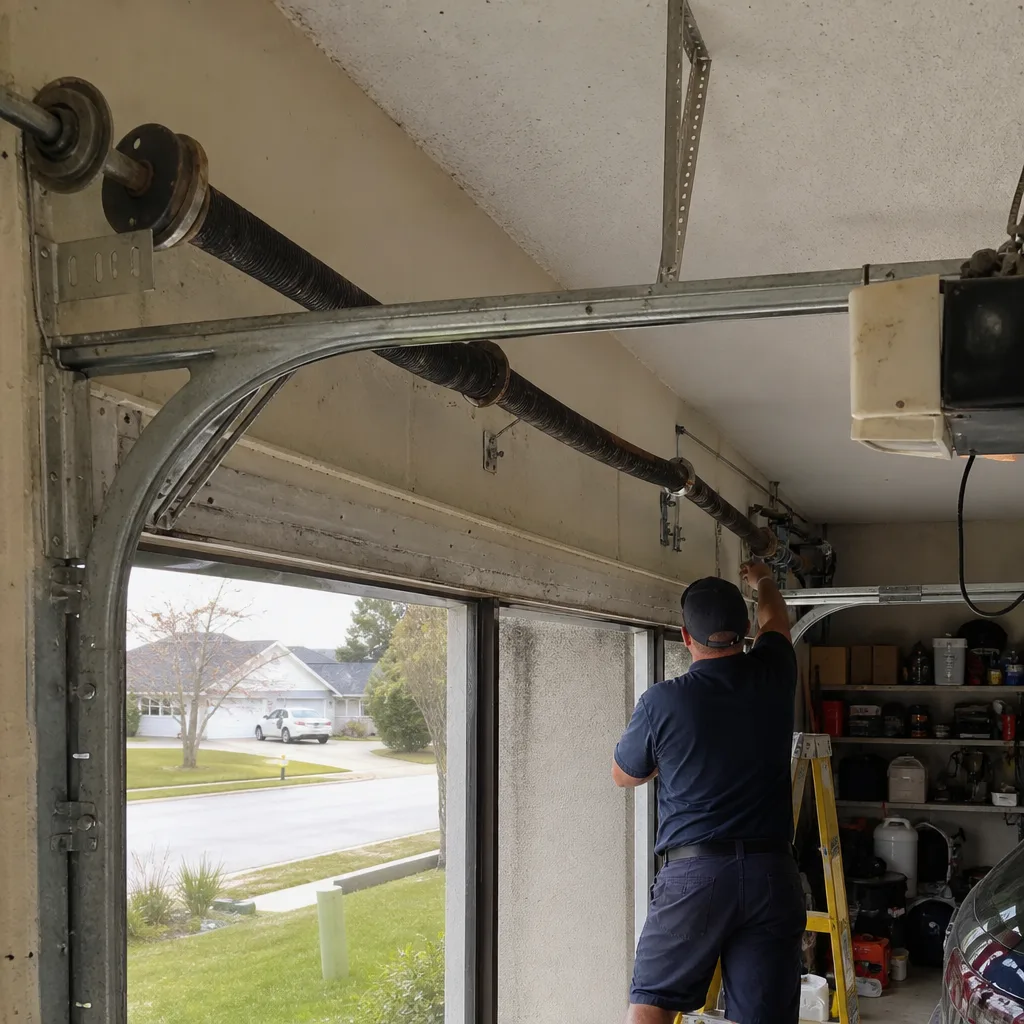
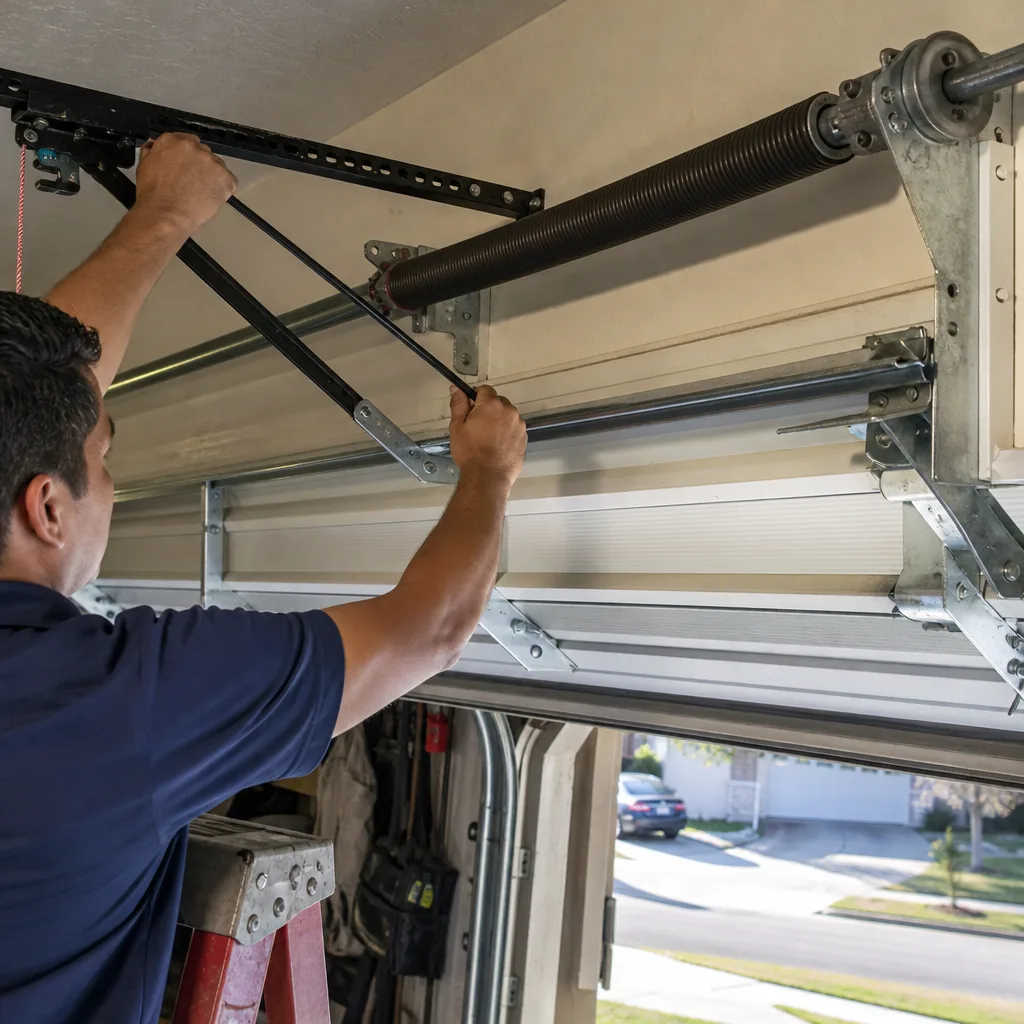
- Inspect the torsion spring above the closed door. If you see a visible gap in the spring coil, it’s snapped. Do not attempt to operate the door. A snapped spring under residual tension is dangerous to touch.
- Run the opener and listen. A healthy door hums smoothly. Grinding, popping, or hesitation means something shifted. Stop immediately.
- Operate the door manually. Disengage the opener and lift by hand. The door should move smoothly with consistent resistance. Any binding is a red flag.
- Check the weather seal along the bottom. Storm-driven rain gets behind the seal and into the garage. If the seal is torn or pulled loose, water damage to stored items follows.
Marion County homes face a specific combination of risks: mature oak trees, older homes with original garage door systems, and the heavy rain bands that follow Ocala’s summer storm pattern. Wind gusts above 50 mph, common even in non-tropical storms here, exert enough pressure on a 16-foot-wide door to bend tracks permanently. We see this regularly on homes in the historic districts and pre-1990 subdivisions where garage door systems are original.
Battery Backup Openers: Which Ones Actually Work in Ocala
Battery backup garage door openers are marketed as the solution to storm-season power outages, and for some Ocala homeowners they are. But there’s a meaningful gap between the marketing and the reality, and knowing which brands deliver is worth the ten minutes it takes to understand.
LiftMaster and Chamberlain manufacture the battery backup systems we see perform most reliably in Ocala homes. Their DC-motor openers with integrated battery backup run smoothly on battery power and typically deliver 20 to 40 open-close cycles on a full charge, depending on door weight. Genie’s battery backup units, found in many newer Ocala homes, also perform well but tend to deplete faster on heavier double doors. Craftsman battery backup openers, common in older homes, are the ones we most often find with failed batteries, simply because the units are aging and the batteries were never replaced.
Here’s what actually matters when evaluating battery backup performance:
- Battery age, not battery presence. A three-year-old backup battery is roughly half as useful as a new one. If you can’t remember when the battery was installed, it’s time to test or replace it.
- Door weight and balance. A battery backup opener working against an unbalanced door draws significantly more current and drains much faster. The backup system is only as good as the door it’s operating.
- Cycle count per charge. Manufacturers advertise up to 40 cycles on battery power, but that assumes a perfectly balanced door under ideal temperature conditions. In July heat, with an older heavy door, expect closer to 15 to 20 cycles.
- Charging behavior during normal operation. Some backup batteries only charge while the opener is actively running, not while idle on AC power. If your opener gets minimal use, the battery may be depleted without you knowing.
The honest assessment for Ocala homeowners: battery backup is worth having for the thunderstorm-season outages that last 30 minutes to four hours. For a multi-day hurricane outage, no battery backup opener will keep up with daily use. Plan on manual operation as your fallback. If you’re deciding whether to upgrade, garage door installation in Ocala includes opener selection and we can walk you through which battery backup models match your door weight and usage pattern.
Storm Approaching and Your Door Is Stuck Open: How to Secure It
This scenario is the one Ocala homeowners are least prepared for: the power is still on, the storm is hours away, and the garage door has failed in the open position. It happens when a spring breaks, a cable jumps the drum, or the opener fails mid-cycle. A door stuck open during an approaching storm is a direct threat to your home’s structural integrity. Wind entering the garage pressurizes the interior, lifts the roof, and can take the whole structure apart.
Here’s the sequence to secure a door stuck open, in order of decreasing safety:
- Assess why the door is stuck. If the opener failed but springs are intact, you may be able to manually close the door after disengaging the opener. Try this first.
- If a spring is visibly snapped or a cable is off its drum, do not attempt to close the door by hand. The door is now a dead weight and will come down uncontrolled. The risk of serious injury is real.
- Secure the door in place if you cannot close it. If the door is stuck at head height or above, brace it from the inside. Two 2×4 boards cut to length and wedged under the door can prevent it from dropping if other components fail.
- Cover the opening from the inside. A heavy tarp, plywood sheet, or even a mattress propped against the opening slows wind and water entry. You’re buying time, not solving the problem permanently.
- Call for professional help, but understand the timeline. The hours before a hurricane landfall are the busiest time for garage door repair companies in Ocala and nationwide. A technician may not arrive before the storm. Prepare to secure the opening as best you can and plan for post-storm repair.
The best defense against this scenario is pre-storm maintenance. A broken spring doesn’t announce itself politely. It snaps when it wants to, and statistically that’s during temperature swings or right after a period of heavy use. An annual inspection of springs, cables, rollers, and tracks catches the components nearing failure before they do it at the worst possible time. Our garage door repair services in Ocala include pre-storm tune-ups designed exactly for this: catching the failure before the evacuation order.
Documenting Pre-Storm Door Condition for Insurance Claims
Insurance adjusters in Florida process thousands of garage door damage claims after major storms, and the claims that get paid fastest are the ones where the homeowner can prove the door’s pre-storm condition; our guide on Garage Door Permits, Codes & Inspections in FL: What You Need to Know explains additional compliance considerations. Here’s what actually matters to an adjuster, based on what we’ve seen from clients who navigated Hurricane Ian and Idalia claims in Central Florida:
- Dated photos of the door closed and open, taken from both inside and outside. Include close-ups of springs, cables, rollers, and bottom seal. An adjuster who can see the door was well-maintained pre-storm processes the claim faster.
- The door’s age and manufacturer. A Clopay door from 2018 is valued differently than a Wayne Dalton door from 2002. Photograph the manufacturer label inside the panel or on the end stile.
- Measurements. Record door width, height, panel count, and track configuration. These allow the adjuster to price replacement accurately without a second site visit.
- Receipts or records of prior service. Even a handwritten note taped inside the garage with service dates and what was done strengthens the claim that the door was maintained.
- Video footage. A 30-second phone video showing the door opening and closing smoothly before the storm is better evidence than any written description.
Keep this documentation in a cloud folder, not just on your phone. Phones get damaged, lost, or run out of battery during evacuations. A shared album or cloud drive accessible from any device means the adjuster gets everything in one email instead of waiting days for you to find photos on a water-damaged phone.
For Ocala homeowners in flood-prone or heavily wooded areas, we recommend documenting the door at the start of hurricane season each year, around June 1. That creates an annual baseline that adjustments are measured against. It takes 15 minutes and costs nothing.
Common Mistakes to Avoid
- Pulling the release cord with the door half open. This is the single most dangerous garage door mistake a homeowner can make. A partially open door under spring tension drops instantly when disengaged. Always confirm the door is fully closed before pulling the cord.
- Testing the manual release for the first time during an actual emergency. In the dark, with storm anxiety running high, you’ll struggle to find a cord you’ve never touched. Practice the release twice a year. It’s a 30-second drill.
- Trusting a battery backup that hasn’t been tested in months. Backup batteries die silently. If you haven’t unplugged the opener and run it on battery in the last 90 days, assume the battery is weak.
- Attempting DIY spring replacement or cable repair. Torsion springs under tension store enormous force. A spring that unloads while you’re working on it can cause serious injury. This is genuinely one repair that belongs only in professional hands.
- Closing a stuck door by pulling it down with a rope or standing under it. If the door is stuck open due to spring failure, it’s a 150-pound dead weight. Do not put yourself under it. Brace it and call for help.
- Assuming your garage door is fine after a hurricane because it opens and closes. Hairline cracks, slightly bent tracks, and weakened spring mounts get worse with every use. A door that works today can fail catastrophically in two weeks. Get it inspected.
- Leaving the manual slide lock engaged when the power comes back and someone presses the opener button. This destroys the opener gear and can bend the door. Always confirm the lock is released before running the opener.
When to Call a Professional
Some garage door situations are DIY-solvable with the knowledge in this guide. Others are not. Call a professional when: a torsion spring is visibly snapped or separated; cables are off the drums or frayed; the door is jammed in the half-open position and won’t move safely; the door makes repeated loud noises during operation; or the door reversed downward and now won’t respond to either the opener or manual operation. These conditions indicate structural or spring failure, and the forces involved are beyond what a homeowner should be handling. Our Key Step Garage Door Repair home page covers our full range of services. Key Step Garage Door Repair offers free estimates in Ocala. Call (855) 795-2118 for storm damage assessment, pre-season inspection, or any door issue that makes you uncomfortable. We service the eight most common garage door brands installed in Marion County homes including Amarr, Wayne Dalton, Raynor, and Craftsman.
Frequently Asked Questions
Pull the red emergency release cord hanging from the center rail to disengage the opener from the door, then lift the door by hand using the bottom handle. A properly balanced door weighs only 8 to 15 pounds of effective lift force. Practice this before you need it, not during an emergency. If the door feels heavy or drops when released, stop and call (855) 795-2118 for an inspection.
It will if the battery is charged and the door is balanced. Backup batteries on LiftMaster, Chamberlain, Genie, and Craftsman openers typically deliver 15 to 40 cycles per charge depending on door weight and battery age. Test yours monthly by unplugging the opener and running a full cycle. A battery older than three years may need replacement. Call (855) 795-2118 for a free battery assessment.
Check the bottom panel for flush ground contact, inspect both tracks for bends or pulled bolts, look for panel cracks at all four corners of each section, examine the torsion spring above the closed door for visible gaps, and run the opener listening for grinding or hesitation. Also test manual operation by lifting the door and checking for smooth movement.
No. An open garage door during high winds pressurizes the garage interior and can lift the roof structure. If the door is stuck open and you cannot close it manually due to spring or cable failure, brace it from the inside with lumber and cover the opening with a tarp or plywood. Then call a professional. This is one of the most dangerous storm scenarios in Ocala homes.
Costs vary widely depending on whether the damage is to the panels, tracks, springs, or the opener itself, but most Ocala storm damage repairs we perform fall between $180 and $900. A full door replacement runs higher. The best way to know is a free estimate. Call (855) 795-2118 for an exact quote, and your price will be confirmed before any work begins.
Dated pre-storm photos of the door from inside and outside, close-ups of springs and cables, the door manufacturer and age, measurements of the door and track configuration, and any prior service records. Store everything in a cloud folder before hurricane season starts. Adjusters process claims faster when the pre-storm condition is clearly documented.
We service LiftMaster, Chamberlain, Genie, Clopay, Amarr, Wayne Dalton, Craftsman, and Raynor systems. Our technicians are trained on each brand’s specific hardware and drive mechanisms. We don’t do generic fixes; we repair the system you actually have.
The Bottom Line
Garage door emergencies in Ocala come in two predictable forms: power outages that leave you locked in or out, and storm damage that compromises the door’s safety. Both are manageable with preparation. Learn your manual release mechanism and practice it twice a year. Test your battery backup monthly, or replace it if it’s aging. Document your door’s condition at the start of hurricane season every June. After any major storm, perform the seven-point inspection before running the opener. When problems go beyond what preparation handles, a specialist who knows your specific door brand makes the difference between a patch and a proper repair. For more guides & resources, visit our blog. The time to prepare is now, not when the wind picks up.
Written by the team at Key Step Garage Door Repair, serving Ocala since 2013.
See the difference
 Before
 After
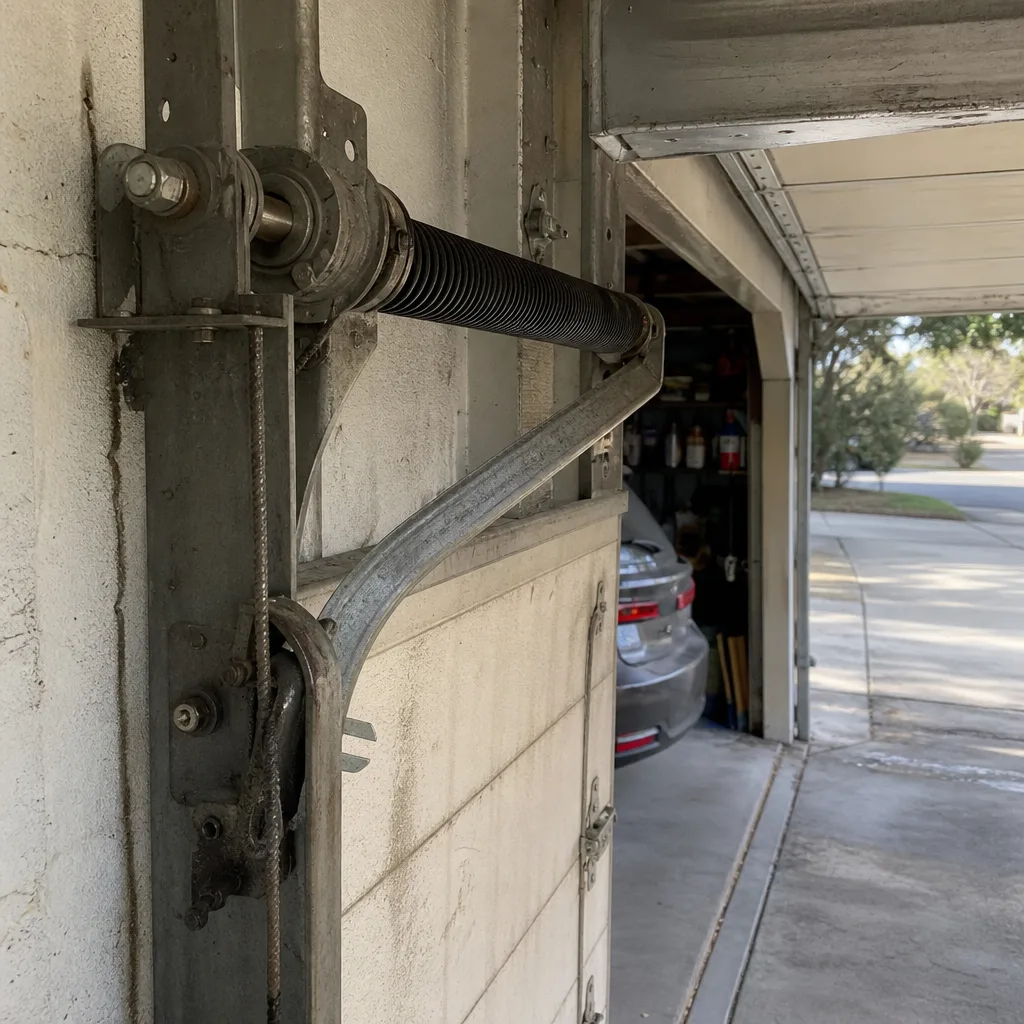 Before
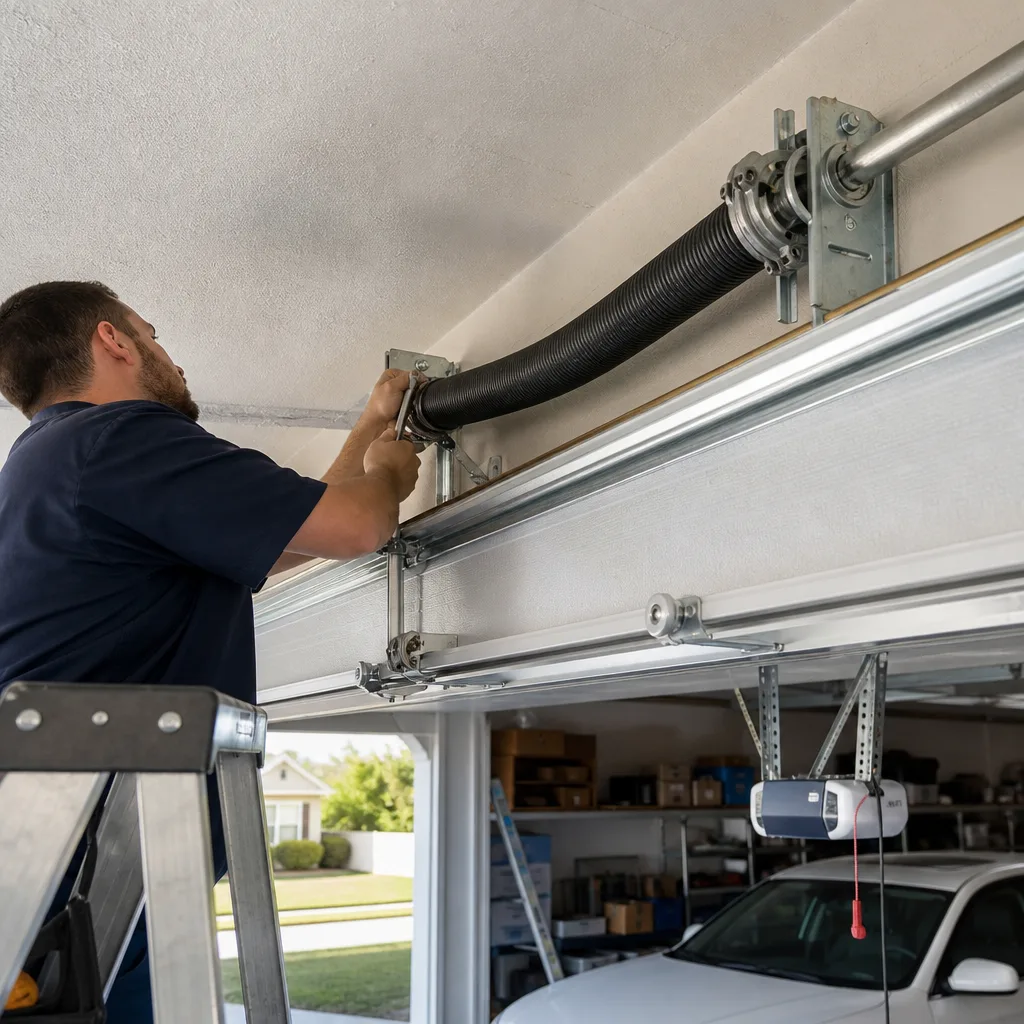 After
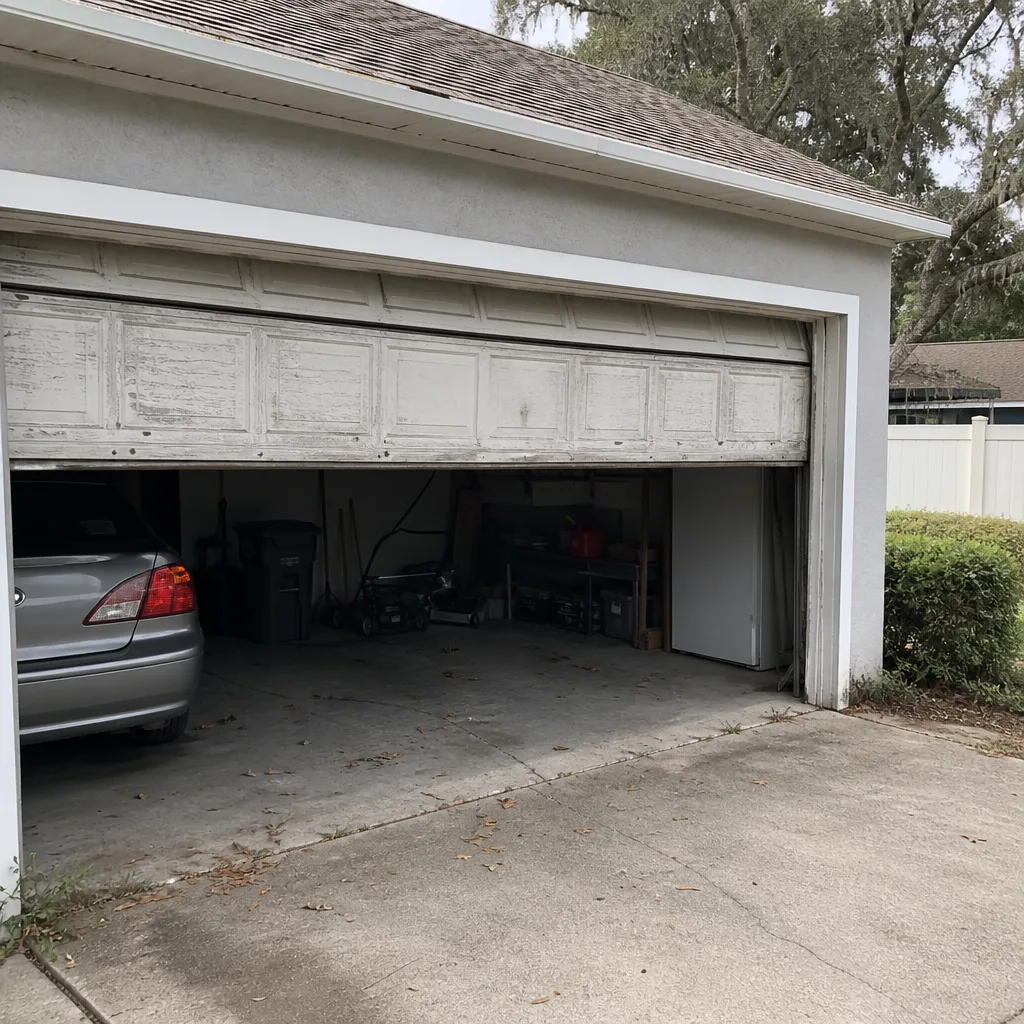 Before
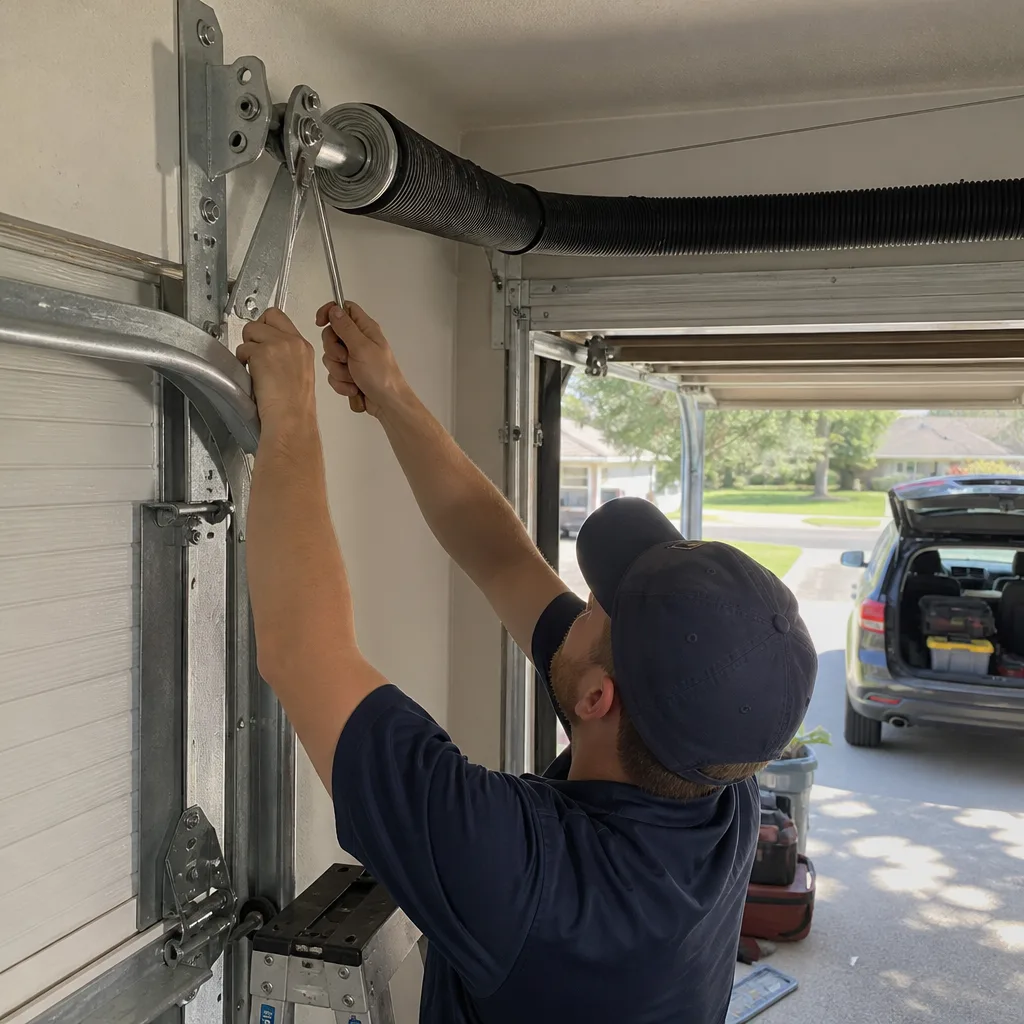 After