

Last updated October 30, 2026
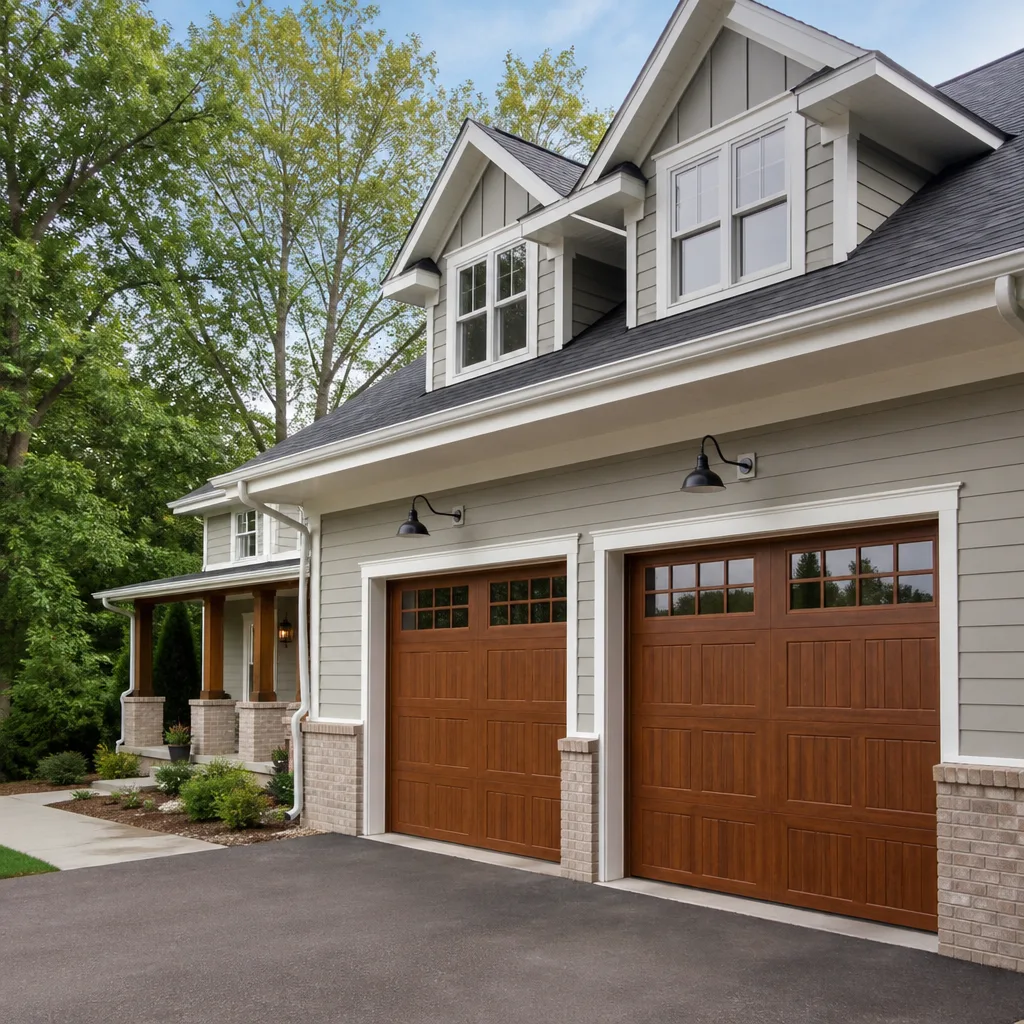
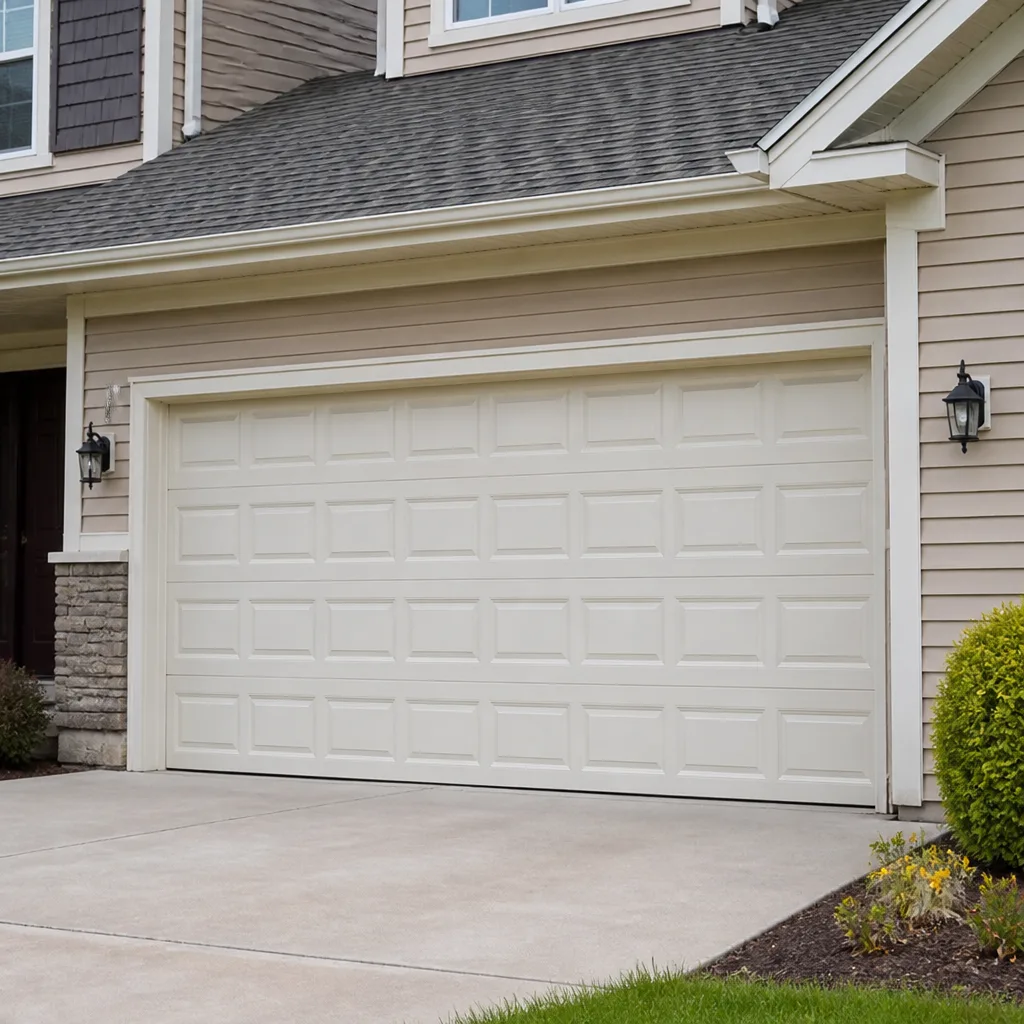 Raised-panel steel
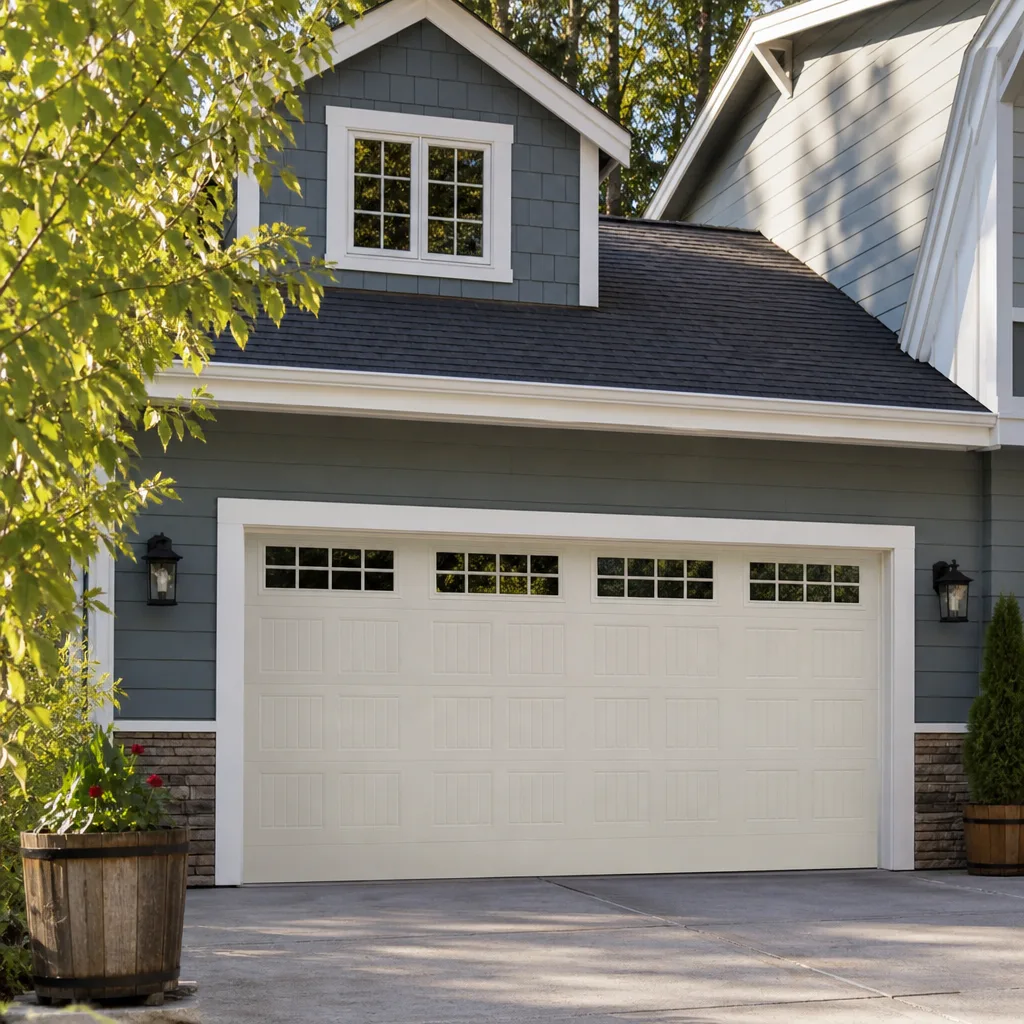
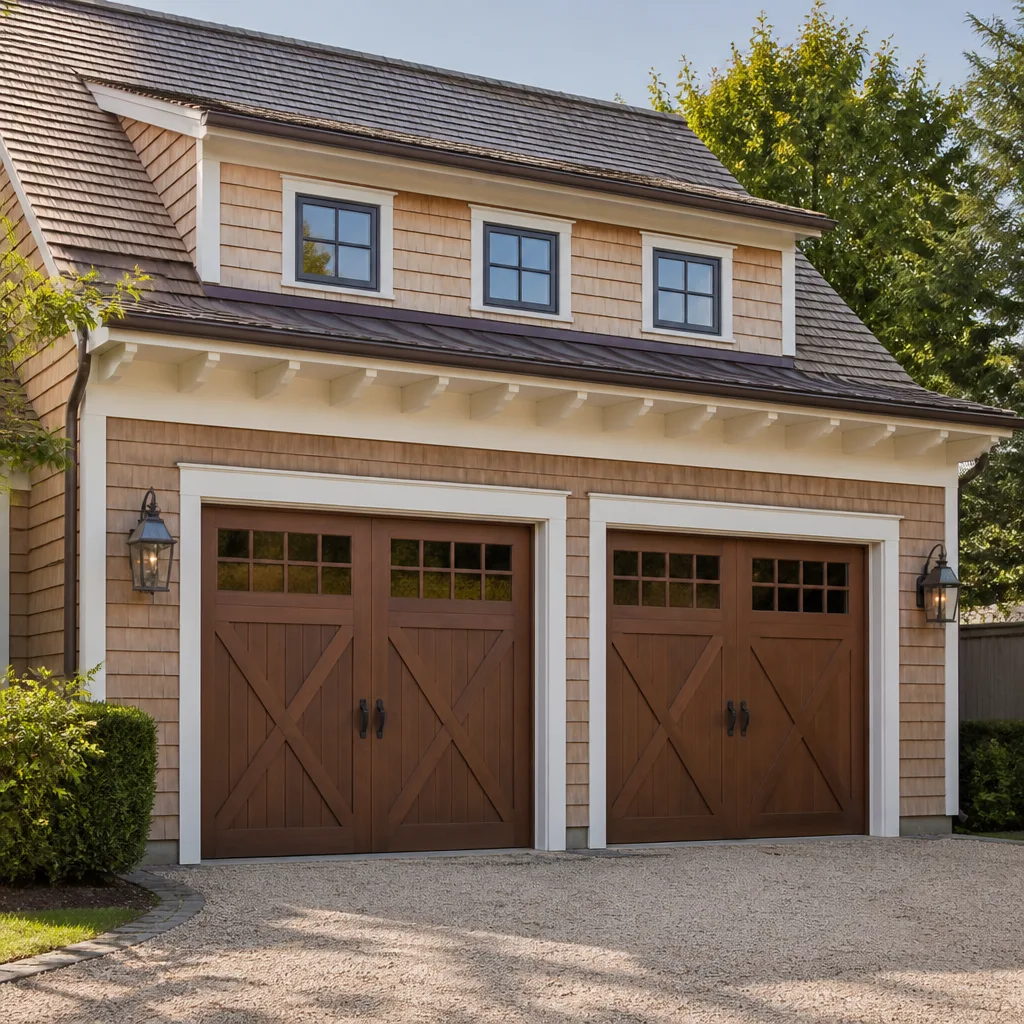 Carriage house
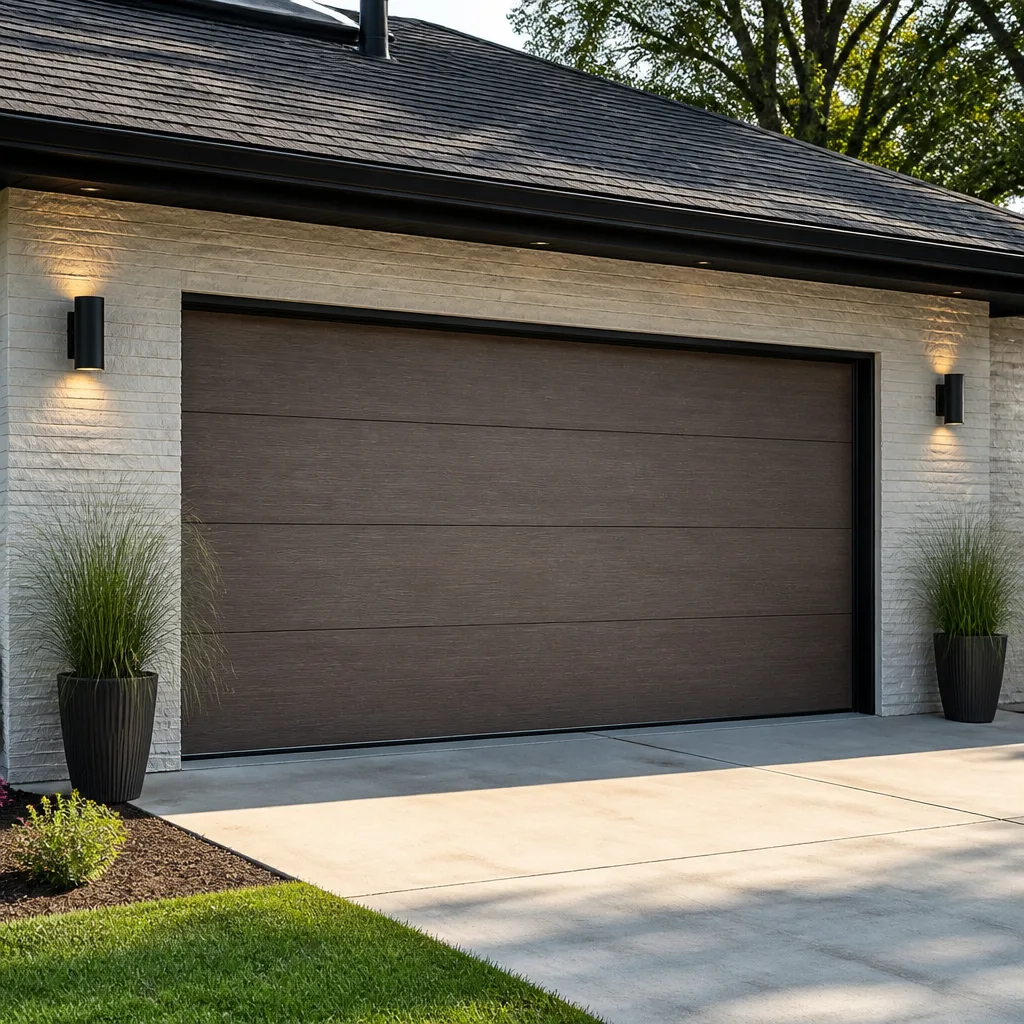 Modern flush
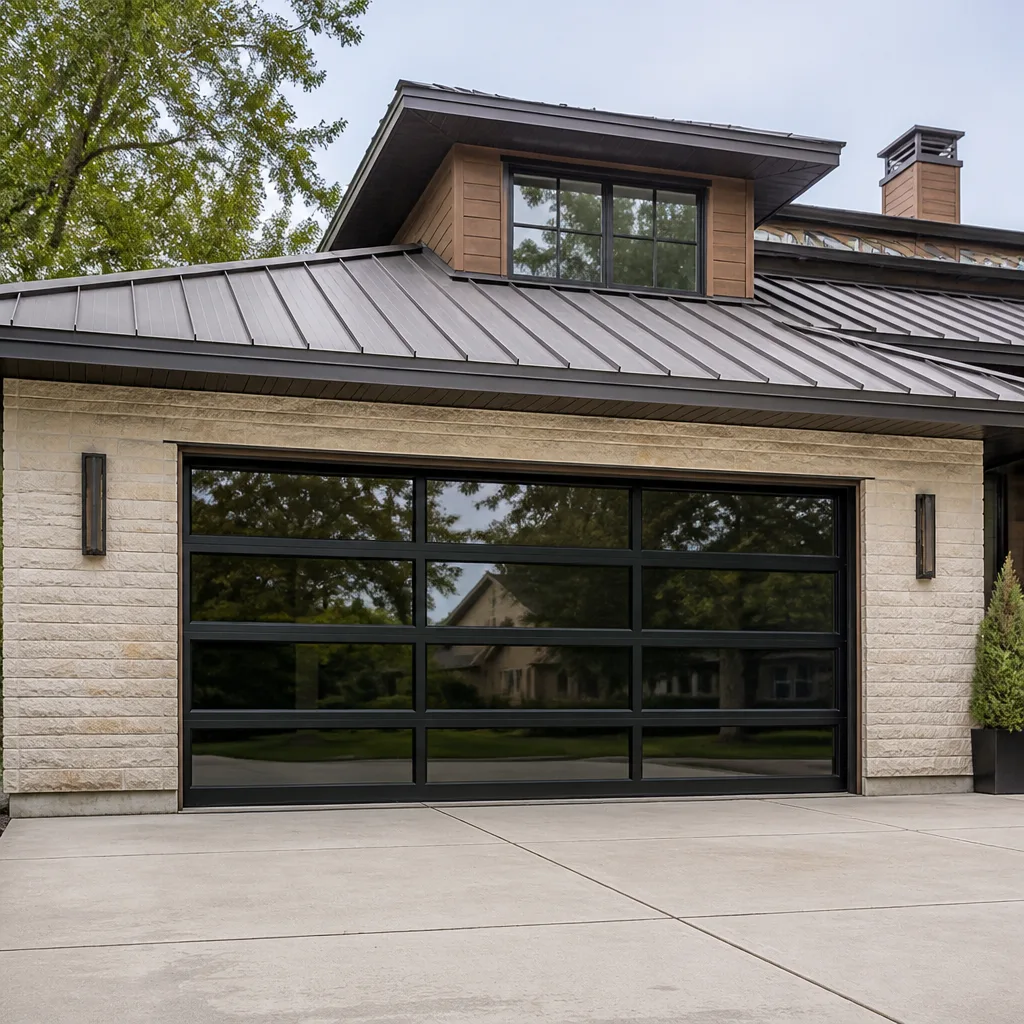 Full-view glass
 LiftMaster openers
 Chamberlain openers
Full 25-point door and opener safety check with every visit - springs, cables, rollers, tracks, and your LiftMaster or Chamberlain opener included
You get a price before we start. It does not change when the truck arrives.
Get your free estimateGarage Door Repair Maintenance Checklist for Ocala Homeowners
WD-40 on garage door springs is one of the most common mistakes we see in Ocala. That thin, penetrating spray strips the grease that protects torsion springs, and in Central Florida’s humidity, a stripped spring rusts fast. What starts as a $15 can of spray becomes a $300 spring replacement by the next wet season. This guide gives you a maintenance checklist built specifically for Ocala’s climate: which lubricant to use on which part, which month to apply it, and which tasks to leave to a trained technician or our Garage Door Repair services. You’ll learn the seasonal schedule that accounts for Marion County’s wet and dry cycles, how to test safety functions that temperature swings affect, and how to document your work so manufacturer warranties stay intact.
Styles & brands we work with
Quick Answer
A garage door maintenance checklist for Ocala homeowners should follow a seasonal rhythm: lubricate rollers, hinges, and springs twice a year with a lithium-based grease (not WD-40), tighten hardware in March and October, test auto-reverse and photo eyes monthly, replace weather stripping every 2 to 3 years due to UV degradation, and schedule a professional inspection before hurricane season. Most of this takes under 30 minutes per season and prevents roughly 80% of the repair calls we see.
Table of Contents
- The 10-Minute Monthly Maintenance Routine
- Lubrication: The Right Product on the Right Part
- Ocala’s Seasonal Maintenance Schedule: Wet Season vs. Dry Season
- Testing Auto-Reverse and Photo Eyes in Florida’s Temperature Swings
- Weather Stripping and UV Damage: What Central Florida Sun Does
- Warranty Protection: What Your Maintenance Log Should Include
- Hardware Tightening and Track Alignment
- Common Mistakes to Avoid
- When to Call a Professional
- Frequently Asked Questions
- The Bottom Line
The 10-Minute Monthly Maintenance Routine
Most Ocala homeowners don’t need an hour-long garage door service every month. They need ten focused minutes that catch small problems before they become repair bills. Here’s the routine we recommend, calibrated for a door that cycles four to six times daily.
Step 1: Watch and Listen (2 minutes)
Stand inside the garage while the door runs through a full open-and-close cycle. Watch the rollers in the tracks. Listen for grinding, squealing, or a rhythmic thump that wasn’t there last month. A door that hesitates halfway up, or shudders as it moves, is telling you something. Write down what you observe. In our experience, homeowners who keep a simple note on their phone catch issues weeks before they become failures.
Step 2: Check Photo Eye Alignment (1 minute)
The two small sensors near the floor on either side of the door should have solid lights, not blinking. If one blinks, wipe the lens with a dry cloth. Ocala’s pollen season from February through April coats those lenses in a fine yellow film that trips the sensor and prevents the door from closing.
Step 3: Test Auto-Reverse (2 minutes)
Place a roll of paper towels flat on the floor under the door’s path. Close the door. It should reverse within two seconds of touching the roll. Do this monthly. Florida’s heat causes the photoelectric sensors to drift slightly over time, and a door that doesn’t reverse is a serious safety hazard, especially in homes with children or pets.
Step 4: Inspect Cables and Springs Visually (2 minutes)
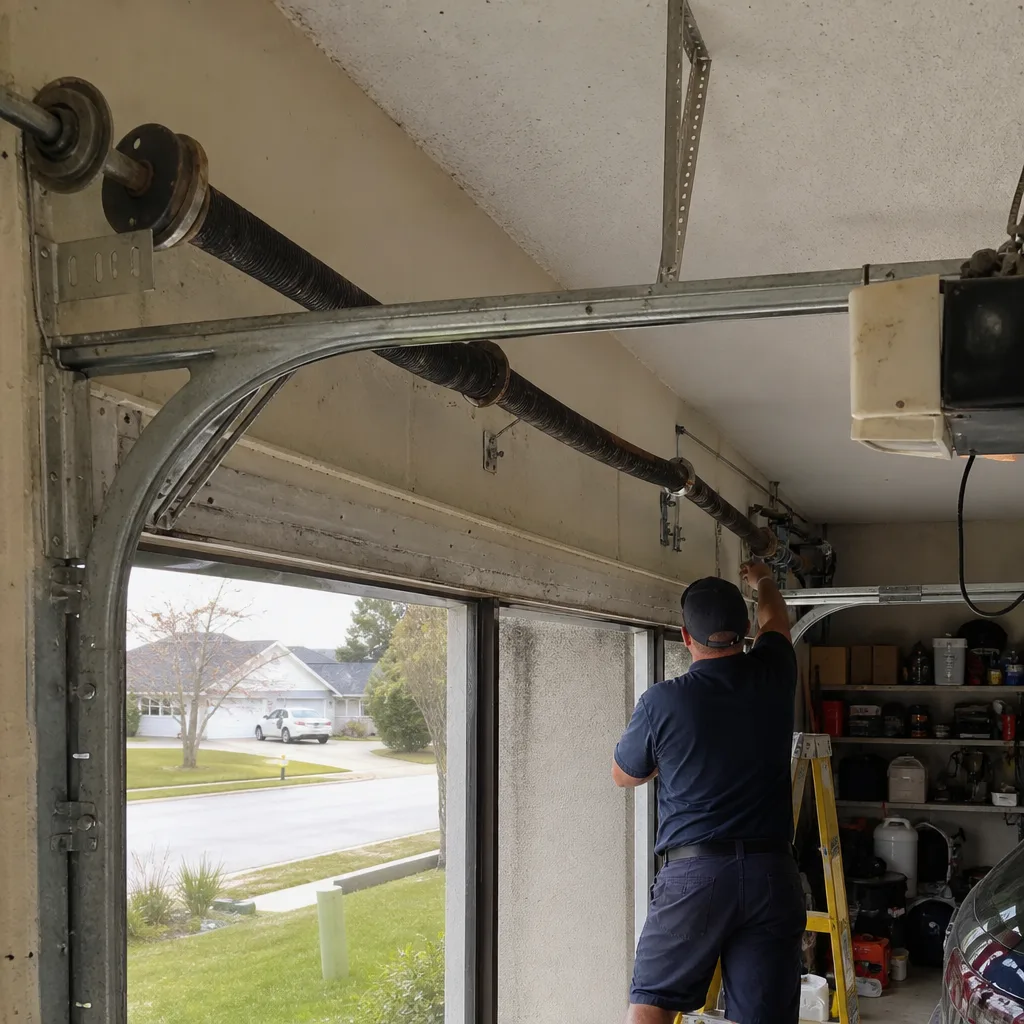
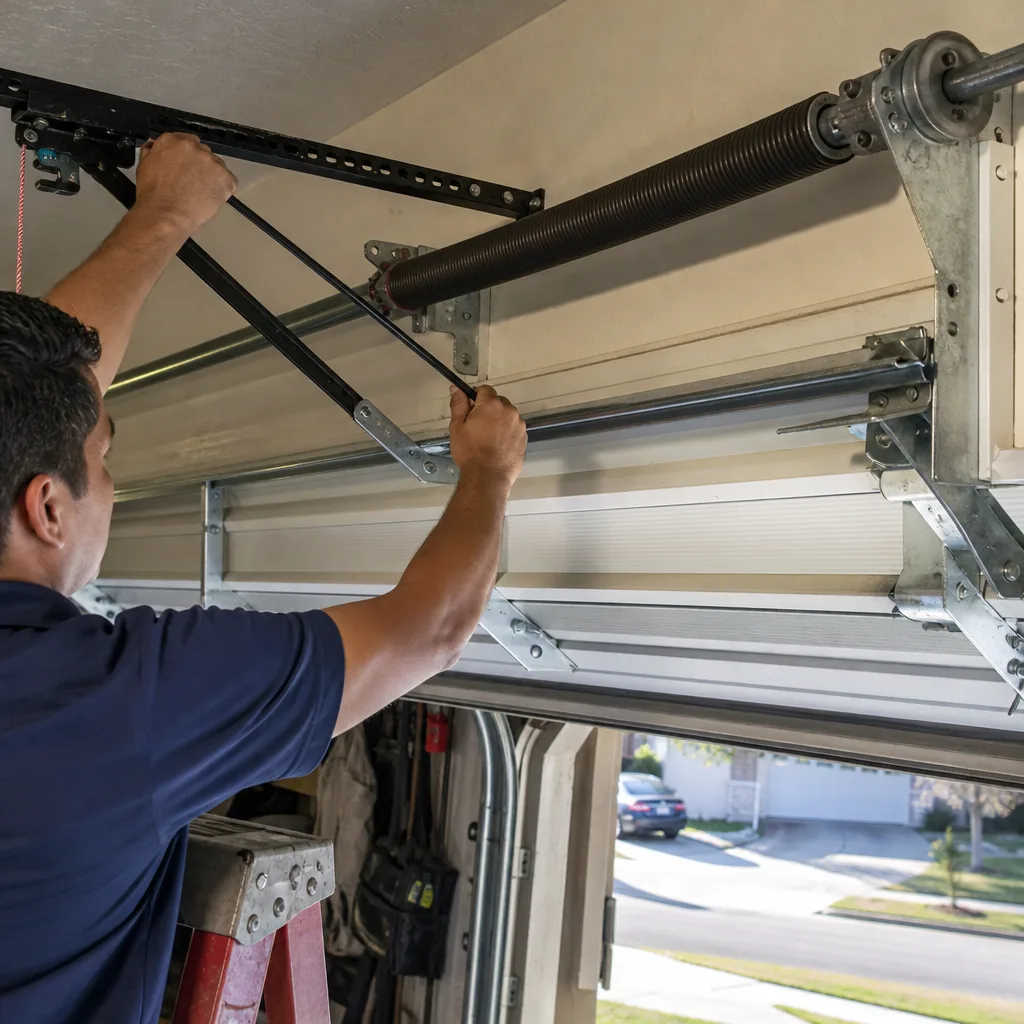
Look up. The lift cables on both sides should be taut, not frayed or dangling. The torsion spring above the door should show no gaps in its coil. If you see rust, take a photo and note the date. Do not touch the spring or cables. These components are under extreme tension and can cause severe injury if handled incorrectly.
Step 5: Tighten What’s Loose (3 minutes)
Garage doors vibrate with every cycle. Bolts, hinges, and track brackets loosen over time. Use a socket wrench to snug up the bolts on hinges and the track mounting brackets. Don’t over-torque; just eliminate play. If a bolt spins without tightening, the hole may be stripped and will need a professional repair.
This monthly routine covers 80% of preventable failures. The remaining 20% comes down to seasonal work, which we cover below.
Lubrication: The Right Product on the Right Part
The single most common question we get from Ocala homeowners is what to lubricate and with what. The answer is more specific than most guides admit, because Central Florida’s humidity makes product choice matter more here than in drier climates.
What to Use
- For rollers, hinges, and the torsion spring: A lithium-based white grease or a silicone-based garage door lubricant. We recommend products labeled specifically for garage doors, such as 3-IN-ONE Professional Garage Door Lubricant or Blaster Garage Door Lubricant. These are formulated to stay in place in 90%+ humidity without attracting grit.
- For the opener rail or screw drive: White lithium grease for chain and screw drives. Some newer models from LiftMaster and Chamberlain use a belt drive that needs no lubrication at all – check your manual.
- For the lock and keyhole: Graphite powder, never liquid lubricant. Liquid turns to gum in Ocala’s heat.
What Never to Use
- WD-40: It’s a penetrating oil and solvent, not a lubricant. It strips existing grease and leaves metal exposed. On springs, this accelerates rust in humid air. On rollers, it gums up and attracts dirt.
- Motor oil or 3-in-1 household oil: Too thin for garage door components. It runs off within weeks and leaves a sticky residue.
- Cooking spray: Degrades in heat and provides zero long-term protection.
How to Apply
- Run the door to the halfway position and disconnect the opener by pulling the red release handle. Work with the door stationary.
- Spray the hinge pins where the door bends between panels. Two short bursts per hinge is enough.
- Spray the roller bearings where the wheel meets the stem. If you have sealed nylon rollers, skip them and focus on the stems.
- Apply a thin coat of grease along the torsion spring coils using a rag or brush. You’re not soaking the spring; you’re maintaining a protective film.
- Wipe away any excess that drips. Excess lubricant collects grit, and grit wears components faster.
- Reconnect the opener and run the door through two full cycles to distribute the lubricant.
In our experience in Ocala, doors that get this treatment in March and October show measurably less roller and hinge wear after five years than doors lubricated randomly or not at all. The timing matters: late winter and late fall sit just before the weather shifts put maximum stress on the hardware.
Ocala’s Seasonal Maintenance Schedule: Wet Season vs. Dry Season
Ocala’s climate splits the year into two distinct stress patterns. Most generic maintenance checklists ignore this, which is why they underperform here. Here’s what we do for doors across Marion County, from Shady Road to the Historic District, and why.
October through May: The Dry Season
The dry season is the work season. Lower humidity means hardware doesn’t rust as aggressively, but cooler mornings and warmer afternoons cause metal to expand and contract daily. This thermal cycling loosens bolts and shifts track alignment over time.
October (start of dry season):
- Complete a full lubrication of rollers, hinges, and springs.
- Tighten all track brackets and hinge bolts.
- Inspect weather stripping on the bottom of the door and replace if cracked or flattened.
- Test auto-reverse force and photoelectric sensors.
February through April:
- Clean photo eye lenses every two weeks during oak pollen season. Ocala’s live oaks release pollen that coats sensors quickly.
- Check for rust on cables and springs, especially if your garage is uninsulated and open to morning humidity.
- Listen for spring squeal, which signals the protective grease layer has worn thin.
June through September: The Wet Season
From June through September, daily thunderstorms push relative humidity to 90% or higher. Untreated steel rusts within weeks. Rubber weather stripping stays soft but grows mildew. Wood doors absorb moisture and swell.
June (before the peak of the wet season):
- Reapply lubricant to hinges, rollers, and springs. The dry-season coat has thinned by now.
- Inspect the bottom weather seal for gaps. Afternoon downpours drive water under a worn seal and into the garage.
- Check the opener’s drive mechanism for corrosion. Chain drives from Genie and older Craftsman models are especially prone to surface rust during wet season.
- Verify that drains near the garage door are clear so water doesn’t pool against the door panels.
August through September (peak humidity and hurricane threats):
- Test the door’s balance manually. Disconnect the opener and lift the door to waist height. It should stay put. If it drops or rises, the springs are out of tension and the door won’t close properly in high wind.
- Confirm the emergency release handle is functional in case of power outage.
- If your door has reinforcement struts, check that they’re secure. High wind from summer storms puts real load on the door face.
- Document all maintenance in a simple log for warranty purposes, as we cover below.
This schedule mirrors what we do on professional tune-ups across Ocala. Following it keeps a door operating reliably through both seasons and stretches the life of springs and rollers by years.
Testing Auto-Reverse and Photo Eyes in Florida’s Temperature Swings
Ocala’s daily temperature range from March through May can exceed 30 degrees. That thermal swing affects your garage door opener’s safety mechanisms more than most homeowners expect.
The auto-reverse function on modern openers from LiftMaster, Chamberlain, and Genie relies on two systems: a mechanical force sensor that detects resistance, and photoelectric eyes that detect objects in the door’s path. Both are affected by temperature and humidity in specific ways.
How Temperature Affects Force Settings
Metal components expand in Florida heat. A door that ran smoothly in January may bind slightly in July as the tracks, rollers, and panels expand. The opener’s force setting, calibrated for January’s cooler metal, may now trip too early, causing the door to reverse when nothing is in the way. Or worse, a homeowner may increase the force setting to compensate, which makes the door less sensitive to a real obstruction.
We recommend testing the auto-reverse force monthly and paying special attention during seasonal transitions. Here’s the test procedure we use on every service call in Ocala:
- Place a 2×4 flat on the floor in the center of the door’s path.
- Close the door using the opener.
- The door should reverse within two seconds of contacting the wood.
- If the door stops but does not reverse, or if it crushes the 2×4, the force setting is too high and the system is unsafe.
- Repeat the test with the photoelectric sensors by waving an object between the beams while the door closes. The door should stop and reverse.
If a door fails either test, do not adjust the force setting yourself unless you have the manual and the training to do it safely. An incorrectly set opener is a serious injury risk. This is one of the most common reasons we get called to homes in Silver Springs Shores and Fore Ranch: an owner adjusted the force dial to fix a reversing door and created a dangerous condition that took a professional to correct. For warning signs to watch for, see our Garage Door Warning Signs: A Ocala Homeowner’s Reference Guide.
After testing, check that the photoelectric sensors are firmly mounted. Florida storms rattle garage frames, and a sensor that shifts even a quarter-inch out of alignment will fail intermittently, which is worse than failing consistently because it’s harder to diagnose.
Weather Stripping and UV Damage: What Central Florida Sun Does
Weather stripping is the most overlooked maintenance item on Ocala garage doors, and it’s also the one most affected by our specific environment. Central Florida sun delivers intense UV radiation year-round, not just in summer. The bottom seal and the vinyl trim around the door frame absorb that UV and degrade faster here than in most of the country.
What UV Does to Garage Door Seals
Rubber and vinyl weather seals contain plasticizers that keep them flexible. UV radiation breaks down those plasticizers, causing the material to harden, crack, and lose its ability to compress. A seal that’s three years old in Ocala often looks like a seal that’s six years old in a northern climate.
When the bottom seal fails, the consequences compound quickly. Rain blows under the door during summer storms. Humidity enters the garage, causing tools to rust and stored items to mildew. And the gap lets in insects, including the fire ants and palmetto bugs Ocala homeowners know too well.
How to Inspect Weather Stripping
- Close the door and look for daylight visible under the bottom edge. Any gap wider than a pencil is a problem.
- Run your hand along the bottom seal. If it feels hard, brittle, or has visible cracks, it’s done.
- Check the weather stripping on the door jambs and header. In Ocala, south-facing doors degrade fastest because they receive the most direct sun.
- Look for mildew on the seal, which indicates trapped moisture and means the seal has lost its surface integrity.
Most bottom seals on standard residential doors can be replaced in under an hour by a homeowner with basic tools. The seal slides into a track on the bottom of the door. If the track is corroded or the door is wood and swollen from humidity, a professional should handle the replacement. We replace weather seals regularly as part of our garage door repair work in Ocala, and we see the difference a proper seal makes for the entire garage environment.
Warranty Protection: What Your Maintenance Log Should Include
Most Ocala homeowners don’t realize that their garage door warranty can be voided by improper maintenance or unapproved repairs. Door manufacturers like Clopay, Amarr, and Wayne Dalton include maintenance requirements in their warranty terms, and opener warranties from LiftMaster and Chamberlain have similar clauses. If a spring fails and the manufacturer asks for maintenance records and you have none, you may be paying for the replacement out of pocket.
Here’s what a warranty-friendly maintenance log should include:
- Date of each maintenance action – monthly tests, seasonal lubrication, hardware tightening.
- What was done – be specific: “Lubricated all six hinge pins and both torsion springs with lithium grease” not “lubricated door.”
- Product used – brand and type of lubricant, which matters because using the wrong product can void coverage.
- Observations – noise, rust, wear, or anything unusual you noticed during the routine.
- Photos – a quick phone photo of the springs, cables, and rollers before and after lubrication takes seconds and is strong documentation.
- Professional service records – if a technician is called, keep the invoice and note what was repaired or replaced.
Some warranties also specify that certain tasks must be performed by a professional. For example, spring replacement on torsion systems is a professional task on almost every door, and doing it yourself voids the spring warranty. Adjusting opener force settings outside the manufacturer’s specified range can void the opener warranty. If you’re unsure whether a task is warranty-safe, call the manufacturer’s support line or ask a garage door specialist before doing it yourself.
Documentation matters most when the failure is expensive. A torsion spring that breaks at year six on a ten-year warranty might be covered if you can show twice-yearly lubrication and no signs of neglect. Without records, that’s a $250 to $350 replacement coming out of your pocket.
Hardware Tightening and Track Alignment
Garage doors in Ocala move up and down thousands of times per year, and every cycle sends vibration through the entire system. Bolts loosen. Tracks shift. Hinges develop play. This section covers what you can tighten yourself and what needs a trained eye.
What to Tighten Yourself
- Hinge bolts – the hinges that connect door panels have bolts on both the panel side and the roller side. Snug them with a socket wrench twice a year.
- Track brackets – the brackets that hold the vertical and horizontal tracks to the wall and ceiling. If a bracket is loose, the track can drift and cause the door to bind or come off the track.
- Opener mounting bolts – the bolts that hold the opener motor to the ceiling mount. Loose bolts here cause the opener to shake and amplify noise.
Track Alignment: When to Call a Professional
Track misalignment is a common issue on older Ocala homes, especially where garage slabs have settled or shifted. If the vertical track is not plumb, the door will rub against the track, wear rollers unevenly, and eventually jam. You can check alignment visually: the gap between the door edge and the track should be consistent from top to bottom.
Fixing track alignment involves loosening the track brackets, repositioning the track, and retightening, often while the door is under spring tension. If the door has come off the track, do not attempt to force it back. The torsion spring holds tremendous energy, and improperly handling a door that’s off its track is one of the leading causes of serious garage door injuries. Call a professional. Our garage door repair team in Ocala sees this most often after summer storms when wind catches a partially open door and twists it off the track.
Common Mistakes to Avoid
- Using WD-40 on springs and rollers. This strips protective grease and accelerates rust. In Ocala’s humidity, a stripped spring can fail within a single wet season.
- Ignoring a noisy door. A squeal or grind is not normal. It’s the sound of metal-on-metal contact. Ocala homeowners who call us early pay for a $20 hinge instead of a $300 spring.
- Skipping the monthly photo eye test. Pollen, humidity, and storm vibration all affect sensor alignment. A door that reverses intermittently is a danger, not just an annoyance.
- Over-lubricating. More lubricant is not better. Excess grease attracts dust and grit, which wears rollers and hinges faster. A thin coat, twice a year, is the correct amount.
- Painting over weather stripping. Paint hardens the rubber and destroys its flexibility. If you paint the door, mask the seals or replace them after painting.
- Adjusting the opener force setting to fix a reversing door. The force dial is not a convenience feature. Increasing force to overcome a binding door creates a serious safety hazard. Diagnose the binding instead.
- Attempting DIY spring replacement. Torsion springs are under lethal tension. Even experienced handymen are injured every year. This is not a DIY task, no matter what a YouTube video shows.
When to Call a Professional
Some maintenance tasks are safe and smart for homeowners. Others are not. For more guides & resources, explore our blog, or call a professional if you see any of these conditions:
- The door is off its track, even partially.
- A spring is broken, has a visible gap in its coils, or shows deep rust pitting.
- The door binds, grinds, or refuses to move through a full cycle despite proper lubrication.
- The auto-reverse test fails after you’ve cleaned the sensors and checked alignment.
- The door sags on one side, which indicates a cable or spring tension problem.
- Your opener makes a humming sound but the door doesn’t move, which typically points to a bad capacitor, gear, or logic board.
At Key Step Garage Door Repair, we work on the systems you actually have, not a generic stand-in. Our technicians are factory-familiar with LiftMaster, Chamberlain, Genie, Clopay, Amarr, Wayne Dalton, Craftsman, and Raynor, so the diagnosis starts from knowing your specific equipment. If you’re in Ocala and your garage door needs attention, call (855) 795-2118 for a free estimate.
Frequently Asked Questions
Lubricate rollers, hinges, and torsion springs twice a year in Ocala, once in March and once in October. The wet season demands a fresh protective coat before the humidity peaks, and the dry season requires lubrication after the thermal cycling of winter has thinned the previous application. Call (855) 795-2118 if you want a professional tune-up that includes lubrication, and we’ll quote the work before we start.
A lithium-based white grease or silicone-based garage door lubricant is best for Ocala’s humidity. Products like 3-IN-ONE Professional Garage Door Lubricant or Blaster Garage Door Lubricant stay in place through 90%+ humidity without attracting grit. Never use WD-40, which strips protective grease and accelerates rust on springs and rollers.
No. Torsion springs are under lethal tension and require specialized winding bars and training to replace safely. Even experienced homeowners are injured every year attempting this repair. Call (855) 795-2118 for a professional spring replacement quote in Ocala, and we’ll have the correct spring for your door’s weight and brand installed by a trained technician.
A professional garage door tune-up in Ocala typically runs $75 to $150 depending on the door’s age, size, and condition. Tune-ups include lubrication, hardware tightening, track inspection, safety testing, and spring tension checks. We quote every price before any work begins, so the number we give you is the number you pay. For an exact quote, call (855) 795-2118.
The most common cause in Ocala is pollen coating the photoelectric sensor lenses during spring, followed by sensor misalignment from storm vibration in summer. Clean the lenses with a dry cloth and check that both sensors are firmly mounted and aligned. If the problem persists after cleaning and alignment, the sensors or the opener’s force setting may need professional attention.
Some Ocala home warranties cover garage door components, but most require proof of regular maintenance before approving a claim. Keep a log of your lubrication dates, products used, and any professional service visits, along with photos. If your claim is denied due to lack of maintenance records, the repair cost falls entirely on you. A simple written log and a few photos each year protect your coverage.
The Bottom Line
Garage door maintenance in Ocala comes down to timing, product choice, and knowing what not to touch. Lubricate with lithium grease in March and October, never with WD-40. Test your auto-reverse and photo eyes monthly, especially during pollen season and after summer storms. Replace weather stripping every two to three years because Central Florida UV destroys it faster than you’d expect. Document everything for warranty protection. And leave the springs, cables, and track work to trained professionals. A consistent 10-minute monthly routine and a twice-yearly deep maintenance session will keep your door running for decades and keep repair bills rare. For help with any of it, including opener repair or new door installation, call Key Step Garage Door Repair at (855) 795-2118.
Written by the team at Key Step Garage Door Repair, serving Ocala since 2013.
See the difference
 Before
 After
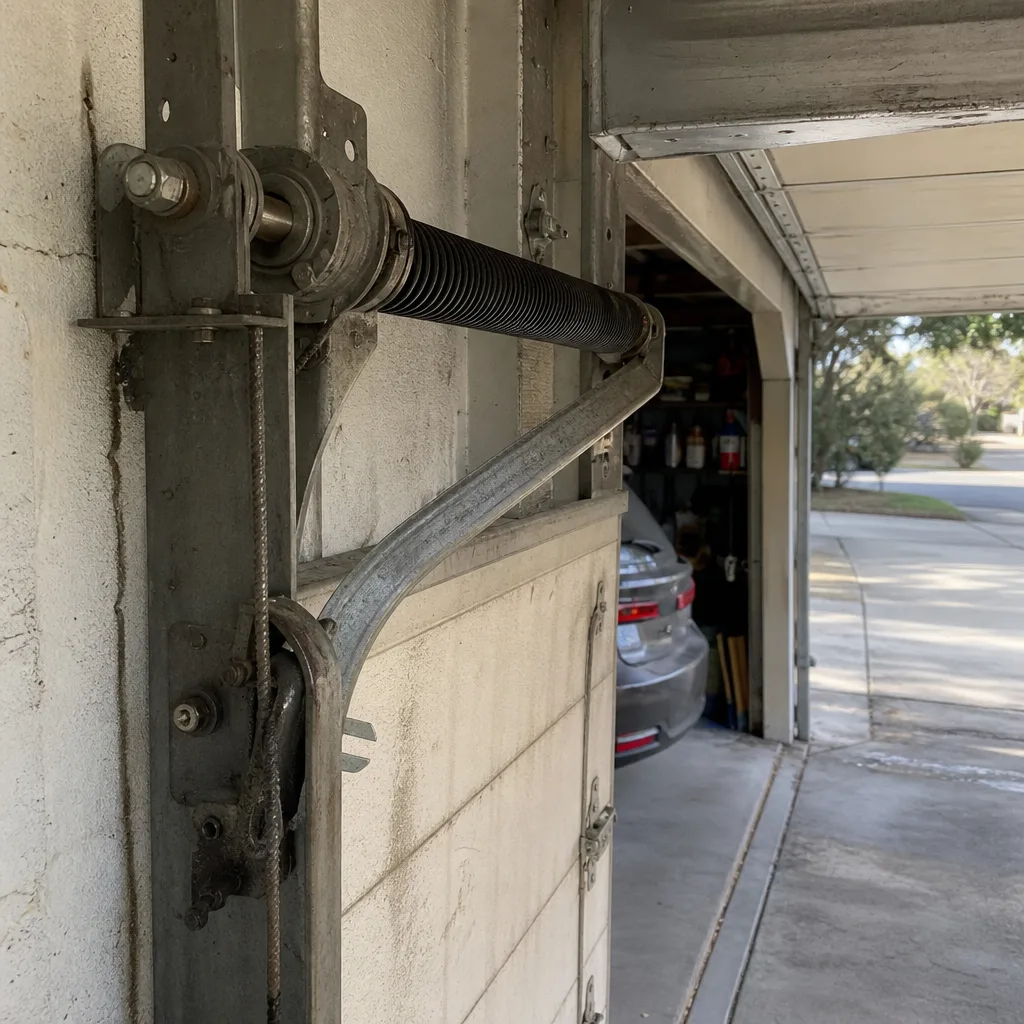 Before
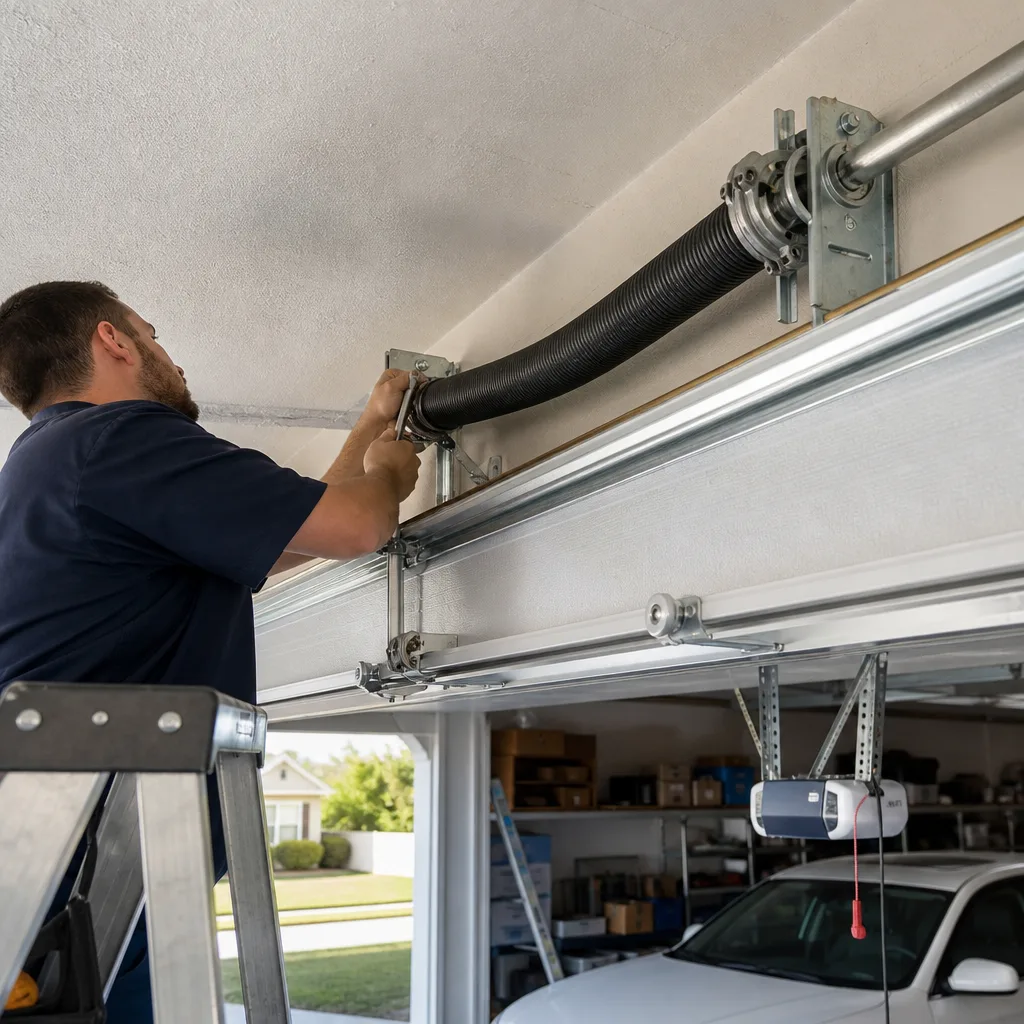 After
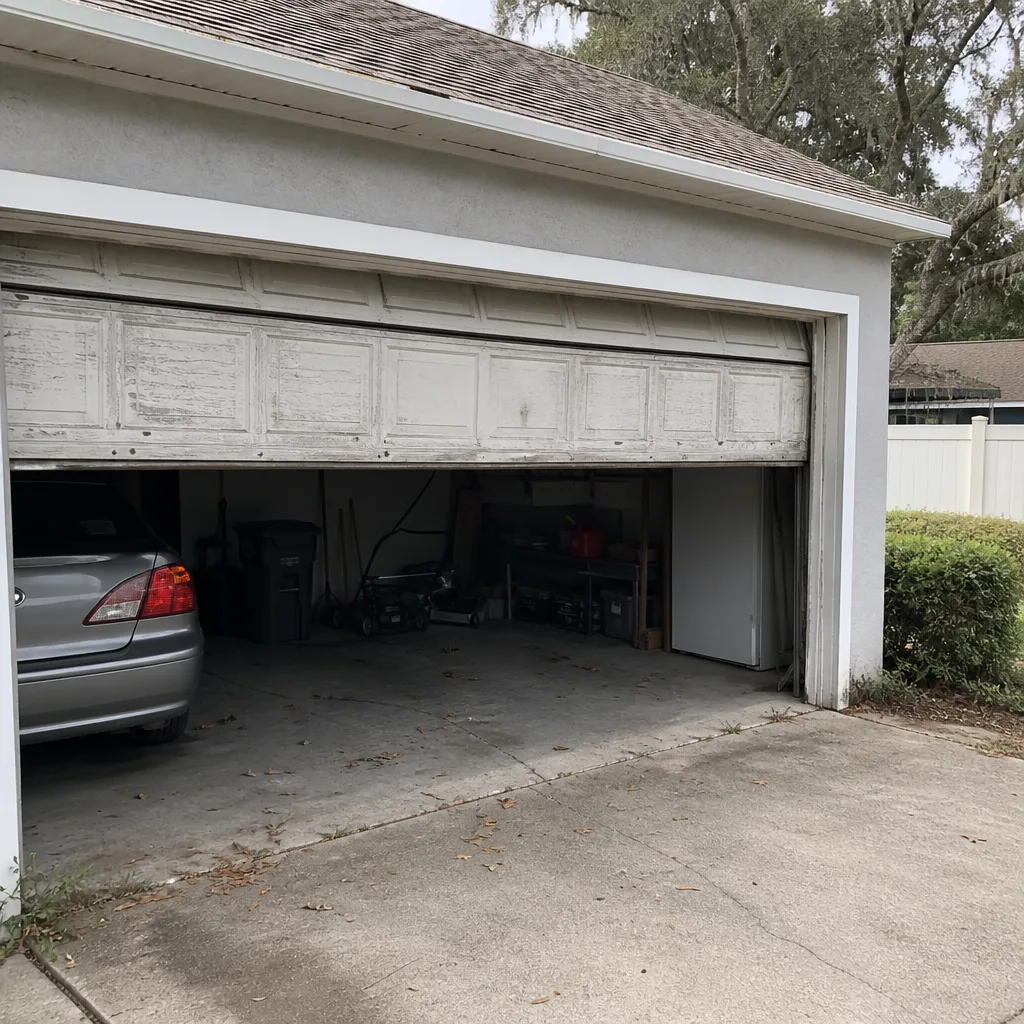 Before
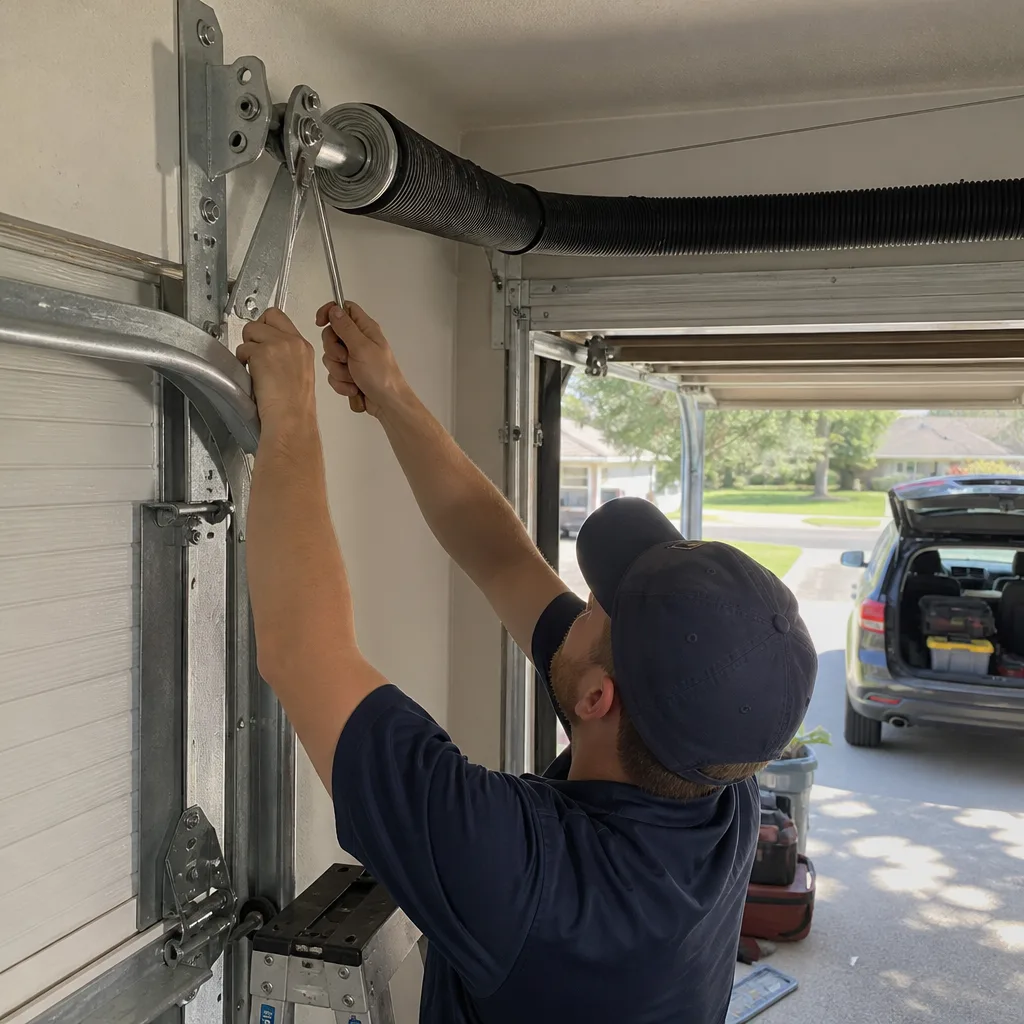 After