
Last updated October 30, 2026
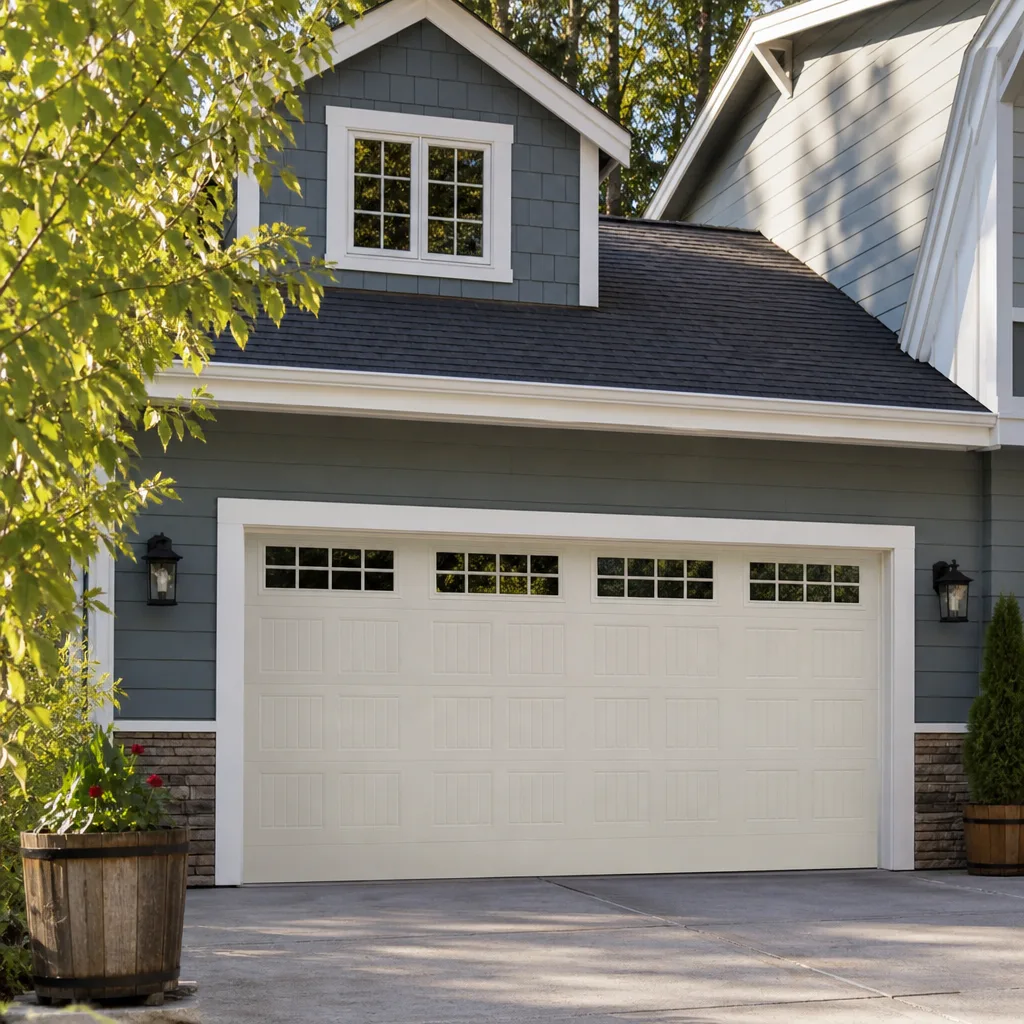
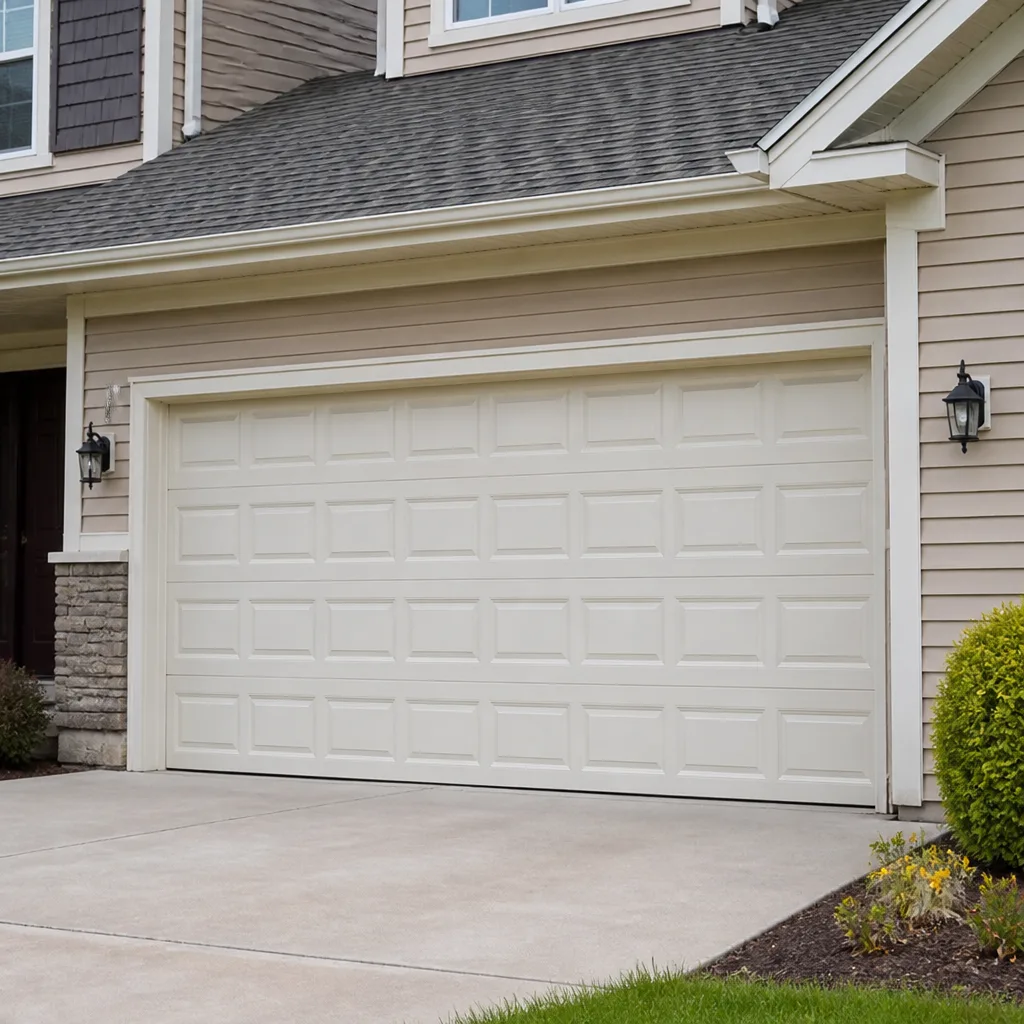 Raised-panel steel
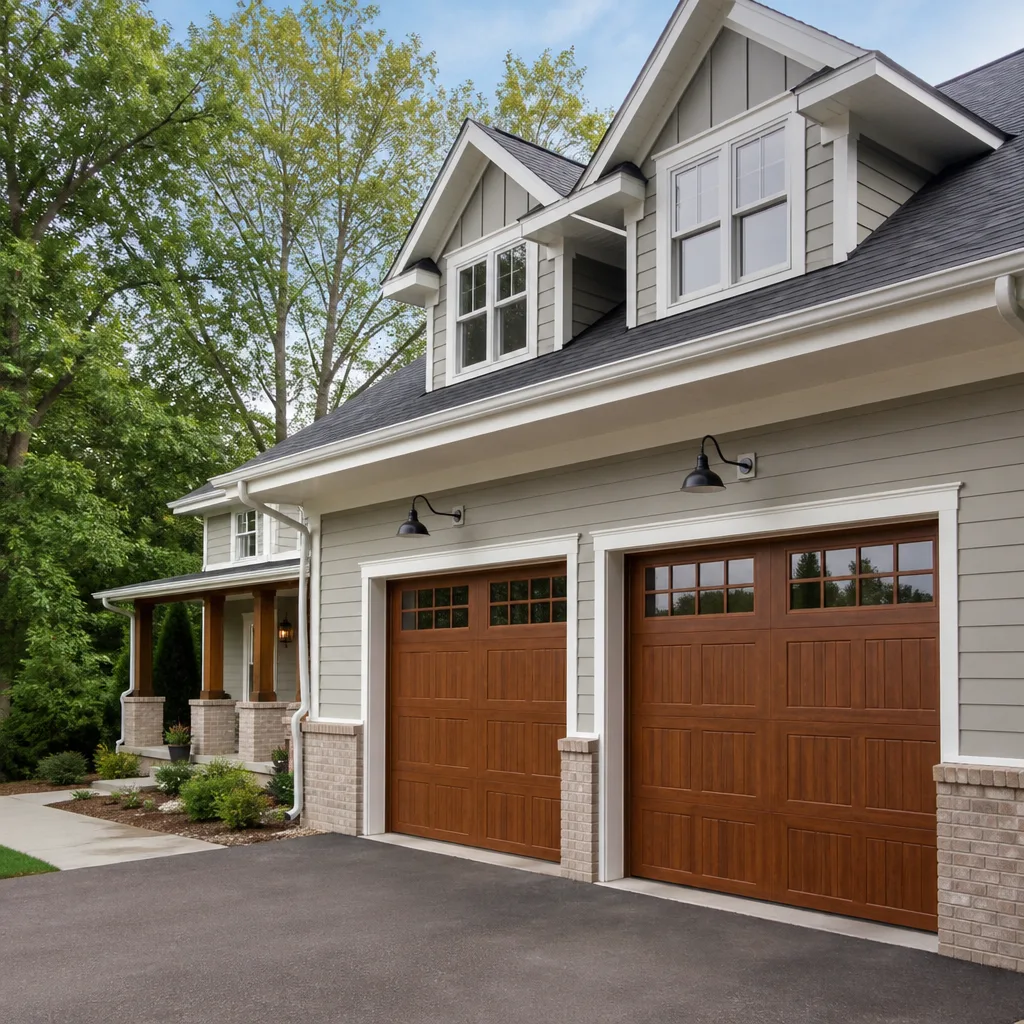
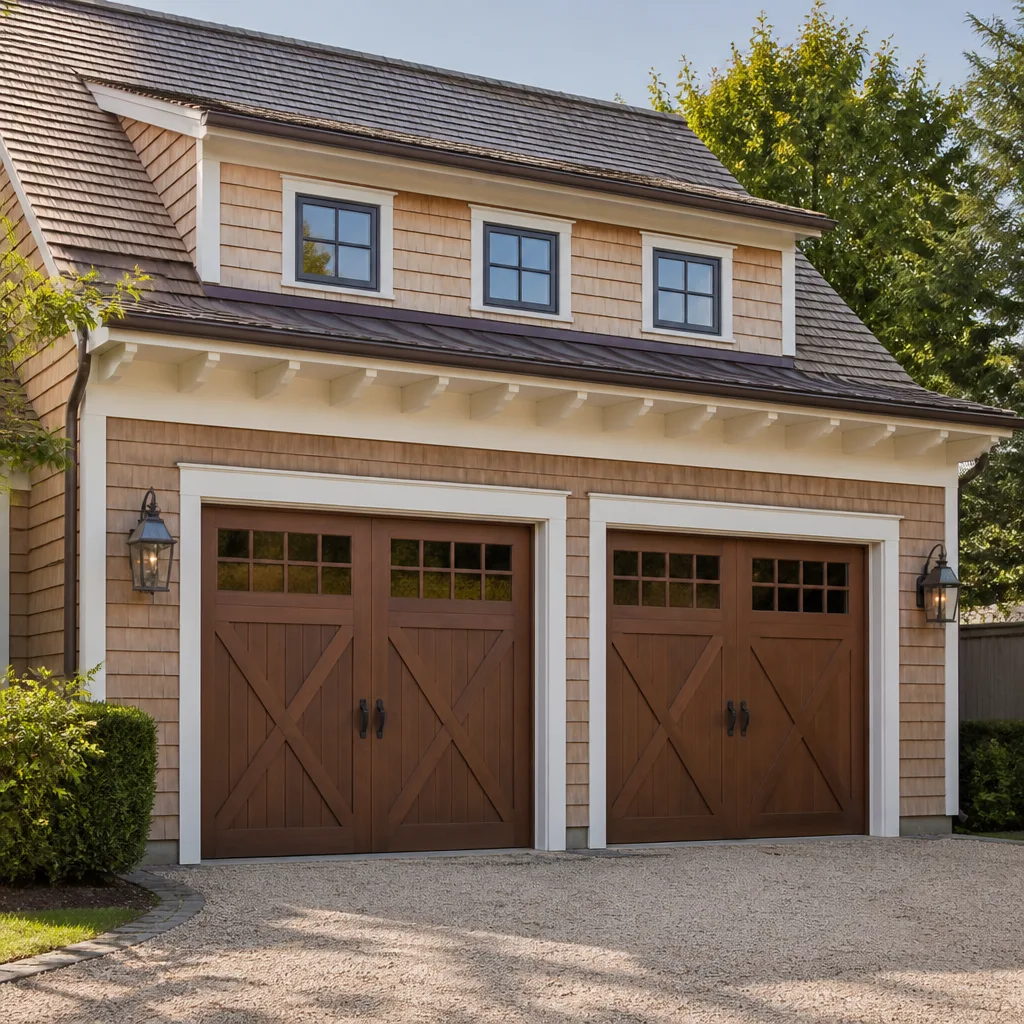 Carriage house
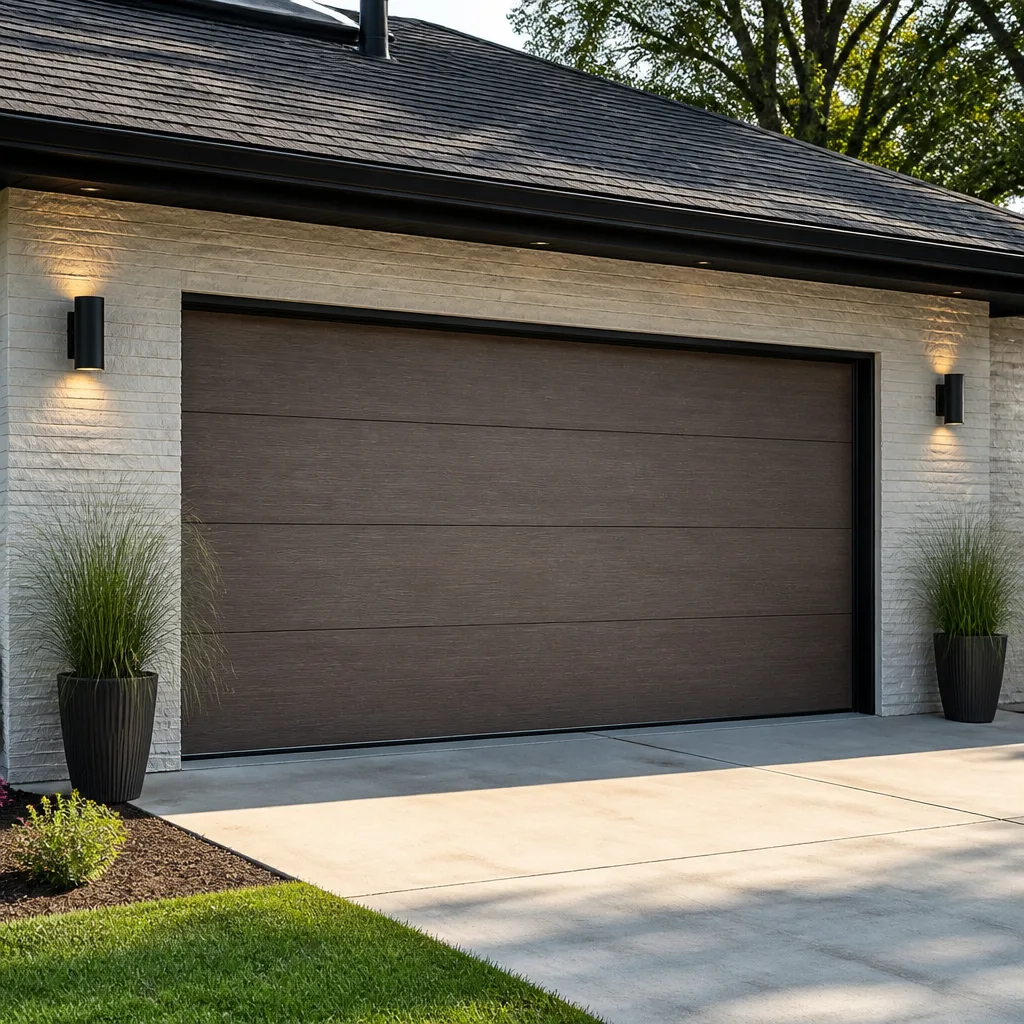 Modern flush
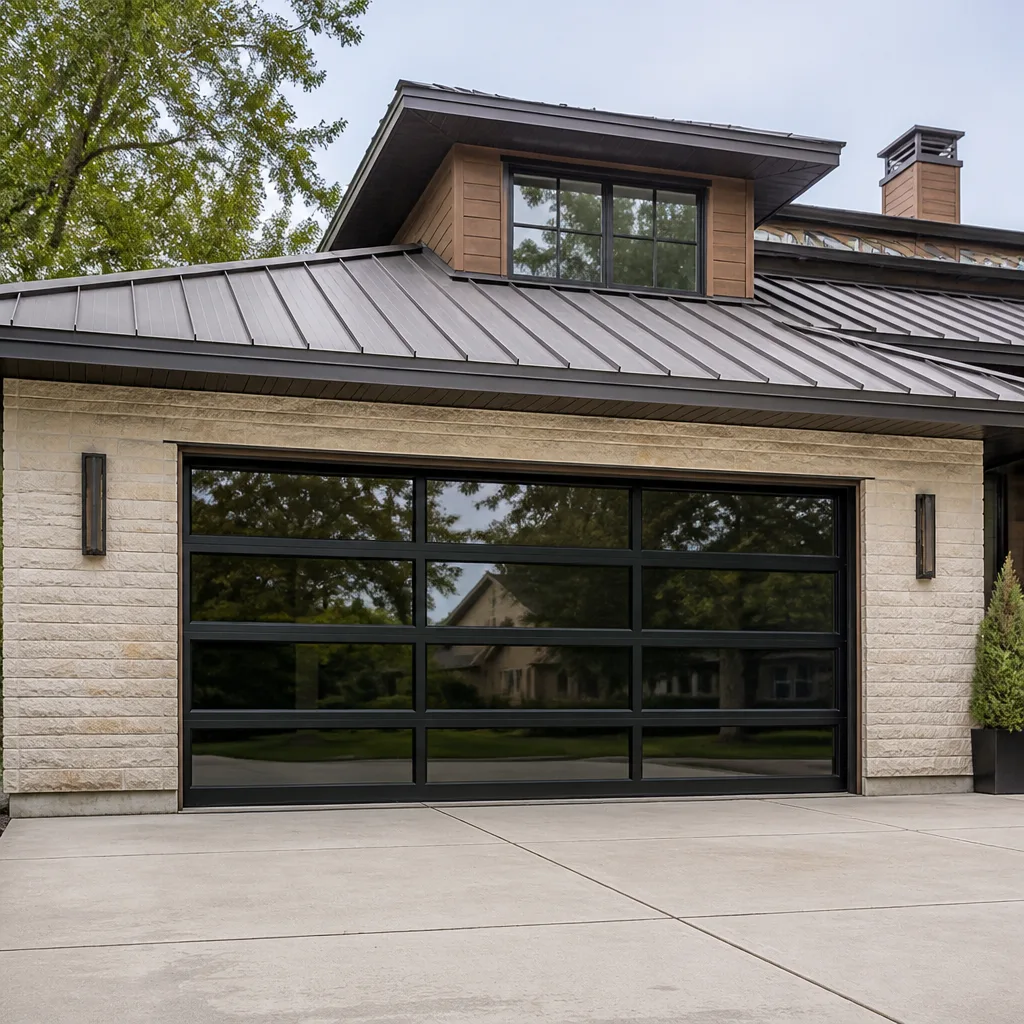 Full-view glass
 LiftMaster openers
 Chamberlain openers
Full 25-point door and opener safety check with every visit - springs, cables, rollers, tracks, and your LiftMaster or Chamberlain opener included
You get a price before we start. It does not change when the truck arrives.
Get your free estimateDIY vs Professional Garage Door: The Ocala Homeowner’s Decision Guide
Every year, emergency rooms across Florida treat homeowners for garage door injuries that began as a simple weekend project. Torsion springs under tension don’t give warning signs before they release, and the mechanical force involved is measured in hundreds of pounds. Here’s the counterintuitive part: most Ocala homeowners who get hurt aren’t first-timers fumbling through a YouTube tutorial. They’re experienced DIYers who misjudged one variable. This guide walks through which garage door tasks you can safely handle with basic tools, which ones demand caution, and which ones should never be attempted without a trained professional. We’ll use real cost comparisons, Florida-specific building context, and a task-by-task risk breakdown so you can decide with clarity, not guesswork. For more guides & resources on keeping your home safe, explore our blog.
Styles & brands we work with
Quick Answer
For most Ocala homeowners, the smart split is this: handle the simple, low-risk maintenance tasks yourself (lubrication, sensor alignment, visual inspections, weather stripping), but call a professional for anything involving torsion or extension springs, cable replacement, or structural track work. The cost difference shrinks dramatically once you factor in tool purchases and mistake-driven re-dos, while the injury risk difference grows exponentially. Read on for the detailed breakdown behind that answer.
Table of Contents
- The Risk Matrix: Which Jobs Are Actually Safe
- The Torsion Spring Reality: Why This One Job Changes Everything
- Florida-Specific Considerations: Permits, Humidity, and Resale
- The Honest Cost Comparison: DIY vs Hiring a Pro
- Proprietary Components: When Your Brand Makes DIY Impractical
- The Tool Inventory Test: What You Actually Own vs What You’d Need
- Scenario Roadmap: What Should You Do, Based on Your Specific Problem
- Common Mistakes to Avoid
- When to Call a Professional
- Frequently Asked Questions
- The Bottom Line
The Risk Matrix: Which Jobs Are Actually Safe
Most DIY versus professional debates treat all garage door work as one big generic category. That’s a mistake. The honest framework is a three-tier risk stratification based on documented injury rates, damage potential, and the finesse factor required. Here’s how every common job in your Ocala garage breaks down:
Tier One: Homeowner-Safe (Basic Tools, Minimal Risk)
- Lubricating rollers, hinges, and tracks: A spray can of garage door lubricant (not WD-40, which attracts dirt), a rag, and ten minutes. No injury potential beyond a bit of overspray.
- Photo-eye sensor cleaning and alignment: A clean cloth and gentle adjustment. Worst case, the door refuses to close until you get it right, which is the door protecting you rather than a failure.
- Visual inspections: Look for fraying cables, rust spots on springs, loose bolts, and worn weather stripping. Document what you see with photos.
- Weather stripping replacement: Pull out the old strip, push in the new one. No spring tension involved.
- Remote battery replacement and reprogramming: Follow the manual. Even a mismatched remote won’t cause physical injury.
These Tier One tasks ask for observation and light maintenance. They’re the equivalent of checking your oil versus replacing your transmission. No special training needed, no real downside to getting it slightly wrong, and they genuinely extend the life of your system when done regularly.
Tier Two: Proceed With Caution (Medium Risk, Specific Knowledge Required)
- Track bracket tightening: Loose bolts are common in Ocala garages where the humidity cycle swells and contracts wood. But overtightening can misalign tracks and force the door off its rollers. Use a socket wrench, not an impact driver, and check the door’s balance after.
- Roller replacement on non-spring-loaded hinges: The top roller bottom bracket is under tension. The side rollers are not. Know the difference before touching anything.
- Door balance testing: Disconnecting the opener and manually lifting the door is safe. Releasing opener tension if the door slams shut is not. If your door won’t stay open at the halfway point, that’s diagnostic information for a professional, not an invitation to adjust things yourself.
- Keypad programming: Safe, but proprietary protocols on some Chamberlain and Genie openers mean a misstep locks you out temporarily. Annoying, not dangerous.
Tier Three: Professional-Only (High Injury Risk, High Damage Potential)
- Torsion spring replacement and adjustment.
- Extension spring replacement.
- Cable replacement or re-tensioning.
- Track realignment after an impact.
- Opener replacement when the unit is hardwired.
The reasoning behind each Tier Three classification is straightforward. A torsion spring under full winding stores anywhere from 50 to 150 foot-pounds of torque depending on door weight, which translates into a sudden release of hundreds of pounds of force. When a winding bar slips, it becomes a projectile. Cables under tension can sever a finger. Tracks that snap back into place during adjustment can crush a hand. None of these injuries are theoretical. The Consumer Product Safety Commission has tracked garage door related injuries since 1982, and the overwhelming majority stem from spring and cable work by untrained individuals. A homeowner in Ocala can afford a professional visit. What nobody can afford is a permanent hand injury.
To be clear about the diagnostic approach we recommend: start every garage door issue with a Tier One visual check. Note what you see. If the problem involves any component under spring tension, that’s not a call to YouTube, it’s a call to Garage Door Repair in Ocala.
The Torsion Spring Reality: Why This One Job Changes Everything
If you read nothing else in this guide, read this section. The torsion spring is the single component that makes the entire DIY versus professional question a settled matter for millions of homeowners.
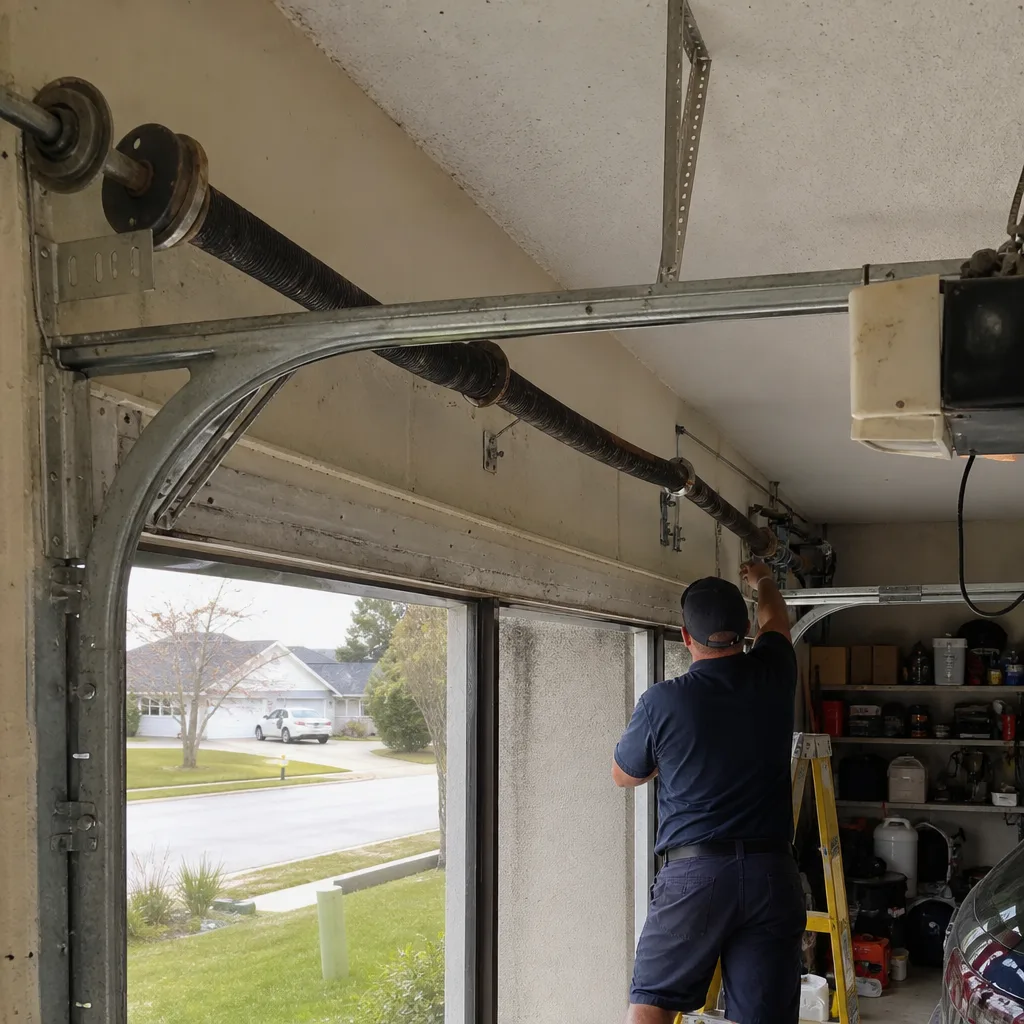
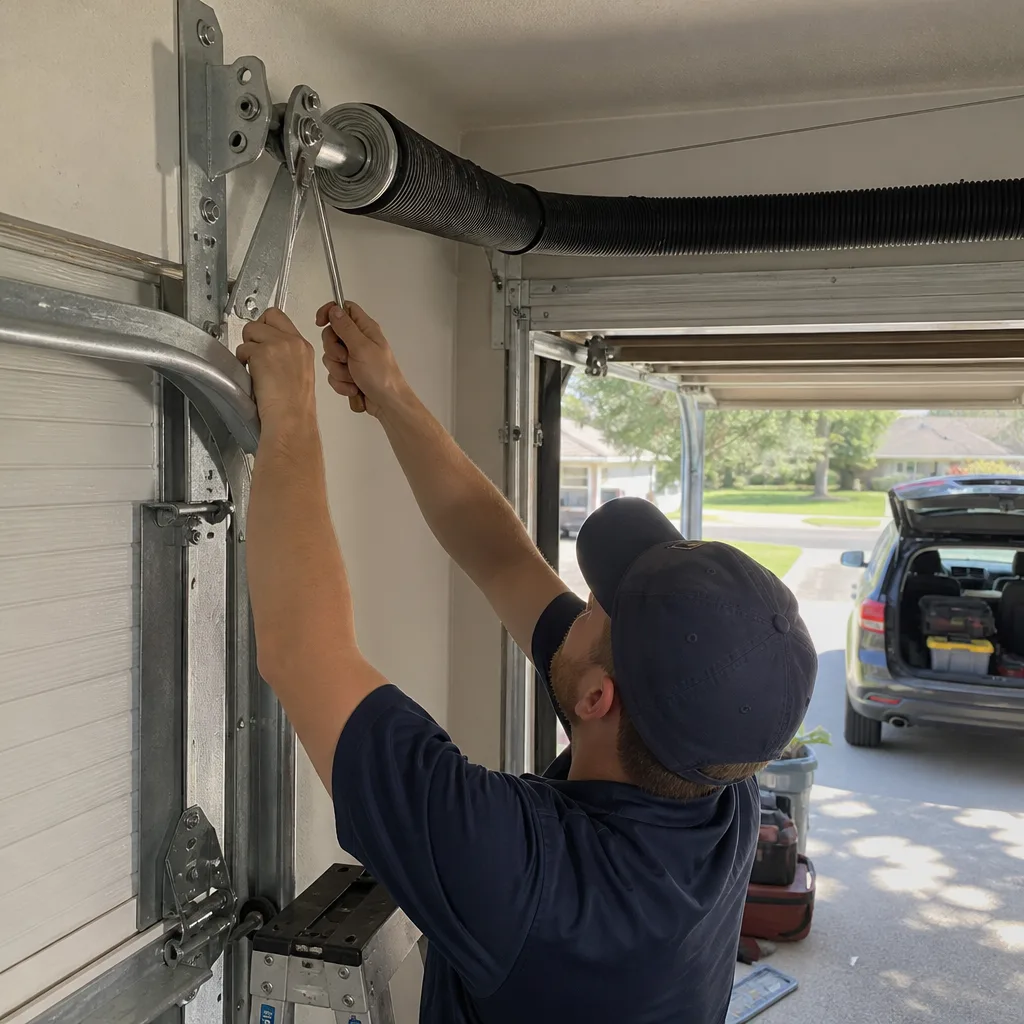
A torsion spring sits above your garage door opening, mounted to a shaft. When your door closes, the spring winds tighter, storing mechanical energy. When the door opens, that stored energy releases to do roughly 90 percent of the lifting work. Your opener is not doing the heavy lifting; it’s managing the spring’s energy. That’s why a broken spring means your opener strains against a door that suddenly weighs 150 to 300 pounds of dead weight.
Here’s what most people don’t understand until it’s too late: a torsion spring doesn’t fail slowly. It doesn’t sag or get visibly weaker. It snaps, usually after 10,000 to 15,000 cycles, in an instant that sounds like a muffled gunshot. If you’re lucky enough to be in the house when it happens, you know exactly what broke. If you’re in the garage, you want to be nowhere near the spring when it lets go.
Now here’s why this matters for the DIY question. To replace a torsion spring, you need two winding bars of a specific diameter. You insert them into the winding cone, one at a time, and rotate quarter-turns to wind or unwind the spring. The bars need to be solid steel. They need to fit snugly in the cone. They need to be held with your full attention for every single quarter-turn, because if one slips out under load, the spring unwinds violently and the bar becomes a metal spear. Homeowners have been killed doing this work. Others have lost eyes, fingers, use of hands.
The math that makes home repair “worth it” usually hinges on time and savings. Replacing a torsion spring yourself might save $200 to $400 in labor. But if the winding bar slips on turn 18, the cost calculation changes in ways no savings can compensate for.
We mention this not to scare you off all garage door work. That’s the opposite of our point. We bring it up because most guides bury this warning under generic “call a professional if unsure” language. The reality is precise: torsion spring work is the single most dangerous homeowner task in the American home, full stop. Not because it’s subtle, but because the energy involved is invisible, stored, and indifferent to your skill level. A master mechanic with 30 years of car experience has no transferable skill here. Winding bars don’t care about your background.
For Ocala homeowners, the humidity adds one more layer: corrosion on the winding cone and shaft can make the bars stickier, which increases the chance of slippage. Salt air doesn’t reach Ocala, but the summer moisture cycle does. Springs that have sat in humid garages for years look fine on the surface and bind unpredictably under torque. A fresh spring installed in a climate-controlled shop is one thing. A 12-year-old spring in an Ocala garage in August is a different animal entirely.
If your spring has broken, the decision is already made for you by physics and probability. Call a specialist who does this work daily. The Key Step Garage Door Repair home approach to spring replacement treats the door and drive system as one integrated unit: if the spring broke, the opener has been compensating for imbalance for weeks. That’s the kind of diagnostic sequencing that comes from doing garage door work specifically, not as a side service.
Florida-Specific Considerations: Permits, Humidity, and Resale
Florida building code and Ocala’s enforcement environment add several layers to the DIY versus professional decision that national guides ignore. Here’s what you need to know before picking up a wrench.
Permit Reality in Ocala
Most garage door maintenance and repair in Ocala does not require a permit. Lubricating, adjusting, replacing springs, swapping rollers, fixing cables, and similar repair work falls under routine maintenance. However, full door replacement and certain structural modifications can trigger permit requirements depending on the scope. If the work involves changing the size of the opening, altering load-bearing framing, or replacing a wind-rated door with a non-wind-rated one, the city wants it done by a licensed contractor with proper documentation.
The Florida Building Code includes specific wind-load requirements for garage doors because of hurricane exposure. Ocala sits inland, which reduces but does not eliminate those requirements. A door rated for wind load may be mandatory depending on your home’s construction date and zone. A DIY door swap that ignores wind rating isn’t just a code problem; it can void your homeowners insurance and complicate a future resale.
The Resale Variable
When you sell a home in Ocala, inspectors look at major systems. A garage door that’s visibly damaged, improperly installed, or non-compliant with local code becomes a negotiating point on the inspection report. If the buyer’s inspector can tell the door was a homeowner installation (non-matching hardware, irregular spacing, missing labels), you’re on the defensive. That $400 you saved by doing it yourself can turn into a $1,500 repair credit the seller demands at closing.
Humidity and Wear Rates
Ocala’s climate is unkind to garage door hardware in specific, predictable ways. Summer humidity accelerates rust on springs, cables, and track brackets. The temperature swings between the humid garage and the air-conditioned house cause wood and even steel to expand and contract, loosening fasteners over time. If you’re doing a Tier One visual inspection, look for surface rust on the springs and cables, softened or cracked weather stripping along the bottom seal, and any bolts that have backed out a few turns. Catching these early means a ten-minute fix instead of a service call.
For homeowners tracking their own maintenance, we recommend adding lubrication and inspection to your Ocala prep list twice a year: once before the summer heat sets in, and once before the cooler months. That rhythm matches the seasonal expansion cycles better than an arbitrary annual date.
The Honest Cost Comparison: DIY vs Hiring a Pro
Cost is where most DIY versus professional debates go wrong. The typical frame is parts cost versus service call. A torsion spring costs $50 to $100 at the parts counter. A service visit costs $250 to $400. See, the DIY logic goes, I save $200 by doing it myself.
That math only works if you already own every tool, get the repair right the first time, place zero value on your own time, and don’t account for the injury or damage risk in dollar terms. Here’s the honest arithmetic for a typical spring replacement in Ocala:
| Cost Category | DIY | Professional |
|---|---|---|
| Parts (spring pair) | $80 – $120 | $80 – $120 (included in quote) |
| Winding bars (proper steel, correct diameter) | $20 – $40 | Already owned by technician |
| Other tools (socket set, vice grips, ladder, safety glasses) | $50 – $150 if not already owned | Already owned by technician |
| Time (including research, store run, full job) | 3 – 6 hours at your hourly value | 45 – 90 minutes, door back in operation |
| Mistake correction (wrong spring, stripped set screw, misaligned cable) | $50 – $200 additional parts | Warrantied work, re-service at no charge |
| Injury or damage risk | Non-zero, potentially catastrophic | Covered by company insurance |
| Realistic total | $150 – $500+ once you account for everything | $250 – $400, fixed and quoted upfront |
Notice what the honest comparison shows. The DIY savings range from $0 to maybe $150, and that’s before you factor in the value of your afternoon, the cost of a second trip to the hardware store when you realize you have the wrong spring size, and the probability of a mistake on a first-time job. When you add those in, the professional comes out ahead on expected value in most scenarios, and massively ahead on risk-adjusted value.
Price transparency matters here. A reputable garage door specialist in Ocala should quote you the full price before any work starts, including parts, labor, and the service visit. You agree to the number, then the work happens. There shouldn’t be any surprise line items when the invoice comes. That’s how Garage Door Repair in Ocala handles every job, and it’s the standard you should apply when comparing any option, DIY or hired.
One more cost factor that rarely makes it into these comparisons: warranty. DIY spring replacement gives you the parts warranty only. If the spring fails prematurely, you’re doing the job again for free labor. A professional installation typically covers parts and workmanship. If the job fails through no fault of yours, the company comes back and makes it right. That’s real economic value, not a marketing line.
Proprietary Components: When Your Brand Makes DIY Impractical
Some Ocala homeowners assume that with enough patience and the right YouTube video, any garage door system can be repaired at home. That assumption crashes into reality with certain brands that rely on proprietary or semi-proprietary components.
Take Genie, for example. Several Genie opener models use unique rail systems and proprietary travel modules that aren’t interchangeable with aftermarket parts. If a Genie logic board fails, the aftermarket version might work, or it might cause communication errors with the motor. A homeowner who buys a “universal” replacement board for a Genie can easily end up with a dead opener and no refund, because the part technically powered up but didn’t integrate.
Chamberlain has similar characteristics in its security protocols. The encrypted rolling code technology that makes Chamberlain openers secure is the same system that frustrates aftermarket keypads and replacement remotes. The paired components need to come from the right compatibility list, or the opener simply won’t recognize them. That’s not a door you can out-DIY with persistence.
Clopay and Amarr doors exhibit this on the mechanical side. Custom track profiles, specific roller sizes, matching hinge plates, and exact panel dimensions mean that a “close enough” replacement part from the big box store often isn’t close enough. You bolt it on, close the door, and discover the door binds three inches from the ground. Or the panel doesn’t seat flush. Or the new roller wears out the track alignment over the next six months.
The practical takeaway: before you attempt any DIY repair, identify your door brand and your opener brand. Check whether the parts you need are truly universal or proprietary. The tell-tale signs of a proprietary system are unusual connector types, non-standard screw spacing, and a total absence of aftermarket options listed as compatible. If you find yourself on a parts website trying to cross-reference part numbers for your specific model, that’s your signal that professional help, with access to brand-specific suppliers, will save you hours of dead ends.
We work across eight major brands, including the ones named above, precisely because brand familiarity changes diagnostic speed. A technician who knows the difference between a Chamberlain belt-drive revision 3 and revision 4 doesn’t spend your billable hour flipping through a manual. Learn which brands demand specialist knowledge before you commit to a DIY repair that turns into a non-functional door and a frustrated afternoon.
The Tool Inventory Test: What You Actually Own vs What You’d Need
Here’s a practical filter for any garage door job you’re considering. Before you commit to DIY, run your tool inventory against the actual requirements. This test alone will eliminate most spring and cable work from your to-do list.
- Do you own solid steel winding bars of the exact diameter for your spring cone? Not screwdrivers, not rebar, not pipe: proper winding bars. If the answer is no, torsion spring work is off the table. Period.
- Do you own a torque wrench or at minimum a high-quality socket set with the specific socket sizes for your track bolts and bearing plates? A standard household socket set may not include the larger sizes required for garage door hardware.
- Do you have a properly rated step ladder or platform that gives you stable, two-footed access to the spring shaft area? Garage door work requires precision under load. Wobble is not acceptable.
- Do you have a partner available for the duration of the job? Many garage door repairs are two-person jobs when done safely. Holding a door panel while removing hinge bolts alone is how panels get dropped and feet get broken.
- Do you have proper eye protection and work gloves rated for mechanical work? Regular sunglasses and garden gloves don’t count when a cable lets go.
- Can you identify the exact replacement part number before disassembling anything? If any disassembly step comes before parts sourcing, you risk leaving your garage door open and inoperable overnight. Ocala’s humidity and wildlife make that a genuine problem.
If you answered no to any of the first four questions, professional service is the economically rational choice. The tool purchase alone offsets most of the labor savings, and that’s before you account for the learning curve. The homeowners who get hurt are overwhelmingly the ones who improvised with a substitute tool: a screwdriver where a winding bar belongs, a crescent wrench where a socket should be, a friend holding a door where a proper brace should go.
This is not gatekeeping. It’s the same logic you’d apply to any specialized work. You wouldn’t replace your own roof with a hammer and a prayer. You wouldn’t rewire your panel with wire strippers from the dollar bin. Garage door springs and cables demand the same respect.
Scenario Roadmap: What Should You Do, Based on Your Specific Problem
Let’s translate the framework into direct answers for the most common situations Ocala homeowners face. Find your scenario and you’ll have a clear next step.
Scenario 1: The opener runs, but the door doesn’t move.
Your move: Tier Two diagnostic, then likely professional. Disconnect the opener from the door using the red emergency release cord, then try to lift the door manually. If it raises smoothly and stays open, the door is balanced and the problem is in the opener. That’s an Garage Door Opener Repair in Ocala situation. If the door is heavy or refuses to stay up, a spring has failed and that’s professional-only work, immediately.
Scenario 2: The door opens a few inches, then reverses.
Your move: Tier One check first. Clean your photo-eye sensors with a soft cloth and check for anything in the door’s path. Ocala garages collect everything from pool toys to yard tools in that lower track area. Still reversing? The travel limits or force settings may need adjustment. That’s a Tier Two task if you’re comfortable with the manual, or a simple service call if you’re not.
Scenario 3: You hear a loud bang and the door looks crooked.
Your move: Professional, same day. A snapped spring or sheared cable has thrown the door out of balance. Do not operate the door. Do not try to straighten it manually. Unplug the opener and call for service. This is the classic Ocala emergency call, and the fix is typically a spring or cable replacement completed in one visit. For preparation tips, see our Garage Door Emergency Preparedness Guide for Ocala Homes.
Scenario 4: The door is noisy but working fine.
Your move: Tier One, absolutely DIY. Lubricate the hinges, rollers, and springs with garage door lubricant. Check for loose bolts and tighten gently. Noise that persists after lubrication could indicate worn rollers or a dry bearing plate, which you can evaluate with a visual inspection. No urgency, no danger, no need for a pro unless the noise gets worse.
Scenario 5: The door is 25 years old and showing rust, wood rot, or panel damage.
Your move: Consult for Garage Door Installation in Ocala. At that age, repair costs accumulate faster than a replacement cost amortizes. A new door with modern insulation values and current safety features is often the more economical long-term decision. This is a measured, scheduled project, not an emergency. Expect a consultation that includes measuring, material selection, and a written price before any work begins.
Scenario 6: The door reverses randomly, but only sometimes.
Your move: Tier One inspection, then professional if it continues. Check sensor alignment and clean the lenses. Check that the safety beam isn’t being interrupted by anything, including spider webs and dust buildup, which are common in Ocala’s humid garage environments. If the problem is intermittent and not explained by a visible cause, there may be a logic board or wiring issue that requires diagnostic equipment.
Common Mistakes to Avoid
- Using the wrong “lubricant.” WD-40 is a solvent, not a lubricant. It actually strips the grease that keeps your rollers and hinges working smoothly. Use a silicone or lithium-based garage door lubricant, available at any Ocala hardware store, applied to hinges, rollers, and the torsion spring.
- Assuming a “universal” part is actually universal. Brand-specific openers and doors, particularly Chamberlain and Amarr models, reject aftermarket parts more often than they accept them. Always verify compatibility before buying.
- Tightening every bolt on the track indiscriminately. The track bolts are set to hold alignment, not to be torqued to 80 foot-pounds. Overtightening warps the track and causes the door to bind. If a bolt is loose, snug it and check door operation. That’s it.
- Ignoring the safety cable on extension springs. If your older Ocala home has an extension spring system, the safety cable running through each spring is there to contain the spring when it snaps. Removing or not reinstalling that cable during any work turns a loud bang into a projectile hazard.
- Disconnecting the opener to diagnose a problem while the door is in the open position. If a spring is broken or a cable is frayed, that door can drop with tremendous force when you release the emergency cord. Lower the door first, or don’t touch it until a professional arrives.
- Making a repair decision based on a single internet video. Your door may be a different brand, a different spring type, or a different vintage than the one in the video. What worked for a 2015 Clopay in Phoenix won’t necessarily transfer to a 2008 Wayne Dalton in Ocala’s humidity cycle.
- Forgetting that professional quotes in Ocala are typically free and binding. You can get a number, compare it against your true DIY cost estimate, and decide with full information. Skipping the quote because you assume it’ll be too expensive is a mistake that costs homeowners money in the long run.
When to Call a Professional
Call a professional when the problem involves any component under spring or cable tension. Call a professional when the door is off its track, making metal-on-metal sounds it didn’t make before, or showing visible damage to panels, rollers, or mounting hardware. Call a professional when the opener is more than ten years old and behaving erratically, because the diagnostic trail often leads to a circuit board problem that’s cheaper to identify correctly the first time. Call a professional when you’ve already spent more than one afternoon on a problem and the door still isn’t working right. The threshold shouldn’t be heroism; it should be whether another hour of your time is likely to change the outcome. When you’re at that point in Ocala, Key Step Garage Door Repair offers free estimates. Call (855) 795-2118 and we’ll give you a clear answer.
Frequently Asked Questions
Spring replacement in Ocala typically runs between $250 and $400 including parts and labor, depending on spring size and door weight. The exact price is quoted before any work begins, so you’ll know the number up front. Call (855) 795-2118 for a free estimate on your specific door.
You can attempt it, but torsion spring replacement is the single most dangerous home repair task in terms of injury severity when it goes wrong. The proper winding bars, the correct spring size, and the precise winding procedure are all non-negotiable. Most Ocala homeowners are better served by a professional with the right equipment and training.
Routine repair and maintenance does not require a permit. Full door replacement may require a permit if it changes the opening size, affects structural framing, or involves wind-load rating changes. A licensed garage door installer can tell you during the estimate whether your project triggers that requirement.
Most springs are rated for 10,000 to 15,000 cycles, which translates to roughly 7 to 12 years for a typical Ocala homeowner who cycles the door 4 to 5 times daily. Humidity and temperature swings in Florida garages can shorten that lifespan through surface corrosion, so regular visual inspection matters.
The most common cause is a broken spring or a disconnected emergency release. Pull the emergency release and try lifting the door manually. If it’s heavy or won’t stay up, the spring has failed. If it moves easily, the issue is in the opener and that’s a separate repair.
We work on eight major brands: LiftMaster, Chamberlain, Genie, Clopay, Amarr, Wayne Dalton, Craftsman, and Raynor. That includes both the door systems and the opener drive systems, so the entire setup gets handled under one call.
The Bottom Line
DIY versus professional garage door work isn’t a question of pride or skill. It’s a question of physics and probability. The safe tasks are genuinely safe, and a competent Ocala homeowner with a can of lubricant and a socket set can handle them confidently. The dangerous tasks are genuinely dangerous, and no amount of YouTube preparation changes the energy stored in a wound spring. Run the honest cost comparison, check your tool inventory, identify your brand, and decide with real information instead of assumption. When the job calls for a specialist, call one. Your door goes back in motion, and you avoid becoming a statistic in the process.
Written by the team at Key Step Garage Door Repair, serving Ocala since 2013.
See the difference
 Before
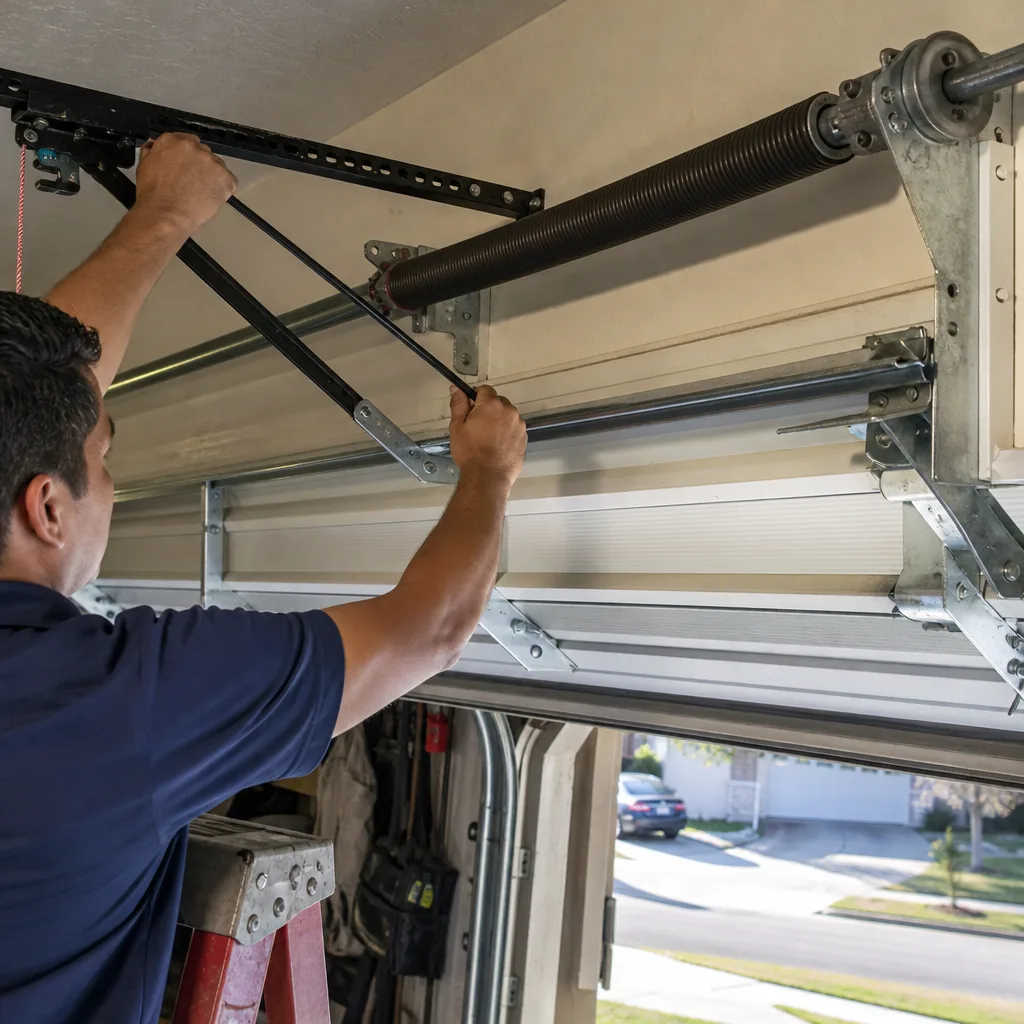 After
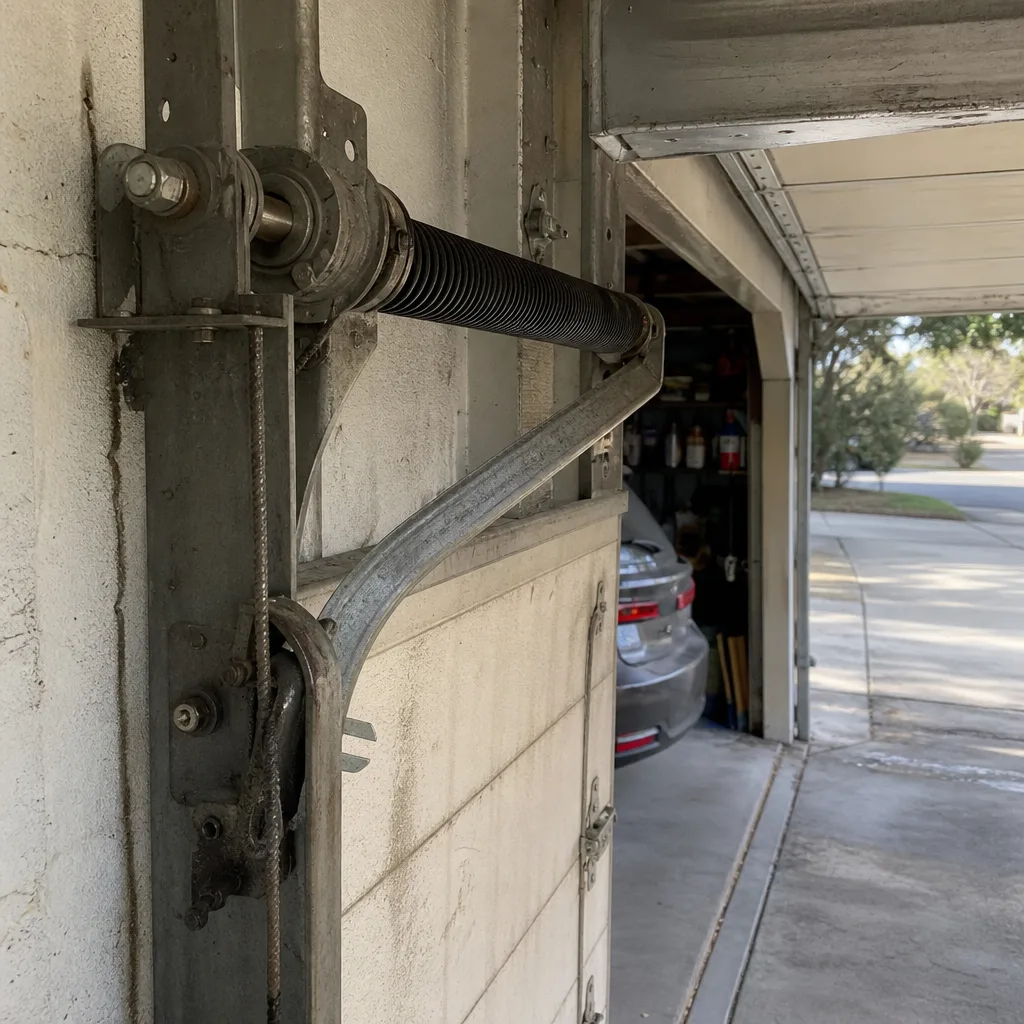 Before
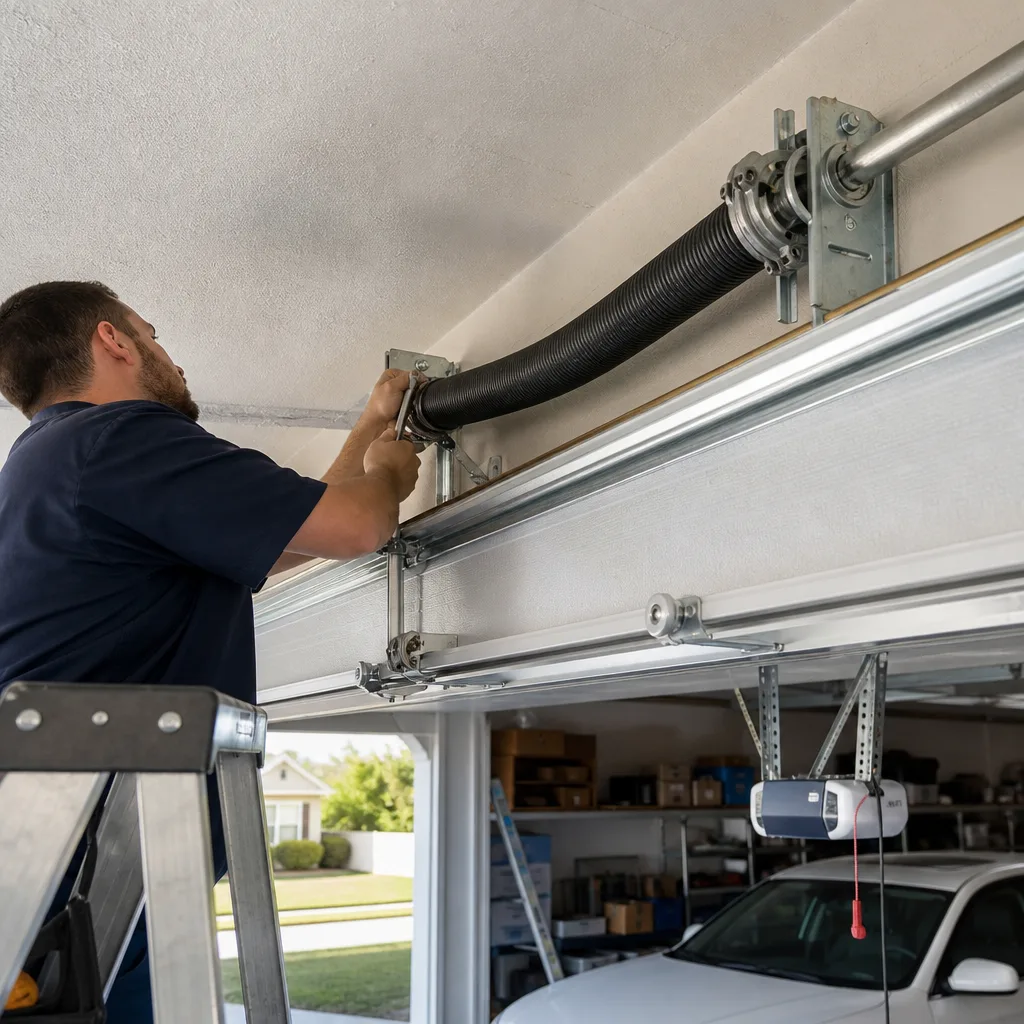 After
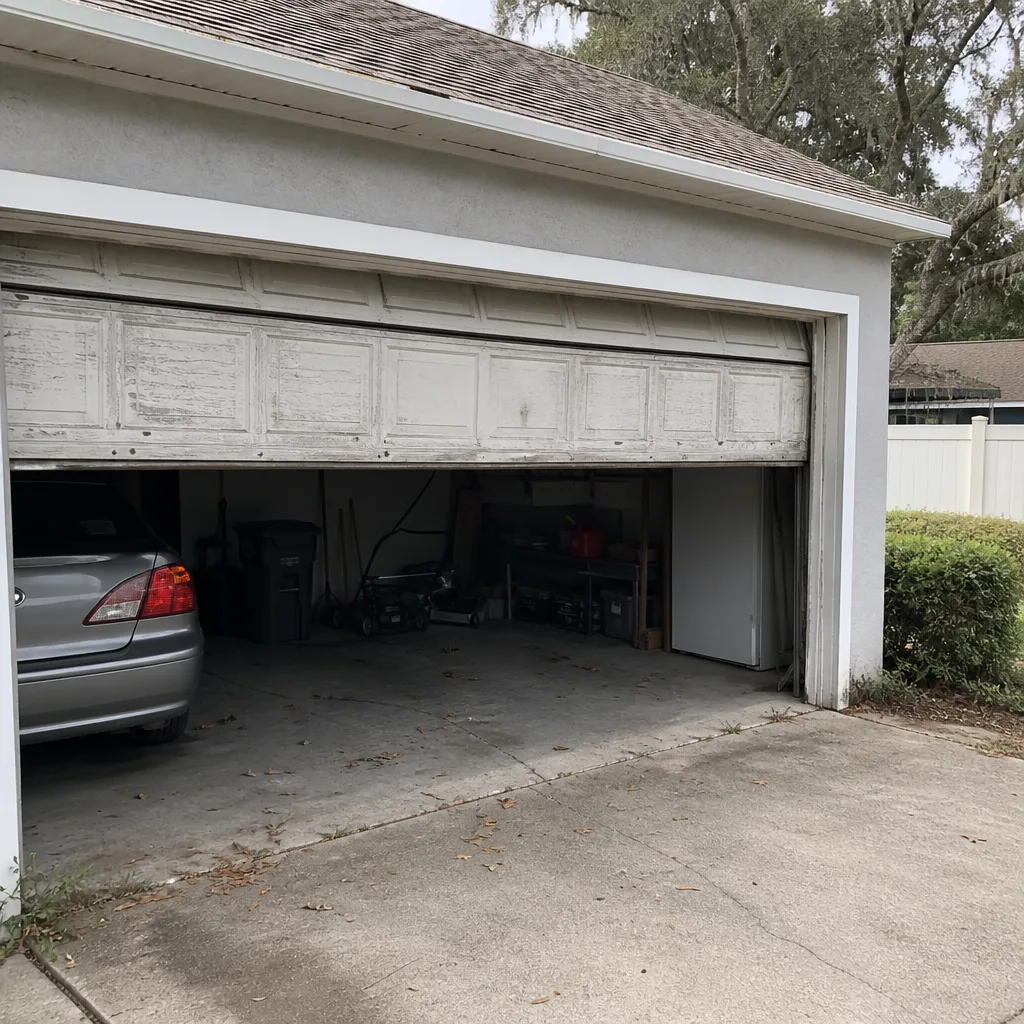 Before
 After