
Last updated October 30, 2026
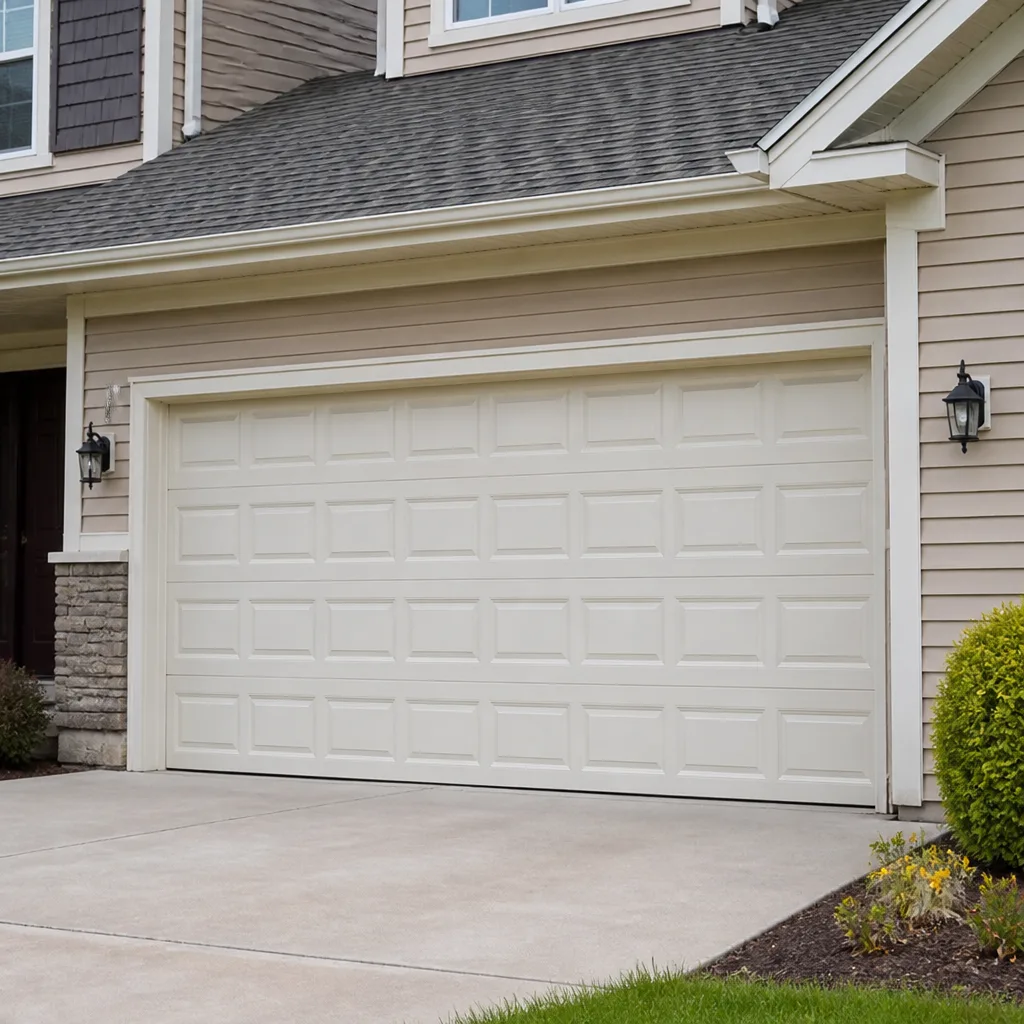 Raised-panel steel
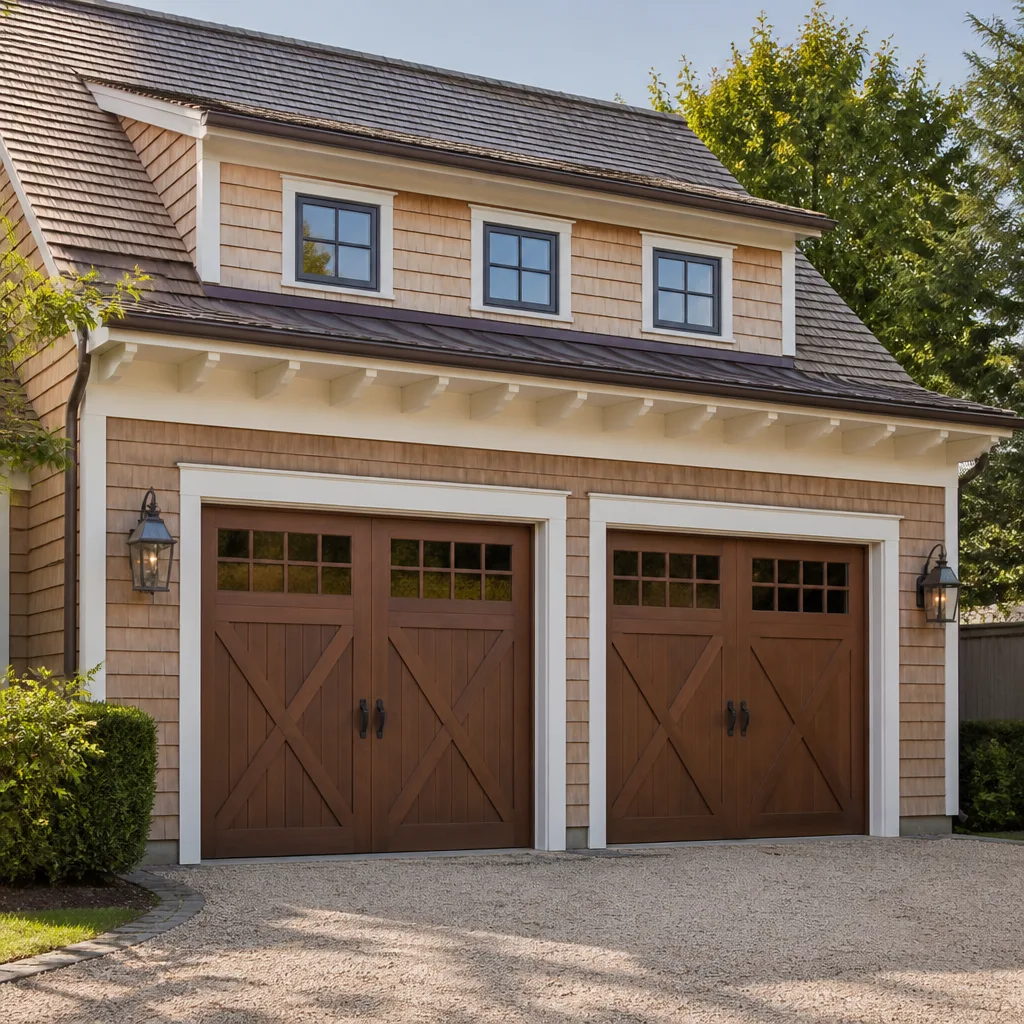 Carriage house
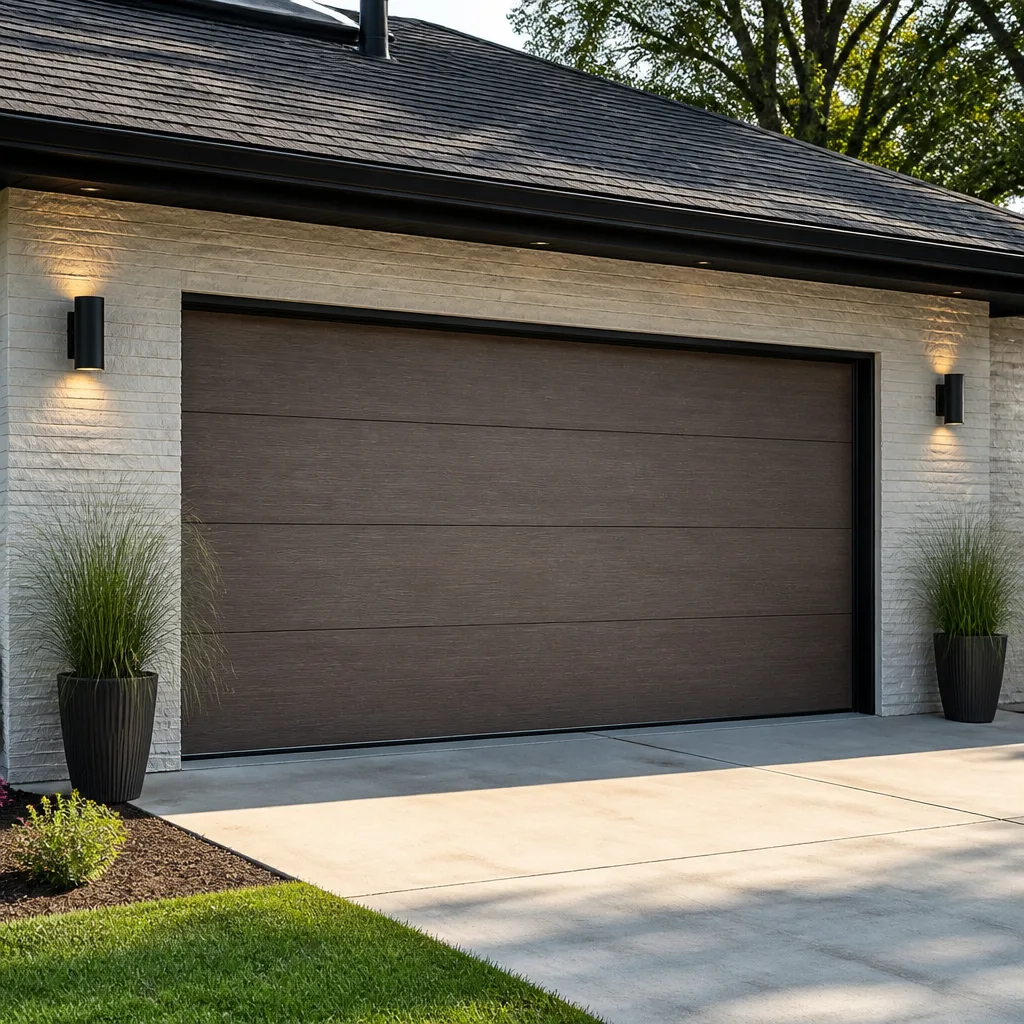 Modern flush
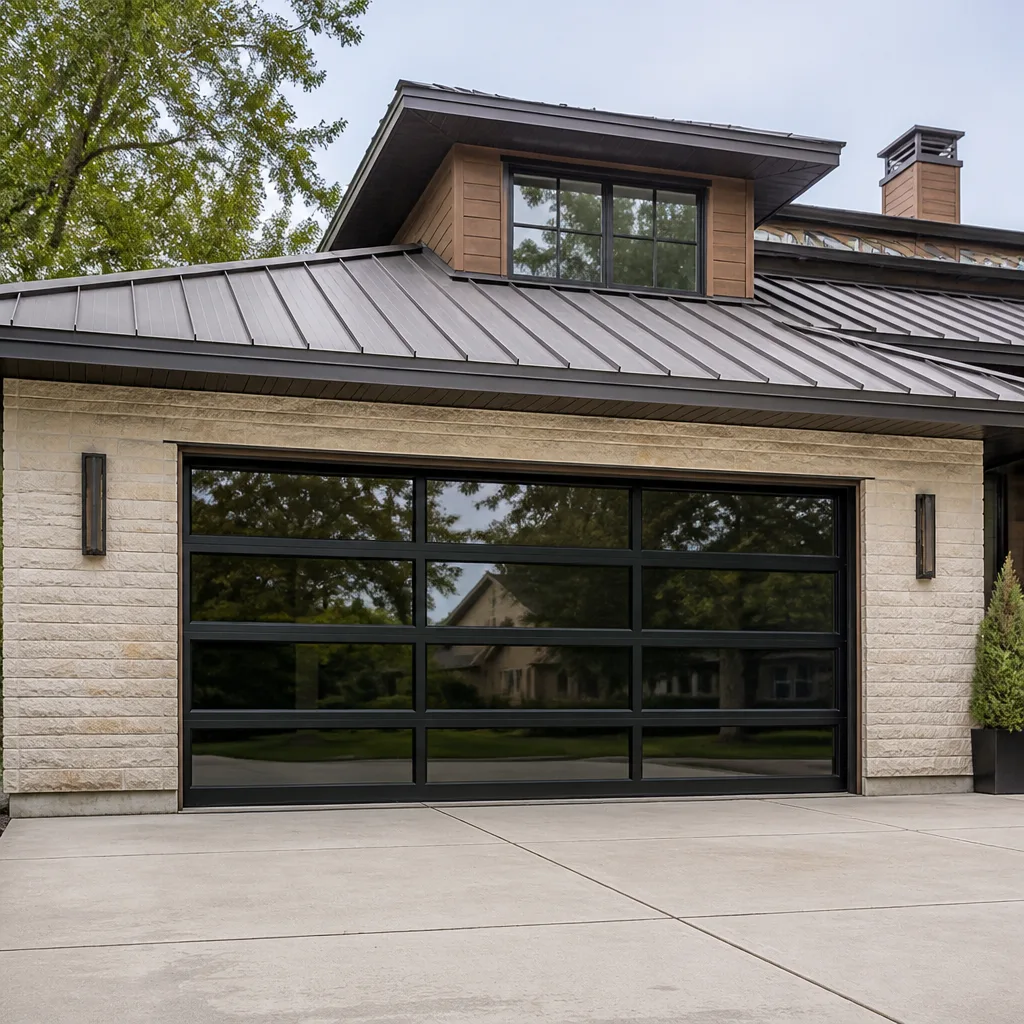 Full-view glass
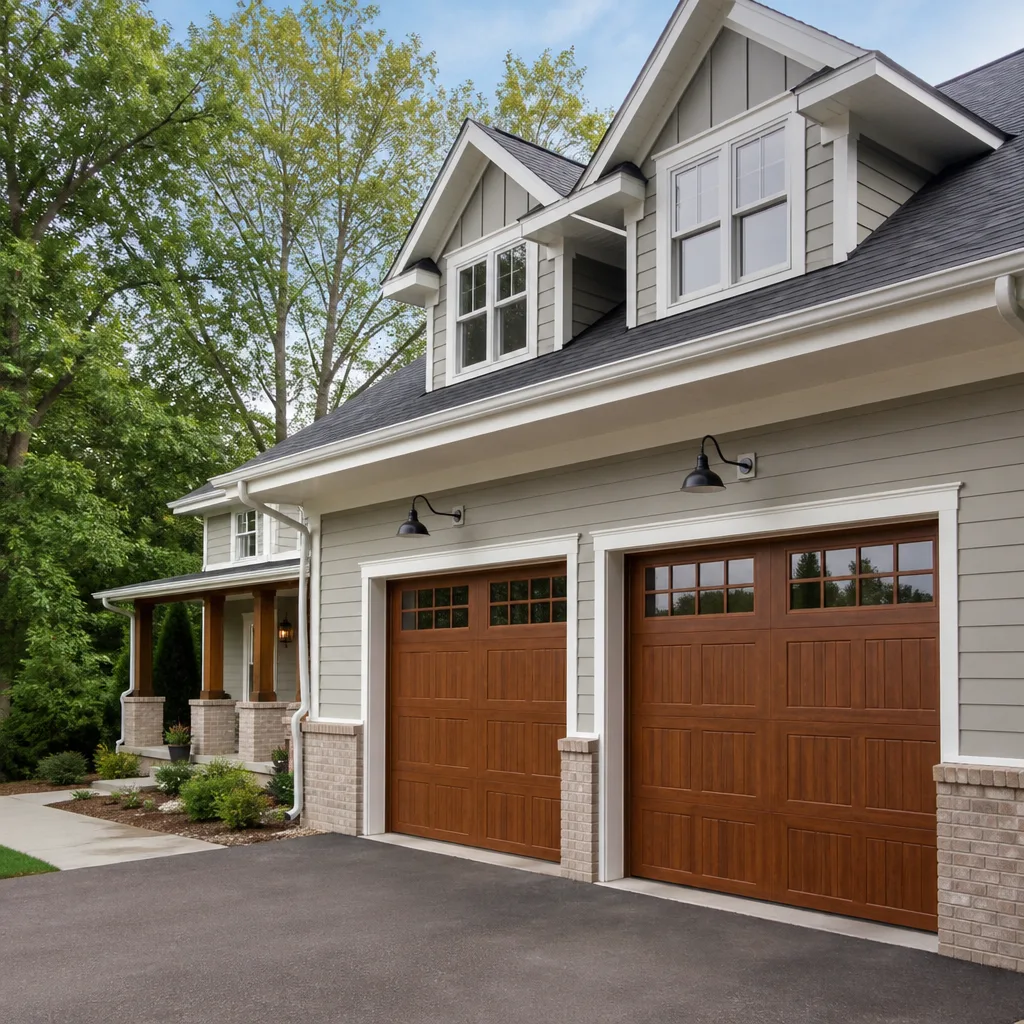 LiftMaster openers
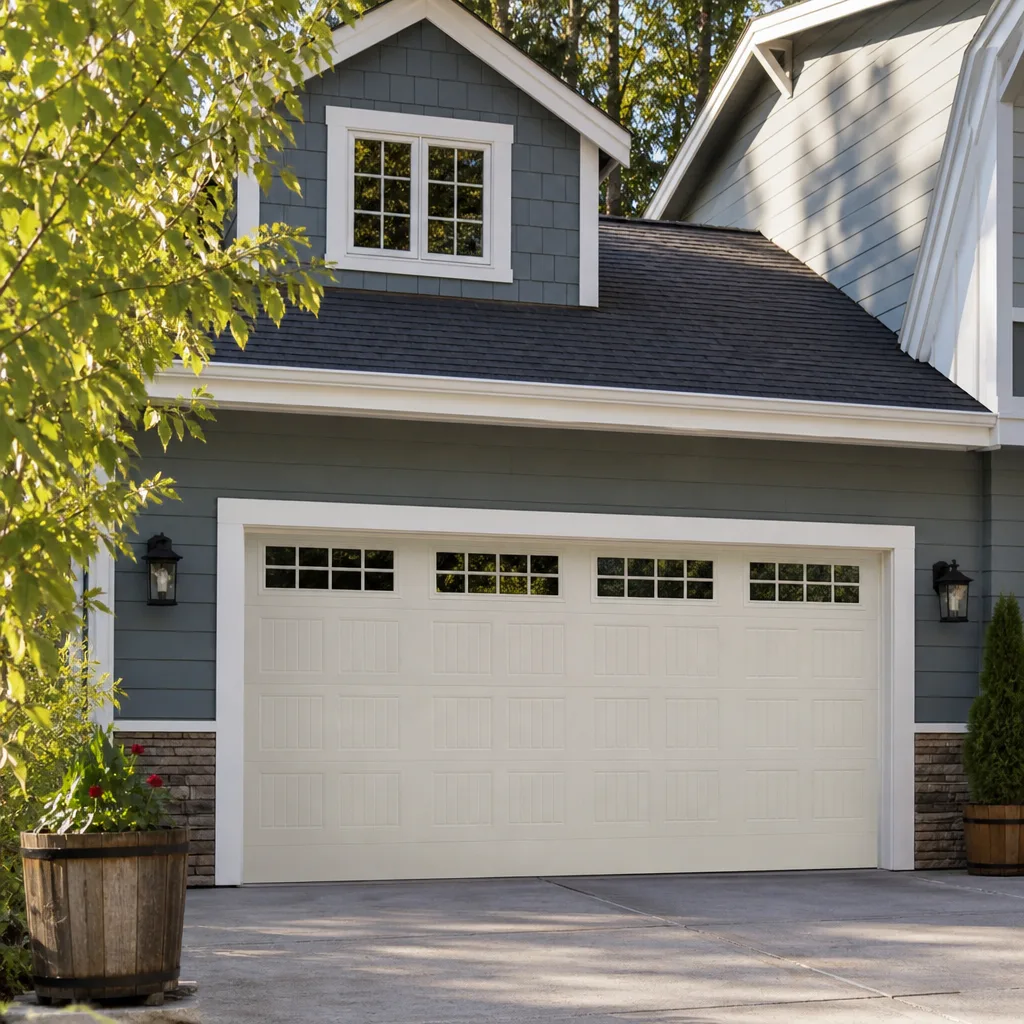 Chamberlain openers
Full 25-point door and opener safety check with every visit - springs, cables, rollers, tracks, and your LiftMaster or Chamberlain opener included
You get a price before we start. It does not change when the truck arrives.
Get your free estimateChoosing the Right Garage Door Brand: A Buyer’s Guide for Ocala
Walk into any garage door showroom north of Orlando and you’ll see rows of doors that look nearly identical under fluorescent light. Same raised panels. Same color swatches. Same warranty brochures. But the door that survives 15 Minnesota winters is not necessarily the door that survives 15 Ocala summers. Sustained humidity above 85%, afternoon temperatures in the mid-90s from May through September, and a UV index that punishes cheap paint systems all compress the gap between a good door and a bad one faster than most buyers expect. Steel thickness matters, yes. But it matters less than the paint chemistry protecting that steel, and less than whether the manufacturer has any authorized service presence within 50 miles of Marion County when something fails.
This guide evaluates garage door brands the way they actually perform in Ocala’s operating environment: how their materials hold up to humidity, how their finishes resist UV breakdown, how realistically you can get warranty service when a spring fails in July, and what’s actually installed in neighborhoods from Fore Ranch to Silver Springs Shores. For a deeper dive, see The Complete Guide to Garage Door in Ocala. You’ll learn how to read a steel gauge spec without getting misled, when R-value insulation is worth paying for, and which brands give you the fewest headaches over a decade of Florida heat.
Quick Answer
The best garage door brands for Ocala homes are those with corrosion-resistant hardware, UV-stable paint systems, and a local or regional service network for warranty and parts support. Clopay and Amarr consistently perform well in Central Florida’s humidity because of their paint chemistry and dealer coverage, while Wayne Dalton and CHI offer solid value in specific product lines. The right choice depends less on brand reputation and more on matching the door’s material and finish to whether your garage is attached or detached, how much direct sun the door face gets, and how quickly you can get parts when something breaks.
Styles & brands we work with
Table of Contents
- Why Ocala’s Climate Should Drive Your Brand Decision
- How to Read Steel Gauge Claims Honestly
- Paint Systems and UV Resistance: The Spec Nobody Checks
- R-Value in Ocala: When Insulation Matters and When It’s an Upcharge
- Parts and Warranty Service: Which Brands Actually Show Up in Marion County
- What Your Neighbors Have: Brand Presence in Ocala Subdivisions
- Common Mistakes to Avoid
- When to Call a Professional
- Frequently Asked Questions
Why Ocala’s Climate Should Drive Your Brand Decision
Ocala sits in a humidity belt that doesn’t let up. The average morning relative humidity from June through September runs between 85% and 92%, and it stays elevated through much of the fall. That’s not a statistic. It’s a daily condition your garage door lives in. Steel doors are not solid slabs of steel; they’re steel skins wrapped around insulation cores, with seams, edges, and hardware penetrations that give moisture a path inside. When a door’s edge treatment or backer coating is mediocre, the first sign is usually rust blooming around the bottom corners and along the bottom panel within three to five years.
We see this pattern constantly in garage door repair work across Ocala. A door that looked fine in a showroom starts showing rust flecks along the bottom rail, then the hardware brackets, then the hinge points. By the time a homeowner notices, the corrosion has usually reached the mounting points where panels connect. That’s not a cosmetic issue anymore; it’s a structural one.
So when you’re comparing brands, the first question isn’t “which is the most popular?” It’s “which door has edge protection and a paint system that can handle 90% humidity without rusting at the seams?” Two brands consistently answer that question well in Central Florida applications: Clopay and Amarr. Both offer hot-dipped galvanized steel as a base layer (a zinc coating that resists corrosion better than electro-galvanized steel), and both have invested heavily in polyurethane foam cores that don’t absorb moisture the way older polystyrene cores could. Wayne Dalton has specific product lines with excellent corrosion resistance, but their value lines don’t include the same edge sealing, so you have to know which line you’re buying. CHI makes a solid door, but their dealer network in Marion County is thinner, which affects parts availability when you need a specific panel match five years later.
How to Read Steel Gauge Claims Honestly
Every manufacturer’s brochure tells you the steel gauge. Almost none of them tell you what it actually means for your door’s lifespan. Here’s the honest version: gauge is a measurement of steel thickness where a lower number means thicker steel. 24-gauge is the industry standard for residential doors. 25-gauge is thinner and cheaper. 26-gauge is value-grade, often found in builder-spec doors installed on new construction.
But gauge alone doesn’t tell you much, because steel quality and coating weight matter just as much as thickness. A 24-gauge panel with a thin zinc coating and basic paint will rust faster than a 25-gauge panel that’s been hot-dipped galvanized and finished with a baked-on polyester or polyurethane topcoat. We’ve pulled apart enough old doors in Ocala to say this with confidence: the coating system, not the raw gauge, is usually what determines whether a door makes it to year 10 without visible rust. If you’re weighing whether to tackle maintenance yourself, our DIY vs Professional Garage Door: The Ocala Homeowner’s Decision Guide breaks down when each approach makes sense.
How to compare honestly:
- Ask for the coating spec. Hot-dipped galvanized steel, with a zinc coating weight of at least G60, is the floor for any door you want to last more than a decade in Florida humidity. If the spec sheet doesn’t mention galvanization or coating weight, that’s a value door.
- Ignore the marketing phrase “heavy-gauge steel.” It means nothing. Ask for the gauge number and the coating spec together.
- Look at the edge of the panel in the showroom. If you can see exposed steel at the edges or the backer looks like bare metal, moisture has a direct path in. Quality doors have hemmed edges and sealed backs.
- Check the hardware. Even a well-coated panel rusts at the hinge points if the hinges and brackets are raw steel. Clopay and Amarr’s mid-tier and premium lines use corrosion-resistant hardware; some value lines from all manufacturers skip this to hit a price point.
For most Ocala homeowners, a 24-gauge hot-dipped galvanized door with a polyurethane foam core is the sweet spot. It’s thick enough to resist dents from lawn equipment and kids, coated well enough to handle the humidity, and priced in a range that doesn’t feel punitive.
Paint Systems and UV Resistance: The Spec Nobody Checks
If your garage door faces south or west in Ocala, it takes direct afternoon sun for four to six hours a day, most days of the year. That sun load breaks down cheap paint systems fast. The first sign is fading. Then chalking, where the paint film starts powdering when you run your hand over it. Then, underneath the failed paint, the steel starts oxidizing.
Most manufacturers offer multiple paint tiers. The base tier is a polyester finish that looks fine at installation and starts degrading within three to five years under Central Florida sun exposure. The next tier is a polyurethane or polyvinylidene fluoride (PVDF) finish, which holds its color and gloss significantly longer. PVDF, which Clopay uses on its premium lines and Amarr on some upper-tier doors, is the same chemistry used on commercial aluminum building panels. It’s expensive, which is why it’s usually found only on the highest-priced doors. But a mid-tier polyester-plus or polyurethane finish from a manufacturer that does its own paint line can also hold up well for a decade or more.
What this means for brand choice: when you compare two doors with similar panel styles and similar prices but different paint warranties, dig into why the warranty differs. A finish warranty that excludes fading or chalking is not a UV warranty. Clopay and Amarr both offer clear, written finish warranties on their upper-tier products. Wayne Dalton has strong brick-and-mortar dealer support in parts of Florida, but their finish warranty language varies by product line, so read the fine print. In our experience doing garage door installation in Ocala, the finish spec is one of the strongest predictors of how the door will look at year seven.
One practical test: ask the dealer which color options carry the longest finish warranty. Dark colors fade faster than light ones under UV exposure, no matter the paint chemistry. If you’re choosing a dark blue or black door for a south-facing garage, that’s the scenario where paint tier matters most.
R-Value in Ocala: When Insulation Matters and When It’s an Upcharge
Insulation ratings, measured as R-value, are one of the most misunderstood specs in garage door buying. North of Ocala, in places where winter cold creeps through an uninsulated garage into the living space above it, R-value translates directly to heating cost savings. Here, that equation mostly flips: the question is whether the garage is attached or detached, whether there’s living space above it, and whether the afternoon sun turns the garage into a heat radiato that warms the rooms next to it.
Here’s the honest breakdown for Ocala homeowners:
- Attached garage with living space above or adjacent: Insulation matters. A door with R-9 to R-13 insulation helps keep the garage from acting as a giant heat sink that radiates into the rooms that share its walls or ceiling. Polyurethane foam cores (injected, not sheet polystyrene) provide better thermal performance and also make the door stiffer and quieter.
- Detached garage: Insulation provides minimal practical benefit. You’re not paying to condition the air in a detached garage, so the thermal value is largely irrelevant. However, polyurethane foam cores are still worth considering because they make the door significantly stiffer and more dent-resistant, which matters if the door faces a driveway where kids play or cars back in.
- Attached garage on the east or north side of the house: Insulation is a nice-to-have, not a must-have. The sun load is moderate, and the shared wall area is often limited.
One more thing about polyurethane versus polystyrene. Polyurethane is injected as a liquid and expands to fill the entire panel cavity, bonding to the steel skins. Polystyrene is a sheet inserted between the skins. Polyurethane gives you better R-value per inch, better sound deadening, and a stiffer door. It also costs more. Both Clopay and Amarr use polyurethane in their insulated lines; lower-cost doors from most manufacturers use polystyrene. If a salesperson quotes an R-value without telling you which core material it comes from, ask. In our experience repairing garage door openers in Ocala, we’ve noticed that insulated doors also put less strain on openers over time, because the added panel stiffness reduces flex during operation.
Parts and Warranty Service: Which Brands Actually Show Up in Marion County
A warranty is only worth what a service network can deliver. This is where brand choice gets practical, and where the difference between a good brand and a good brand for Ocala becomes clear. For full details on what to expect, read The Complete Garage Door Repair Guide for Ocala Homeowners. Clopay, Amarr, Wayne Dalton, and CHI all make doors you can confidently install in Florida. But when a panel gets dented by a wayward basketball or a bottom seal wears out after five years of Florida sun, you need parts, and you need them without waiting six weeks for a freight shipment from Ohio.
In Marion County, the practical reality is this: Clopay and Amarr have the strongest dealer and service presence. Both are carried by multiple Ocala-area dealers, which means parts are locally stocked or regionally available within days. Wayne Dalton has a solid presence in parts of Florida, and their doors are common on higher-end builds, but their local dealer density is lower than Clopay or Amarr. CHI makes a good product, but their distribution network in Central Florida is thinner still, which means warranty claims and specialty parts often require shipment from their Midwest manufacturing base.
What this looks like in practice: you install a door in 2026. In 2031, a storm flings debris into a panel, or the bottom seal finally degrades to the point where water seeps under during Ocala’s summer downpours. If you bought Clopay or Amarr, there’s a good chance a local dealer has the panel or seal on hand or can get it within a week. If you bought a brand with no local distribution, you’re waiting, and a door that’s waiting on parts is a door that doesn’t close. A garage door that doesn’t close is an open invitation to every critter, rainstorm, and opportunist in the area.
This is also where openers factor in. The door and opener are one system, and brands like Key Step Garage Door Repair technicians work on both sides of that system every week. LiftMaster, Chamberlain, and Genie openers are the most common in Ocala homes, and parts for those three are broadly available. That matters because the opener is the part most likely to fail first. When you’re choosing a complete system, a door brand with strong local support plus an opener brand with broad parts availability gives you the shortest downtime repair path.
What Your Neighbors Have: Brand Presence in Ocala Subdivisions
Drive through enough Ocala neighborhoods and you start seeing patterns. Not because one brand is objectively better than another in every case, but because builders and installers develop brand relationships, and those relationships determine what gets installed in tract after tract. In newer subdivisions around the State Road 200 corridor, along the southwest side of town, and in the master-planned communities that have gone up in the last decade, you’ll see a lot of Clopay. Their builder-grade and mid-tier lines are common on new construction because local distributors stock them deeply. You’ll also see Amarr on many of the higher-spec custom homes in the area, especially where the door is a design element rather than an afterthought.
In older Ocala neighborhoods, the picture changes. Homes built in the 1980s and 1990s often have Wayne Dalton or older Clopay models, many of which are now past their service life and due for replacement. Homes from that era also tend to have wooden doors that have absorbed decades of Florida moisture, which is a different conversation entirely.
Why does neighborhood brand presence matter to a buyer? Two reasons. First, resale perception. A garage door is one of the largest visible surfaces on the front elevation of most homes. When it looks weathered, it drags down the perceived condition of the entire house. A fresh, well-finished door from a brand buyers recognize, in a style consistent with the neighborhood, is a quiet but real resale asset. Second, HOA compliance. Some Ocala communities have architectural review boards that specify allowed door materials, styles, and even color palettes. Before you replace a door in an HOA, check the covenants. A door that violates the association’s design standards can mean a fine, or worse, a demand to remove and replace a brand-new installation.
The practical takeaway is simple. Look at what’s on the houses around you. If your subdivision was built in the last 15 years and the neighbors have Clopay, a Clopay replacement will match the neighborhood profile, be simple to source locally, and cause zero friction with the HOA. If you’re in an older neighborhood and replacing a Wayne Dalton, that’s still a strong choice, but verify local parts availability before you commit.
Common Mistakes to Avoid
- Buying by brand name alone. Clopay and Amarr both make excellent doors, but they also make value-line doors that cut corners on coatings and hardware. The brand name is a starting point, not a guarantee. Always check the specific model’s spec sheet for galvanization, edge sealing, and finish warranty.
- Ignoring the south-facing sun load. A dark-colored door on a west or south-facing Ocala home will fade years faster than the same door facing north or east. If you want a dark door, buy the upgraded finish tier, not the base paint.
- Paying for premium insulation on a detached garage. R-13 polyurethane on a detached garage is money spent for a spec that provides little comfort or energy practical benefit. Spend that budget on a better paint system or hardware instead.
- Skipping the parts availability question. A beautiful door you can’t get parts for locally becomes a liability the first time a panel is damaged. Before you sign, ask the dealer: if I need a panel or a new bottom seal in five years, how long does it take to get here?
- Choosing the cheapest installer rather than the right installer. A quality door installed badly can rust, bind, and wear out its opener years early. The installation quality matters as much as the door quality.
- Assuming all 24-gauge steel is the same. It isn’t. Coating weight, edge treatment, and core material are the real differentiators. Ask for the details, not just the gauge number.
- Replacing only the door when the opener is also aging. The door and opener work as one system. A new heavy door can strain an old opener and shorten its life. When a door replacement is on the table, consider whether the opener has enough service years left to be worth keeping.
When to Call a Professional
Some parts of this decision you can research from your living room. Spec sheets, finish warranties, and neighborhood patterns are all things you can compare online. But when it comes to measuring your existing opening, assessing whether the track and mounting hardware will support the door you’re considering, and identifying whether the opener has enough life left to pair with a new door, a trained eye saves you from expensive mistakes. If your current door is dented, rusting, or operating unevenly, the problems aren’t always limited to the panel you can see. Track wear, hinge stress, and spring fatigue often hide behind the surface. Key Step Garage Door Repair offers free estimates in Ocala – call (855) 795-2118 and we’ll tell you honestly what needs attention and what doesn’t.
Frequently Asked Questions
Clopay and Amarr are the two brands we’d recommend first for Ocala homes because both offer hot-dipped galvanized steel panels, UV-stable finish options, and strong local dealer support in the Marion County area. The specific model matters more than the brand, so prioritize doors with G60 or better zinc coating and a polyurethane or premium polyester finish. Call (855) 795-2118 if you want help matching a specific door to your home’s sun exposure and budget.
A quality mid-range single garage door in Ocala typically runs between $1,200 and $2,800 installed, depending on panel style, insulation level, and finish tier. Budget doors can start lower, and premium custom doors run higher. The price is quoted and agreed before any work starts, so there are no surprises on the invoice. Call (855) 795-2118 for a free estimate specific to your opening size and style preferences.
It matters for attached garages that share walls or ceiling with living space, especially when the door faces south or west and absorbs afternoon heat. For detached garages in Ocala, thermal insulation provides marginal practical benefit, though the stiffer polyurethane core still adds dent resistance. A polyurethane core between R-9 and R-13 is the sweet spot for attached garages in Central Florida.
LiftMaster and Chamberlain openers are the most common and best-supported choices in Ocala, with broad parts availability and proven compatibility with Clopay and Amarr doors. Genie is also a solid option, though its local parts network is slightly thinner. The opener should be matched to the door’s weight and balance, which is where a professional install prevents premature wear.
A base polyester finish on a south or west-facing Ocala door typically shows visible fading or chalking within three to five years. A premium polyurethane or PVDF finish can hold its color for a decade or more under the same exposure. If you’re selecting a dark color for a sun-exposed garage, buy the best finish the manufacturer offers for that door line.
Some Ocala HOAs have architectural standards that specify allowed door materials, panel styles, and colors, though they rarely mandate a specific manufacturer. Before you order, check your community’s covenants or contact the architectural review board. Matching the general style of doors already installed in your subdivision is the safest way to avoid approval delays.
The Bottom Line
The right garage door brand for an Ocala home is not a popularity contest. It’s a decision about which manufacturer’s materials and finish systems can survive sustained Florida humidity and sun, and which one has a service network close enough to keep repairs fast and parts accessible. Clopay and Amarr lead the practical list for most homeowners because of their coating quality and local distribution. Wayne Dalton and CHI can be right choices in specific situations, but only when you verify parts availability and finish specs on the exact model you’re buying. The door and opener are one system, and in Ocala’s climate, the brand decision you make today determines what your door looks like and how it operates a decade from now.
Written by the team at Key Step Garage Door Repair, serving Ocala since 2013. We specialize in garage door repair, opener repair, and installation, and we work on the brands most common in Marion County homes: LiftMaster, Chamberlain, Genie, Clopay, Amarr, Wayne Dalton, Craftsman, and Raynor. Explore our more guides & resources for additional homeowner tips.
See the difference
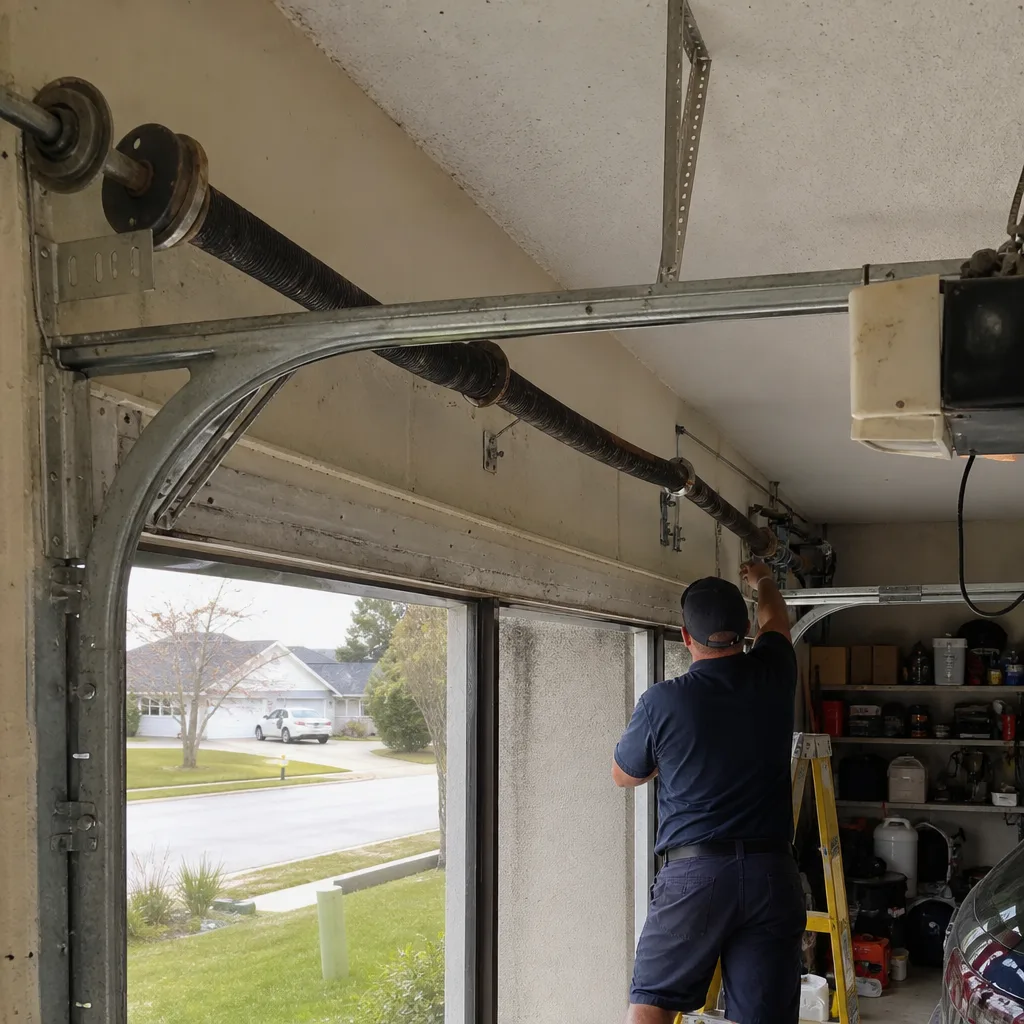 Before
 After
 Before
 After
 Before
 After