

Last updated October 30, 2026
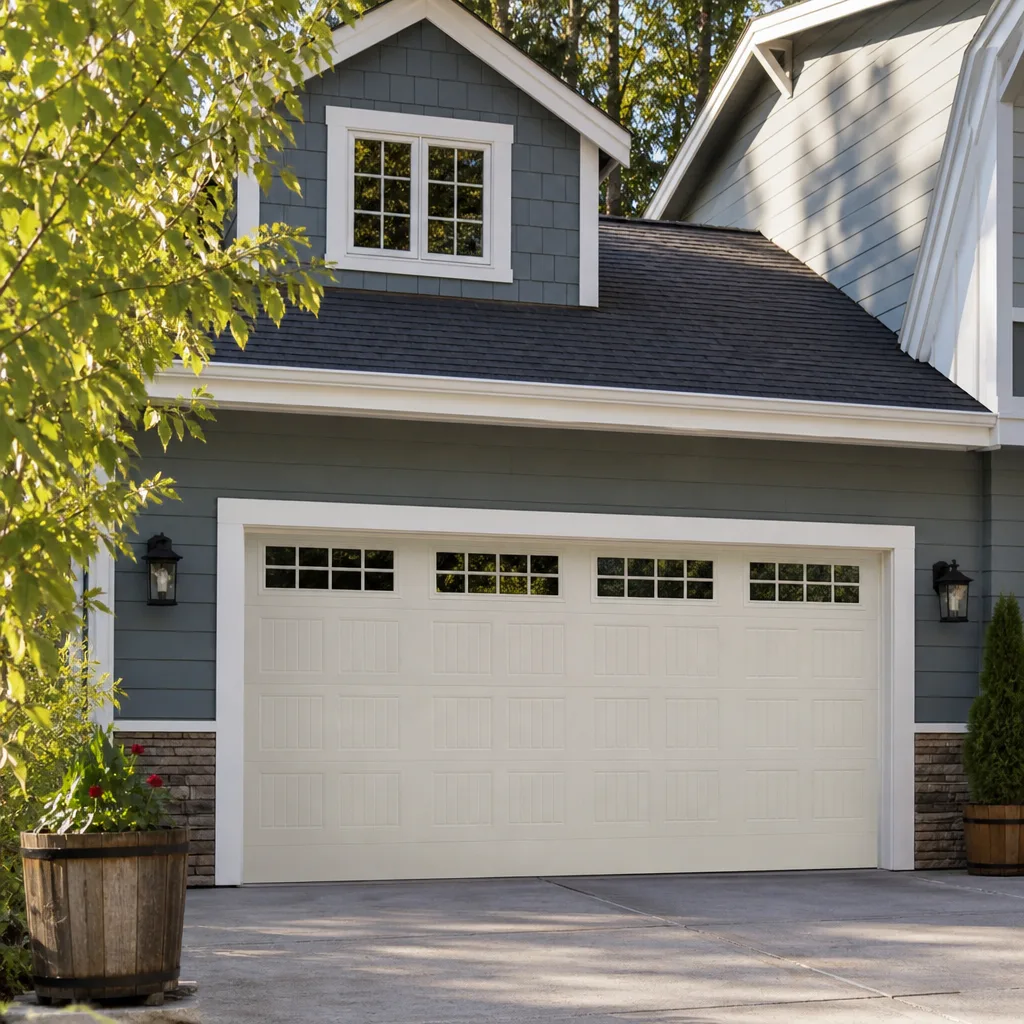
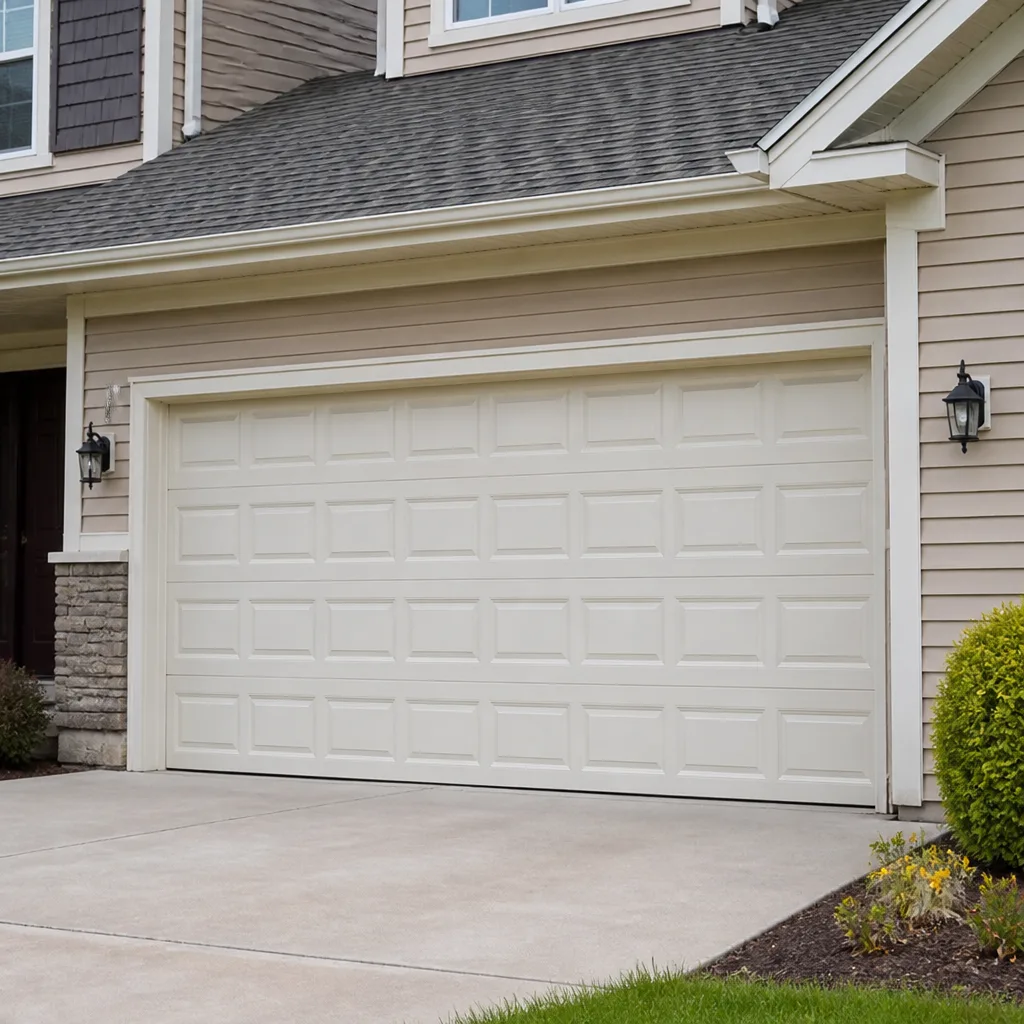 Raised-panel steel
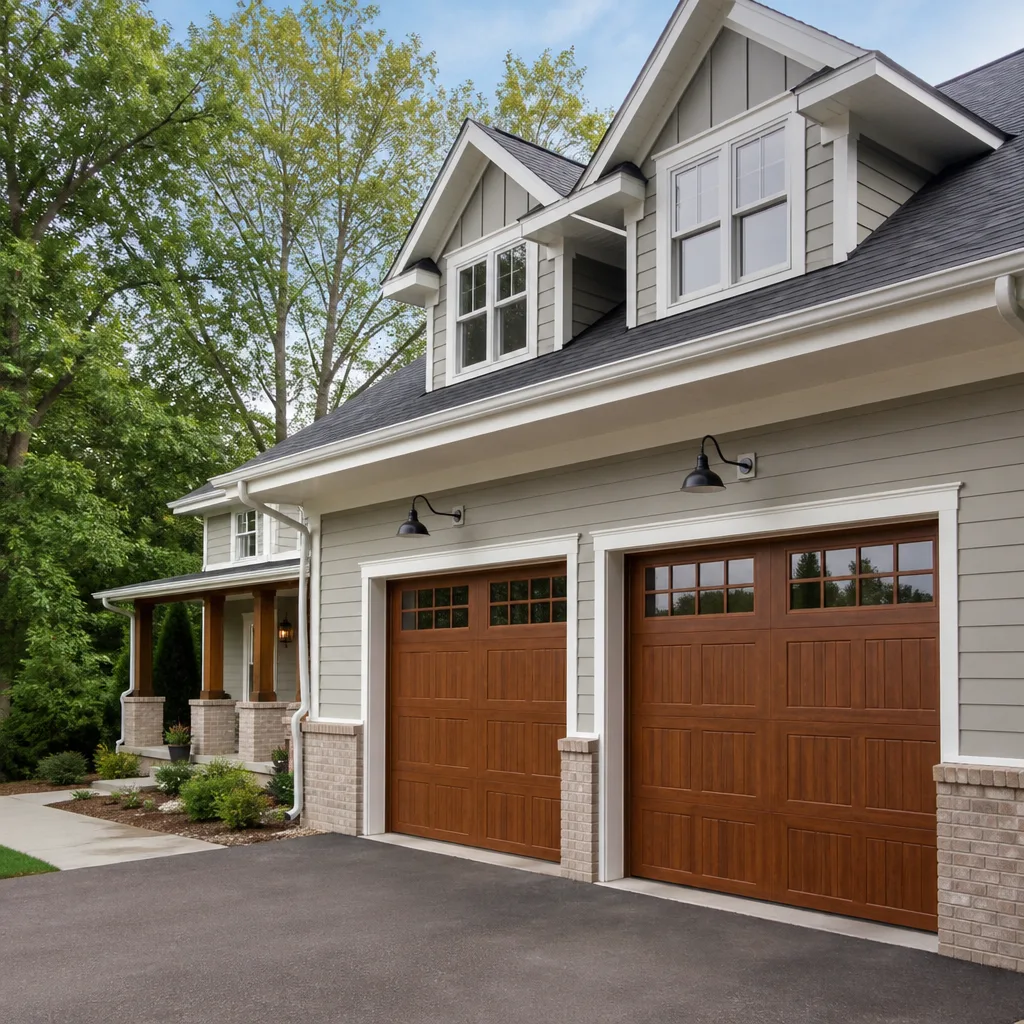
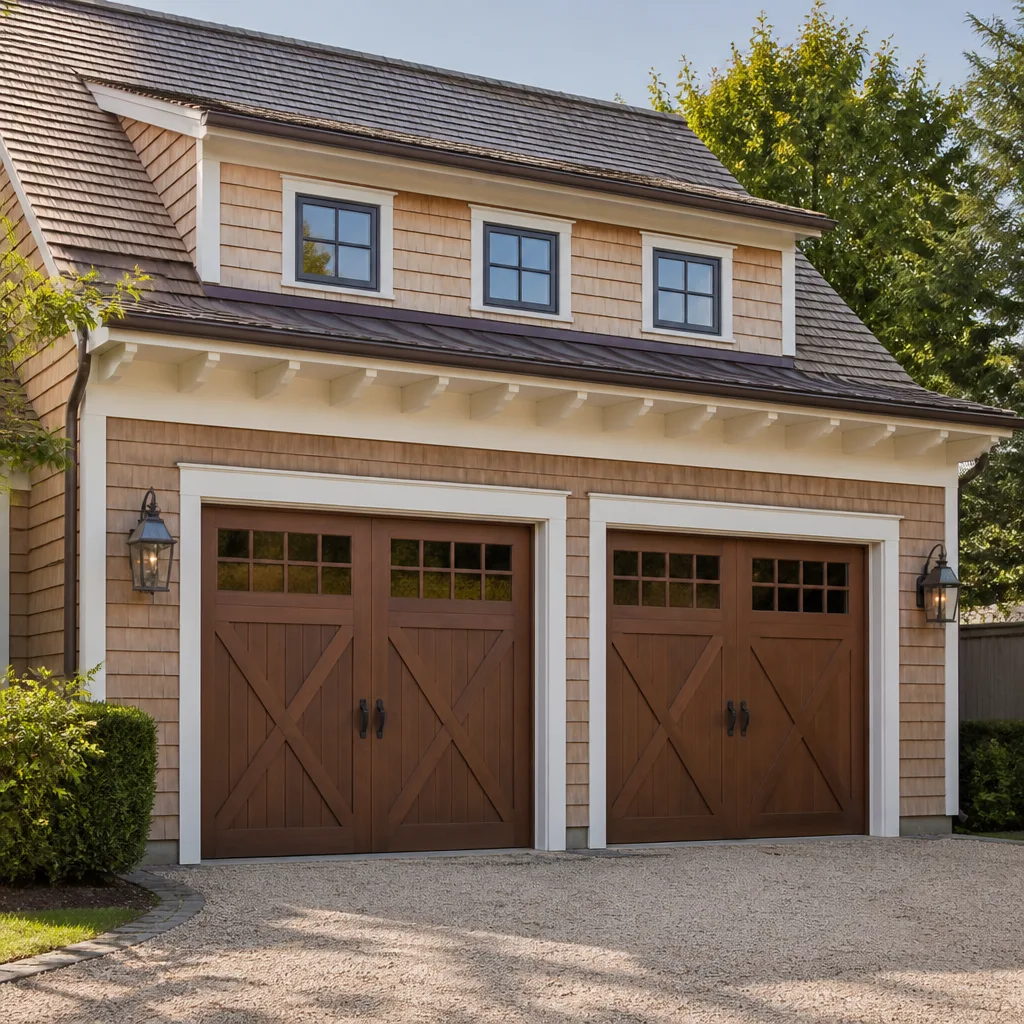 Carriage house
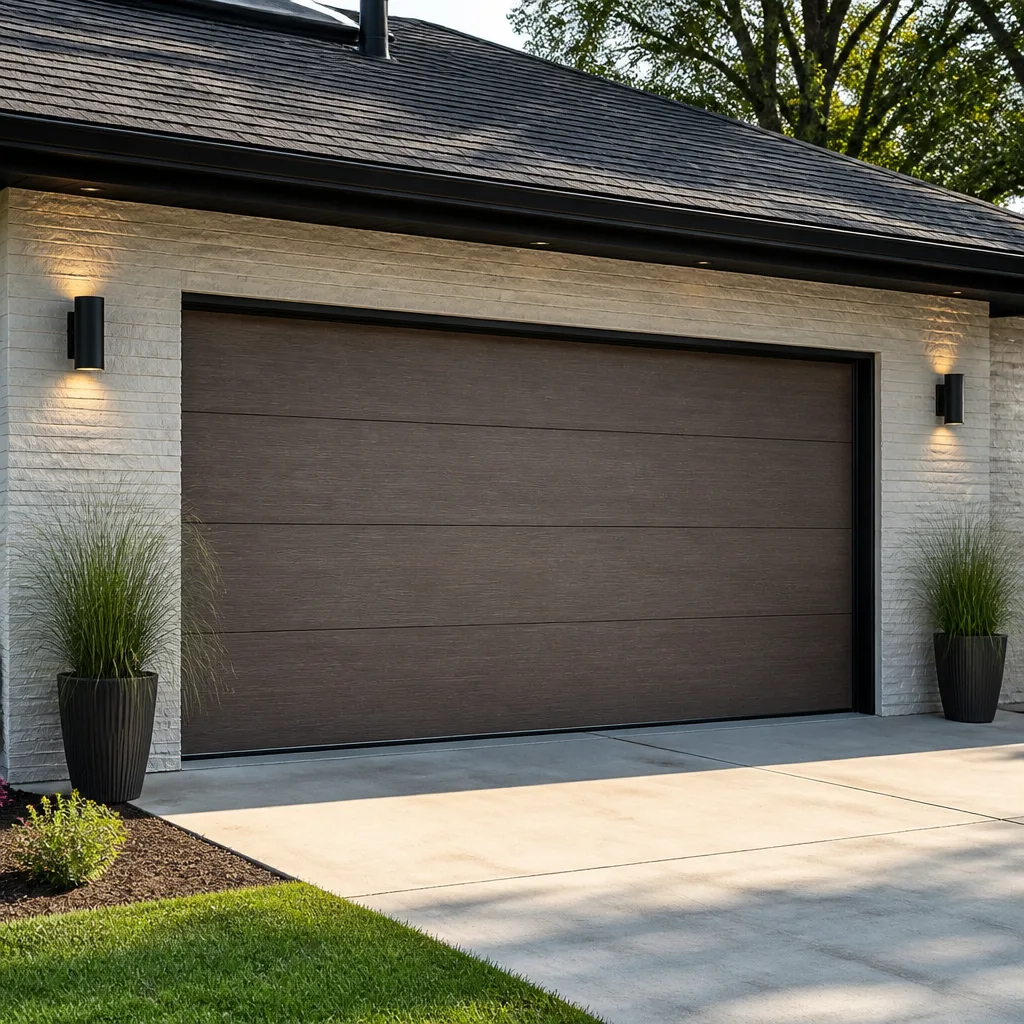 Modern flush
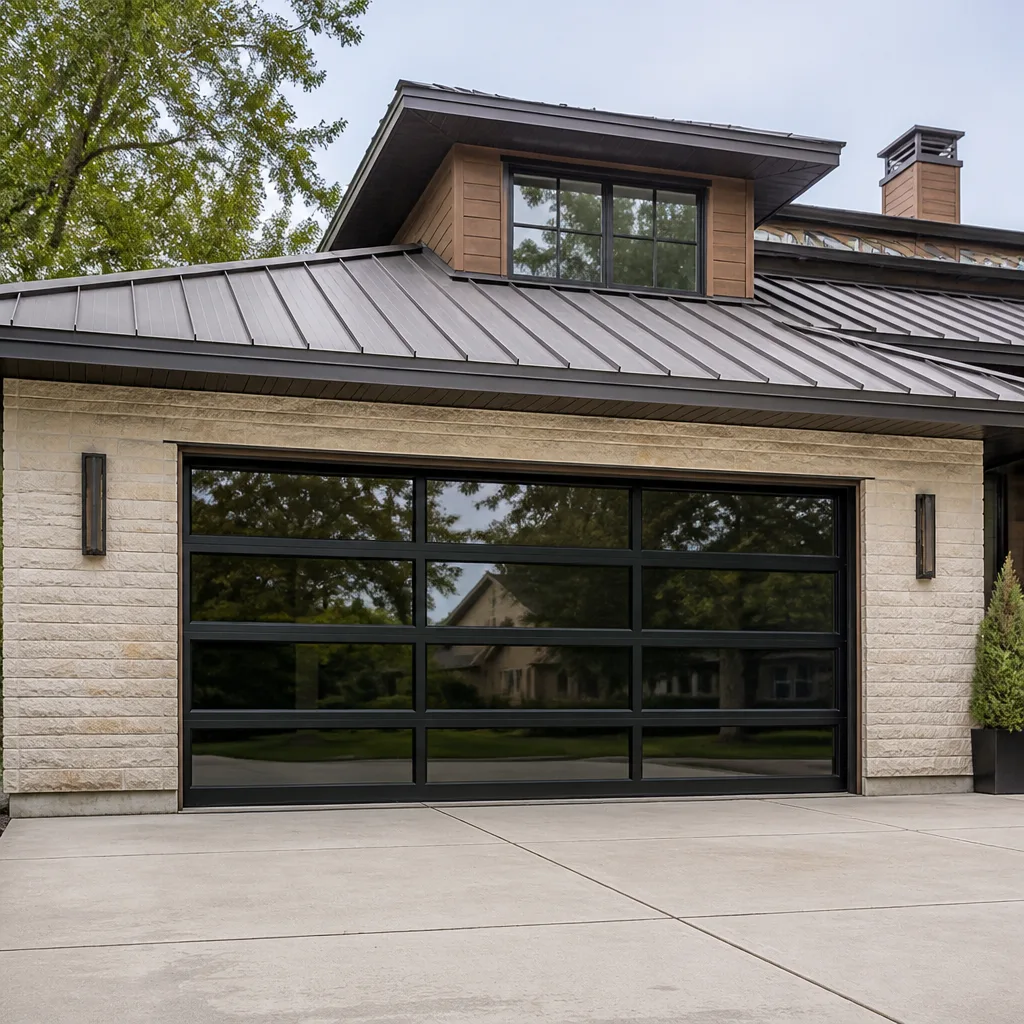 Full-view glass
 LiftMaster openers
 Chamberlain openers
Full 25-point door and opener safety check with every visit - springs, cables, rollers, tracks, and your LiftMaster or Chamberlain opener included
You get a price before we start. It does not change when the truck arrives.
Get your free estimateSeasonal Garage Door Care for Ocala: Year-Round Homeowner’s Guide
The single most damaging month for Ocala garage doors isn’t a cold snap. It’s May, when humidity climbs before the wet season rains arrive and metal components expand against hardware that hasn’t been inspected since the previous fall. By the time August thunderstorm season hits, that unchecked expansion has become rust, seized rollers, and a door that groans every time it opens. This guide rewrites the maintenance calendar for north-central Florida’s actual climate, not some repurposed northern checklist. For a broader look at local garage door topics, see our more guides & resources. You’ll learn what to do in April before humidity peaks, what to inspect in October after hurricane season, and what to check in January during the brief dry-cold window that passes for winter in Marion County.
Styles & brands we work with
Quick Answer
Seasonal garage door care in Ocala means scheduling two thorough inspections per year: one in April before summer humidity and hurricane season, and one in October after the storm season ends. Focus on weatherstripping, roller lubrication with a silicone-based product, opener force-sensitivity settings, and panel finish protection on south-facing doors. Skip the heavy grease, skip the northern winter-prep advice, and never attempt spring or cable work yourself.
Table of Contents
- Why Ocala’s Climate Demands a Different Maintenance Calendar
- April: The Pre-Humidity Inspection That Prevents Summer Failures
- June Through September: Managing the Rainy Season Without Rust or Water Intrusion
- Thunderstorm Pressure Changes and Opener Sensitivity Settings
- October: Post-Hurricane-Season Inspection Protocol for Marion County Homes
- UV Protection for South- and West-Facing Garage Doors
- January: The Brief Dry-Cold Window for Deep Maintenance
- Common Mistakes to Avoid
- When to Call a Professional
- Frequently Asked Questions
- The Bottom Line
Why Ocala’s Climate Demands a Different Maintenance Calendar
Most garage door maintenance advice online was written for places with snow, road salt, and frozen garage floors. Ocala doesn’t have those problems, which means most advice you’ll find is solving issues we don’t have while ignoring the ones we do. Our garage doors face four distinct environmental pressures: constant humidity that never fully drops below 50 percent even in winter, a six-month wet season delivering 40-plus inches of rain, intense UV radiation from a subtropical sun, and hurricane-force wind gusts that test every seal and bracket on the door.
The humidity is the most insidious. Metal components in an Ocala garage corrode not from a single event but from cumulative exposure to moisture in the air. Hinges rust from the inside out. Roller bearings grind down. Torsion springs develop surface pitting that eventually becomes a fracture point. The timeline is consistent: a door installed or last serviced in the fall will usually make it through the dry winter months without visible problems. Then May arrives, humidity spikes, and the door starts binding in the tracks because swollen wooden framing or accumulated rust has reduced clearance tolerances.
What we’ve seen repeatedly in Ocala is that homeowners who service their door in April avoid the overwhelming majority of mid-summer breakdowns. The inspection catches problems while they’re still cheap to fix. Waiting until August, when the door fails at 7 a.m. on a workday, means paying emergency rates for the same repair. This guide is built around that timing reality.
April: The Pre-Humidity Inspection That Prevents Summer Failures
April is the single most important maintenance month for an Ocala garage door. The dry season is ending, afternoon temperatures are climbing into the 80s, and the first humidity surge happens before the daily rains arrive. Metal components are as dry as they’ll be all year, making this the ideal time to clean, inspect, and lubricate everything that moves.
What to Do in April
- Clean the tracks and rollers: Wipe down both vertical and horizontal tracks with a dry cloth to remove dust, pollen, and the fine sand that blows in from Ocala’s sandy soil. Sand acts as an abrasive in the track system, wearing down roller bearings faster than any other contaminant.
- Lubricate with a silicone-based product: Apply silicone spray to rollers, hinges, and the torsion spring. Never use WD-40 as a lubricant on garage door components. It’s a solvent that strips existing lubrication. Never use grease on the track itself, which collects sand and creates a grinding paste.
- Check the weatherstripping: The rubber seal along the bottom of the door, called astragal, takes a beating from Ocala’s UV exposure year-round. Look for cracks, flattening, or gaps where daylight shows through. A failed bottom seal in April means water intrusion by June.
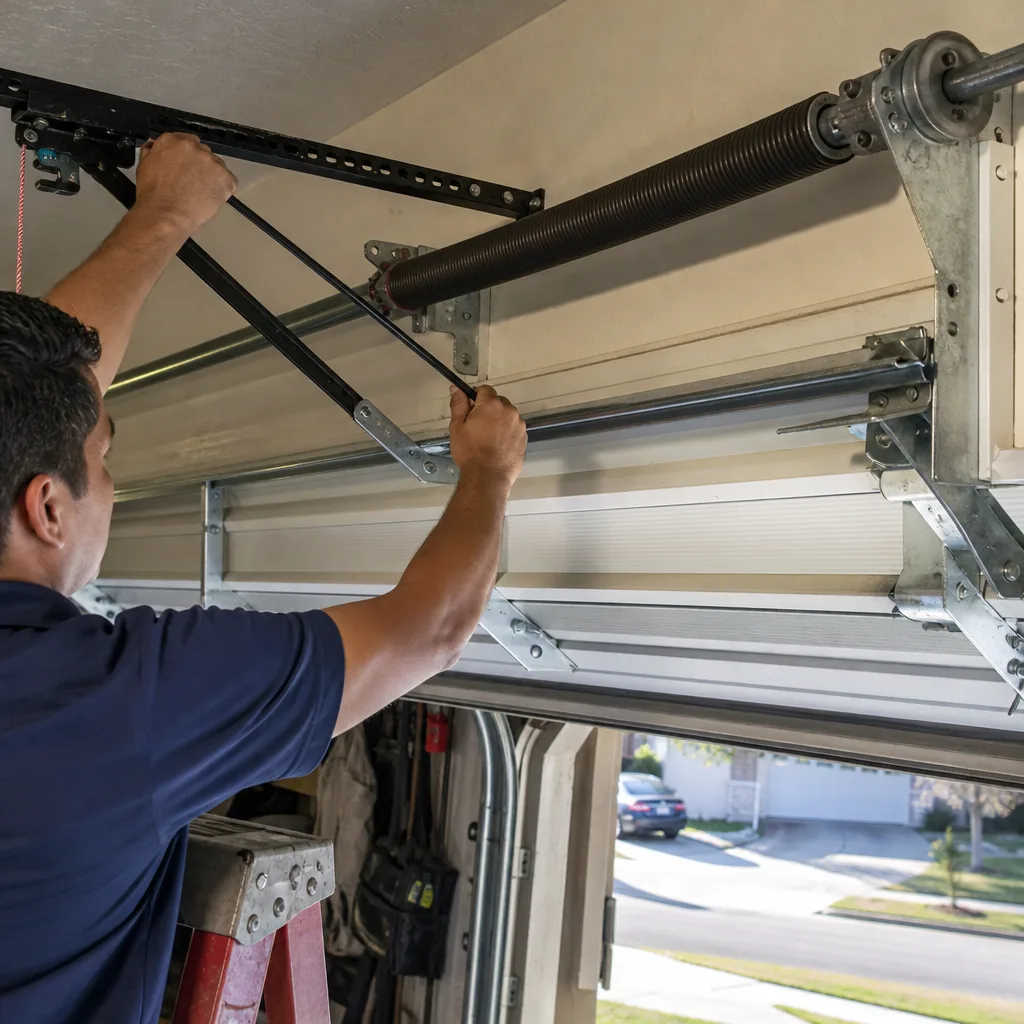
- Test the balance: Pull the emergency release cord while the door is closed, then manually lift the door to waist height. It should stay in place or drift very slightly. If it slams down or shoots up, the springs are losing tension and need adjustment before the summer heat accelerates the wear.
- Inspect all bolts and brackets: Go around the door with a socket wrench and check every hinge bolt, track bracket, and opener mounting point. Thermal expansion and contraction through the winter dry-cool cycle loosens hardware over time. A bracket that’s loose in April will be rattling by July.
This is also the time to schedule any Garage Door Repair in Ocala work you’ve been putting off. Repairs done in April happen on your schedule, not in the middle of a thunderstorm when emergency service rates apply.
Why May Is the Danger Month
May in Ocala is when humidity climbs from the 60 percent range into the 80s and above before the afternoon rains become a daily event. Metal components absorb moisture from the air and expand. If any part of the system was already marginally out of adjustment, that expansion is enough to cause binding, scraping, or complete failure. We see more torsion spring fractures in May than in any other single month, in our experience serving Key Step Garage Door Repair home customers across Marion County.
June Through September: Managing the Rainy Season Without Rust or Water Intrusion
The Ocala wet season delivers most of the year’s rainfall in four months. Afternoon thunderstorms become a near-daily event from late June through early September. Wind-driven rain hits your garage door horizontally, not vertically, which means water finds every gap in the seal system that a normal rain never touches. The ground around the garage door slab stays saturated for months, and that moisture wicks up into the bottom seal and the lower door panels.
Water Intrusion Prevention Checklist
- Inspect the bottom seal weekly during peak rainy season: Look for standing water on the garage floor after afternoon storms. Even a small puddle means the seal is no longer making full contact with the slab. Ocala’s sandy soil settles differently beneath concrete slabs than clay-heavy northern soils, and a slab that was level five years ago may have shifted enough to break the seal’s contact patch.
- Check the side and top weatherstripping: Wind-driven rain enters through side gaps more often than through the bottom. Run your hand along the inside edge of the door frame during a heavy rain. Any moisture means the vinyl trim needs replacement or the door track needs adjustment.
- Keep the door closed during storms: Obvious, but worth saying. An open garage door in a Florida thunderstorm lets wind enter the garage space, pressurize the interior, and potentially lift the roof decking. The garage door itself becomes a sail when open during high wind.
- Wipe down exposed metal after heavy rain: If you have an older door with exposed hinges or brackets, take thirty seconds to dry them after a particularly wet storm. It’s not a substitute for proper lubrication, but it slows the rust cycle during the wettest months.
Floor Rust and Lower Panel Corrosion
The lower panel of an Ocala garage door lives in a uniquely hostile environment. It’s exposed to splash-back from rain hitting the concrete slab, standing water during heavy downpours, and constant ground-level humidity. Steel doors from brands like Amarr and Wayne Dalton have factory-applied rust-resistant coatings, but those coatings degrade over time, especially if the door is older than a decade. If you’re considering a replacement, read our Choosing the Right Garage Door Brand: A Buyer’s Guide for Ocala. Watch for bubbling paint, rust-colored staining, or soft spots along the bottom edge of the lowest panel. These are early warning signs that moisture has breached the protective layer and is working on the steel underneath.
Thunderstorm Pressure Changes and Opener Sensitivity Settings
Here’s a maintenance factor most guides never mention: afternoon thunderstorm pressure changes affect your garage door opener’s sensitivity settings. Florida’s summer storms bring rapid barometric pressure drops, often 5 to 10 millibars within an hour. The opener’s force settings, which tell the motor how much resistance to expect from the door, were calibrated under one set of atmospheric conditions. When pressure drops rapidly, the door’s balance characteristics shift slightly because air pressure inside the garage differs from air pressure outside.
The result is an opener that intermittently reverses during mid-afternoon storms, not because anything is mechanically wrong, but because the force sensitivity is set too tight for the conditions. Many Ocala homeowners assume they need Garage Door Opener Repair in Ocala when the actual fix is a simple sensitivity adjustment.
How to Check Your Opener’s Force Settings
- Locate the adjustment controls: Most LiftMaster, Chamberlain, and Genie openers have force-adjustment dials on the back or side of the motor unit. Chamberlain and LiftMaster models typically use blue dials; Genie uses knob-style controls.
- Test the door’s behavior on a clear morning: With a dry, sunny day and stable pressure, run the door through a full open-close cycle. It should move smoothly without hesitating, stalling, or reversing.
- Test again during an afternoon storm: If the door reverses or stops partway through the cycle during storm conditions but works fine in the morning, the force sensitivity is right at the threshold and needs to be backed off slightly.
- Make small adjustments only: Turn the force dial no more than an eighth of a turn toward the higher setting, then retest. The goal is to compensate for pressure-induced drag without masking a real mechanical problem.
If adjusting the sensitivity doesn’t resolve the problem, the issue is likely mechanical rather than environmental. A door that reverses in all weather conditions usually has a track alignment issue, a failing spring, or a worn gear inside the opener itself.
October: Post-Hurricane-Season Inspection Protocol for Marion County Homes
By October, Ocala has usually emerged from the active part of hurricane season. The daily storms taper off, humidity begins a slow decline, and the dry season starts. This is the second critical inspection window of the year. The goal is different from April: you’re not preparing for what’s coming, you’re assessing what the summer did to your door and fixing damage before it compounds through the winter.
Post-Storm Inspection Steps
- Run the door through three full cycles: Listen for new sounds. Grinding, squealing, popping, or a rhythmic thumping that wasn’t there in April indicates component wear from the summer’s heat and humidity.
- Check the track alignment: Look down the length of each vertical track from the side. Bending, bowing, or a visible gap between the track and the wall suggests the door took a hit, possibly from wind load or debris during a storm.
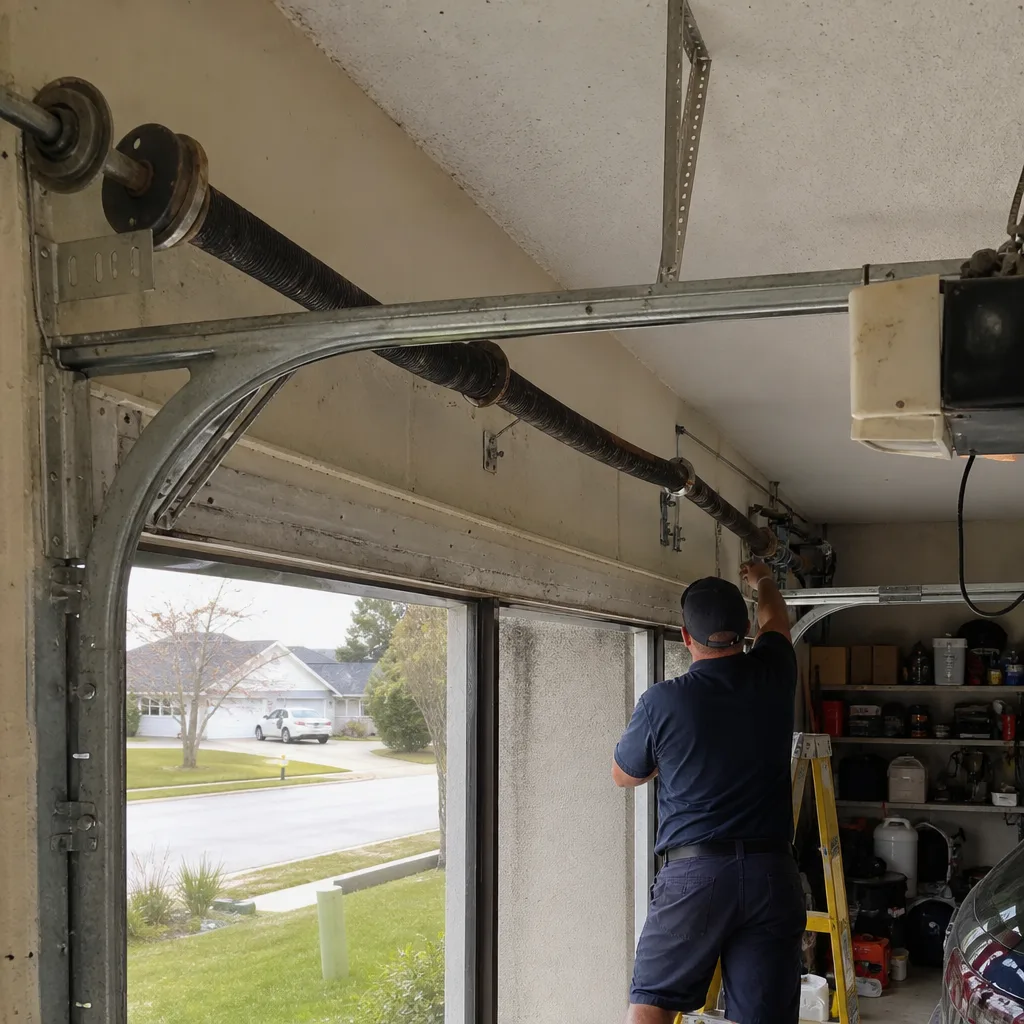
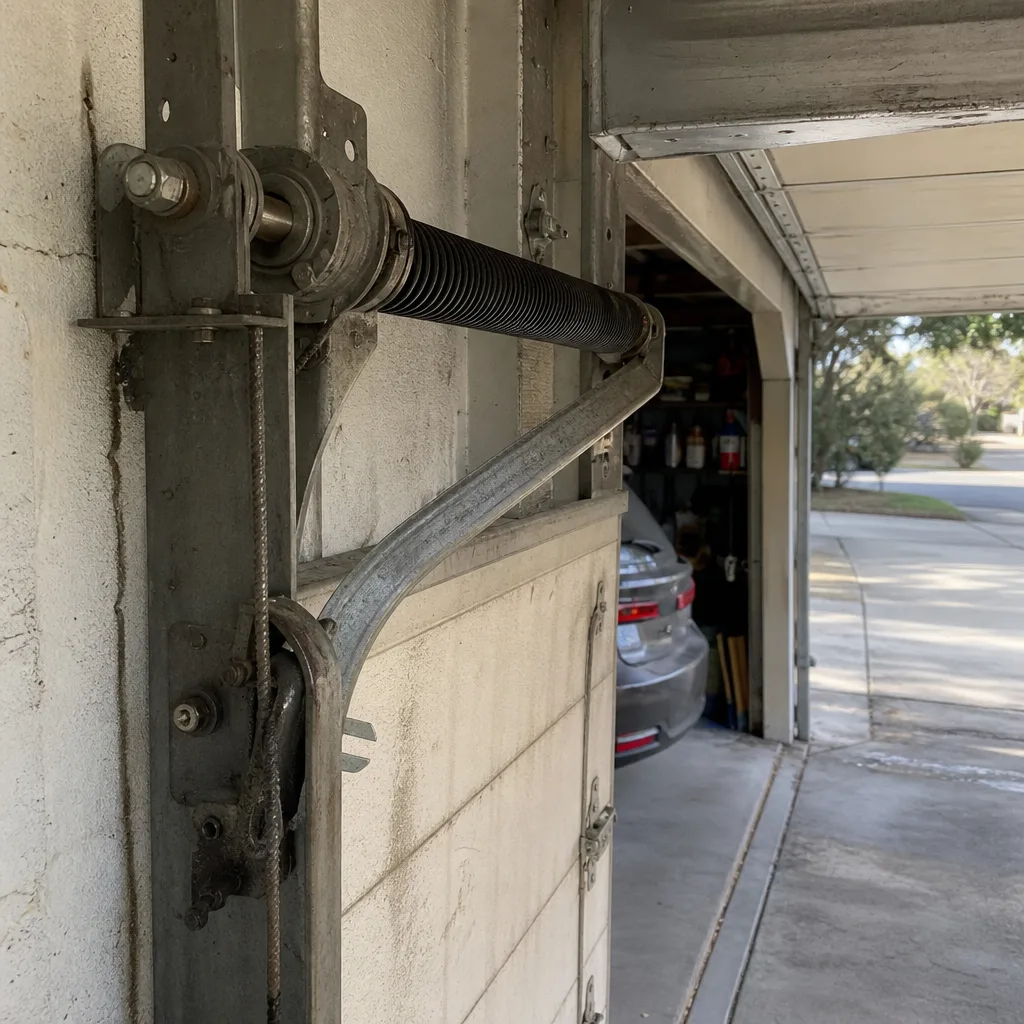
- Inspect the springs for surface rust and pitting: Ocala’s summer humidity accelerates spring corrosion. Surface pitting on a torsion spring is an early warning sign that the spring is nearing the end of its service life. Springs typically last 7 to 12 years in Florida conditions, but a heavily pitted spring should be replaced proactively.
- Examine the opener’s emergency release mechanism: Pull the red cord and confirm the door disengages from the carriage smoothly. A release that’s stiff or stuck can trap you inside the garage during a power outage.
- Look for water staining on the interior drywall around the door frame: Stains indicate water is finding a path around the door seal system and into the wall cavity. Left unaddressed, this becomes a mold and rot problem inside the garage structure, not just a door problem.
When Storm Damage Requires Professional Assessment
Some post-storm conditions are not homeowner-serviceable. If you find any of the following, schedule a professional inspection rather than attempting to fix the issue yourself:
- A visible bend or bow in either track
- Loose or missing track brackets where the bolts appear to have pulled out of the wall
- A door that’s visibly out of level when closed, with a gap on one side
- Cracks in the concrete slab directly under the door tracks
- A broken or visibly stretched spring (do not touch the spring; call a professional immediately)
After a named storm passes through Marion County, many homeowners discover their door needs more than a tune-up. For a full overview of repair options, see The Complete Garage Door Repair Guide for Ocala Homeowners. The combination of wind pressure, water intrusion, and flying debris can cause damage that’s not immediately visible. A fall inspection from a garage door specialist who knows the local storm patterns is worth the cost of the call.
UV Protection for South- and West-Facing Garage Doors
If your garage door faces south or west in Ocala, your door gets more direct sun exposure than a north-facing door gets in the same neighborhood. The Florida sun delivers an average of 5.5 peak sun-hours per day, and that radiation doesn’t just heat up the door. It breaks down the chemical bonds in paint, clear coats, and even the polyurethane foam insulation inside the panel.
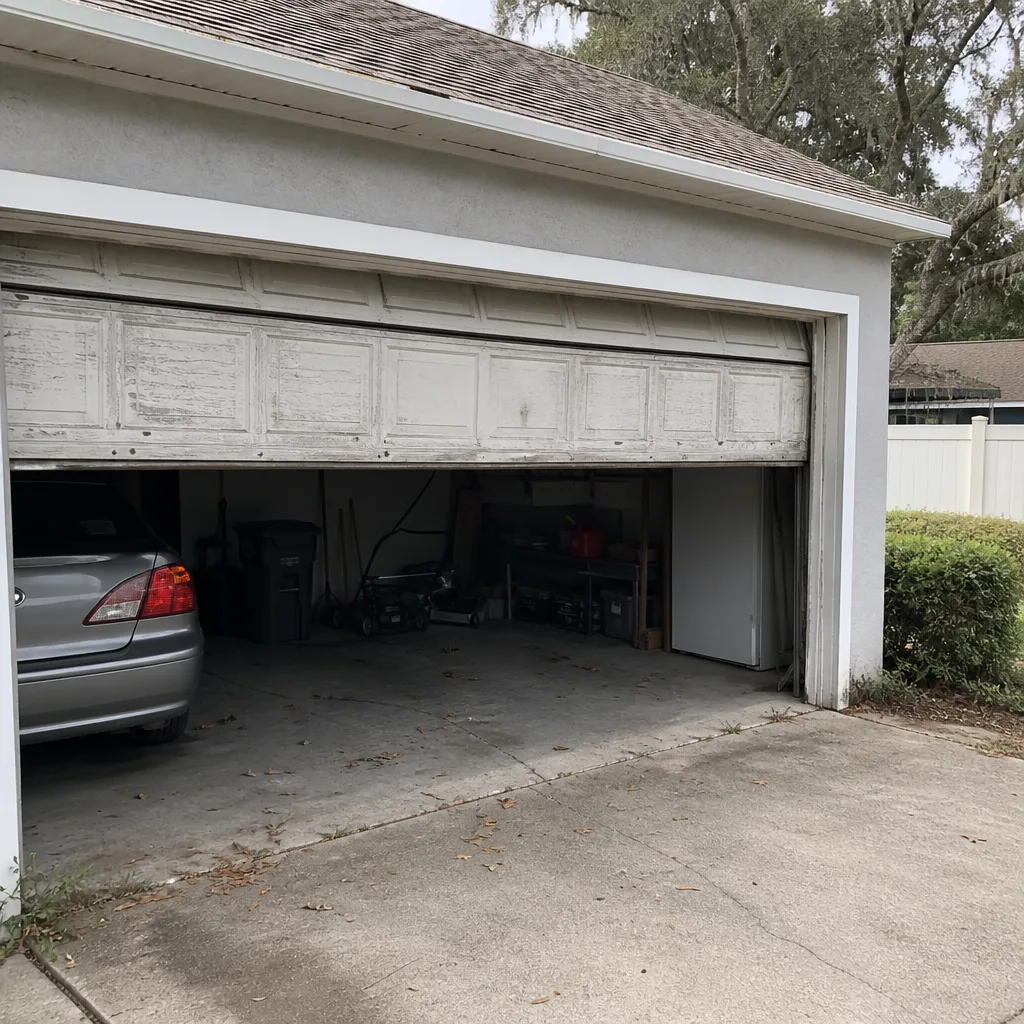
South-facing doors, common in Ocala subdivisions where lots are oriented east-west, receive the most consistent daily exposure. West-facing doors get the most intense dose late in the day, when afternoon temperatures are already at their peak. The result is predictable: fading that starts at the bottom of the top panel and spreads upward, chalking on painted steel, and a clear coat on wood-look doors that turns cloudy and peels within three to five years.
How to Slow UV Damage
- Choose a lighter door color: Dark colors absorb more UV radiation and heat, accelerating paint and clear coat breakdown. A white or light beige door on a south-facing elevation will last noticeably longer before visible fading appears. Brands like Clopay and Raynor offer UV-stable color options specifically formulated for high-sun climates.
- Apply an automotive-grade UV protectant: Available at auto parts stores, these products add a sacrificial layer that absorbs UV radiation before it reaches the door’s factory finish. Reapply every six months on doors with direct sun exposure.
- Wash the door quarterly: Ocala’s airborne pollen, dust, and tree sap settle on the door surface and accelerate coating degradation when combined with UV exposure. A simple rinse with a garden hose and mild car soap removes the contaminants before they bond to the finish.
- Inspect the sealant around window inserts: Doors with decorative glass panels have sealant joints that UV radiation breaks down over time. Failed sealant allows water behind the panel frame, causing rust and fogging between insulated glass layers.
If your south- or west-facing door is already showing significant fading, chalking, or clear coat failure, repainting may extend its life. Steel doors respond well to repainting with quality acrylic latex exterior paint. Wood and composite doors require more involved refinishing. If the panels themselves are warping or delaminating from heat exposure, Garage Door Installation in Ocala may be the more cost-effective long-term solution rather than continued patching.
January: The Brief Dry-Cold Window for Deep Maintenance
Ocala’s January isn’t cold by northern standards, but it’s the driest and coolest month of the year, with average humidity in the 50s and nighttime lows that occasionally dip into the 30s. This is the best window for maintenance tasks that require dry conditions for proper adhesion or curing, and it’s the time when hardware is at its most contracted state, making adjustments more precise.
What January Is Good For
- A deep clean of the door surface: The dry air means cleaning products evaporate properly and leave no residue. This is the ideal time to wash the door, apply protectant, and inspect the finish for any damage that developed over the summer.
- Replacing weatherstripping: New seals install more accurately in cooler, drier conditions. Adhesive-backed weatherstripping bonds better when the surface is cool and dry, not hot and tacky. If your bottom seal or side trim needs replacement, January is the month to do it.
- Checking and tightening all hardware: The metal contraction in cold weather means bolts are at their loosest thread engagement. Torquing everything to spec in January means it stays tight through the thermal expansion cycle of the following summer.
- Testing the opener’s safety reversal system: Place a 2×4 flat on the ground in the door’s path and run the door down. It should reverse within two seconds of contacting the board. Test the photo-eye sensors by blocking the beam while the door is closing. This is a monthly check, but January’s clear air and low humidity make it easier to spot sensor misalignment.
What Not to Worry About in January
You don’t need to winterize anything. You don’t need to switch to a different lubricant. You don’t need to worry about your door freezing shut. If you see northern garage door advice about dealing with ice, snow, or road salt, skip it. Your Ocala door faces different seasonal threats, and time spent solving northern problems is time not spent addressing the humidity, UV, and storm-related issues that actually affect your system.
Common Mistakes to Avoid
- Using WD-40 as a lubricant: WD-40 is a water displacer and solvent, not a lubricant. It temporarily quiets a squeaky roller by dissolving the old lubrication, then evaporates and leaves the metal dry and vulnerable. Use a silicone-based garage door lubricant instead.
- Greasing the tracks: Grease on the vertical tracks attracts sand and dust, which Ocala has in abundance. The resulting abrasive paste accelerates roller wear. Tracks should be clean and dry; only the rollers, hinges, and spring get lubrication.
- Ignoring a noisy door because it still works: New sounds mean new mechanical problems. A squeal that appears in August and is ignored until January has five months to turn a $150 roller replacement into a $400 bearing failure or a broken spring.
- Attempting DIY torsion spring replacement: Torsion springs are under extreme tension and can cause serious injury or death when mishandled. This is one repair that should always be left to a trained professional with the right tools and experience.
- Skipping the April inspection because the door worked all winter: Ocala garage doors rarely fail during the dry winter months. The failure comes in May, June, or July, after humidity has exposed every marginal component. The door that works fine in February is the door that breaks in June if you skip the spring inspection.
- Replacing the whole opener when only the force settings need adjustment: Thunderstorm-induced reversals are frequently misdiagnosed as opener failure. A five-minute sensitivity adjustment may solve a problem that would otherwise lead to a $400 opener replacement.
- Painting over rust without treating it first: Painting over rust on a steel door just seals the corrosion in place. The rust continues to spread beneath the paint, and the bubbling returns within six months. Sand the rust to bare metal, apply a rust converter, prime, then paint.
When to Call a Professional
Most seasonal maintenance on an Ocala garage door is within a homeowner’s reach: cleaning, lubrication, weatherstripping inspection, and sensitivity adjustments are all DIY-friendly tasks. But certain conditions require a trained eye and specialized tools. Call a professional if you find a broken or visibly stretched torsion spring, a bent track, a door that’s come off its rollers, or a panel that’s cracked or separating. These are structural problems, not maintenance items, and attempting to fix them yourself can cause further damage or serious injury.
If you’re not sure whether an issue needs professional attention, err on the side of caution. Key Step Garage Door Repair offers free estimates in Ocala. Call (855) 795-2118 and describe what you’re seeing. We’ll tell you honestly whether it’s something you can handle yourself or whether our technicians should take a look.
We know your brand. Our technicians work on systems from Amarr, Wayne Dalton, Craftsman, Raynor, and other major manufacturers every week. From the opener to the panel, we diagnose and repair the complete door system as one integrated unit, not as isolated parts. The right fix, not just a fast one. That’s the approach we take on every job, and it’s why Ocala homeowners call us back when their next garage door issue arises.
Frequently Asked Questions
Lubricate the rollers, hinges, and torsion spring twice a year in Ocala, once in April before the humid season and once in October after it ends. Use a silicone-based lubricant, never WD-40 or grease. If you hear squeaking or grinding between scheduled lubrications, address it immediately rather than waiting for the next maintenance window. Call (855) 795-2118 if you’re not sure which lubricant to use or which components need attention.
A basic seasonal inspection and lubrication typically ranges from $75 to $150 in Ocala, depending on the door’s age and condition. If the inspection uncovers worn rollers, a failing spring, or damaged weatherstripping, those repairs add to the total. The cost of ignoring seasonal maintenance is higher: emergency spring replacement during summer thunderstorm season can run $250 to $450. Call (855) 795-2118 for a free estimate on any maintenance or repair work.
If your garage door is stuck open, stuck closed, or making sounds that suggest imminent failure, call (855) 795-2118 and describe the problem. We prioritize emergency calls from Ocala homeowners who can’t secure their home or get their car out. For non-emergency maintenance, we’ll schedule the earliest available appointment, usually within a few days.
The price is quoted and agreed before any work starts. Before our technician begins a repair, you’ll know exactly what the work will cost. If we find additional issues during the inspection, we’ll show you what we found, explain why it matters, and get your approval before proceeding. No surprises on the invoice.
Most Ocala service calls are completed in a single visit because our trucks carry the high-wear components for the brands we service: springs, rollers, hinges, weatherstripping, sensors, and opener gears for LiftMaster, Chamberlain, Genie, Craftsman, and other common systems. If a specialized panel or non-standard part is required, we’ll order it and schedule the installation at your convenience.
A garage door is one of the highest-return home improvements in Florida, typically recouping a large portion of its cost at resale. Curb appeal matters in Ocala’s competitive housing market, and a faded, dented, or sagging door drags down the whole listing. If your door is more than 15 years old, visibly damaged, or operating poorly, replacement before listing is a sound investment. Call (855) 795-2118 for a free estimate on a new door installation and see what your options look like.
The Bottom Line
Ocala garage doors fail on a predictable schedule. The humidity surge in May exposes every marginal component that made it through the dry winter. The summer storm season batters seals, stress-tests opener settings, and accelerates corrosion. The fall is when the accumulated damage becomes visible, and the brief January dry spell is when deep maintenance is easiest. If you do one thing this year, do the April inspection. It’s an hour of work that prevents the overwhelming majority of mid-summer breakdowns. If you do two things, add the October post-storm checkup. Your door will last years longer, and you’ll avoid the emergency calls that come when a neglected system finally gives out during a thunderstorm. Call (855) 795-2118 for a free estimate on any garage door service in Ocala.
Written by the team at Key Step Garage Door Repair, serving Ocala since 2013.
See the difference
 Before
 After
 Before
 After
 Before
 After