

Last updated October 30, 2026
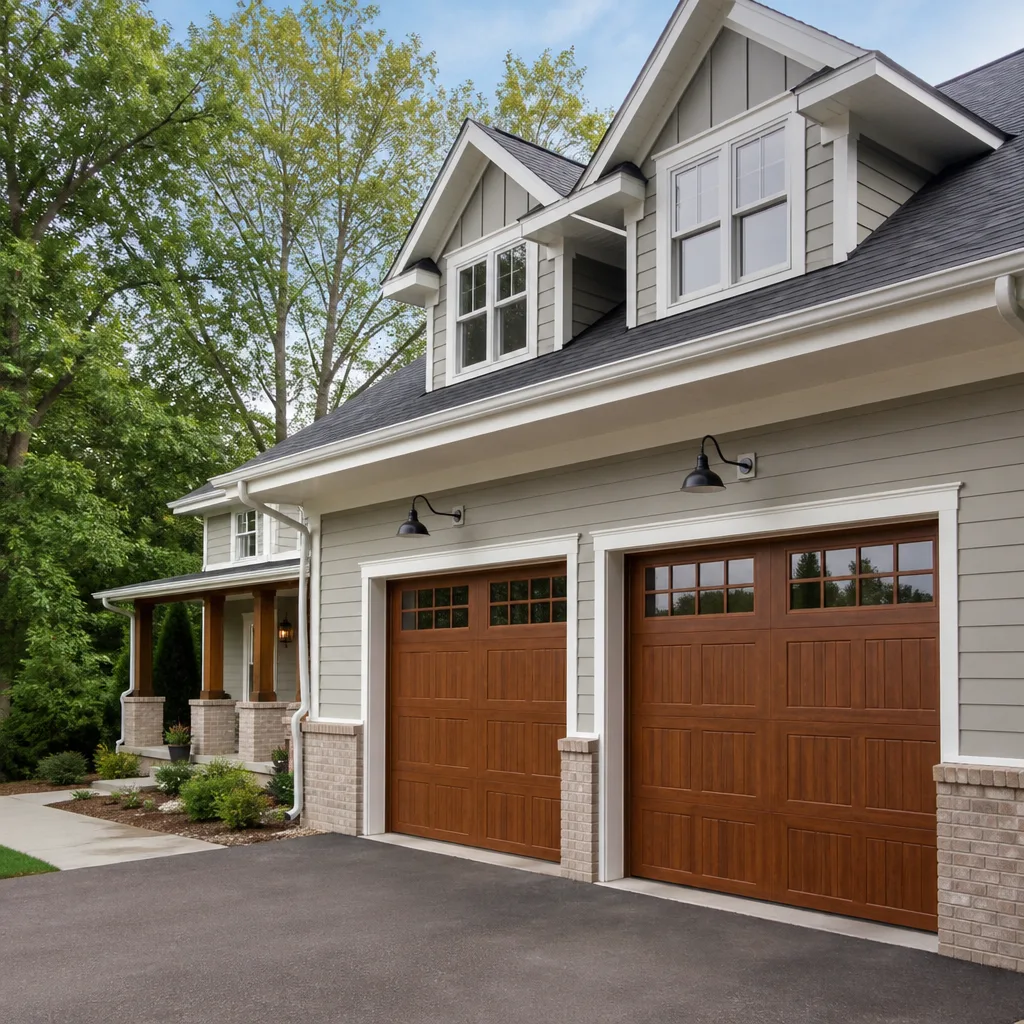
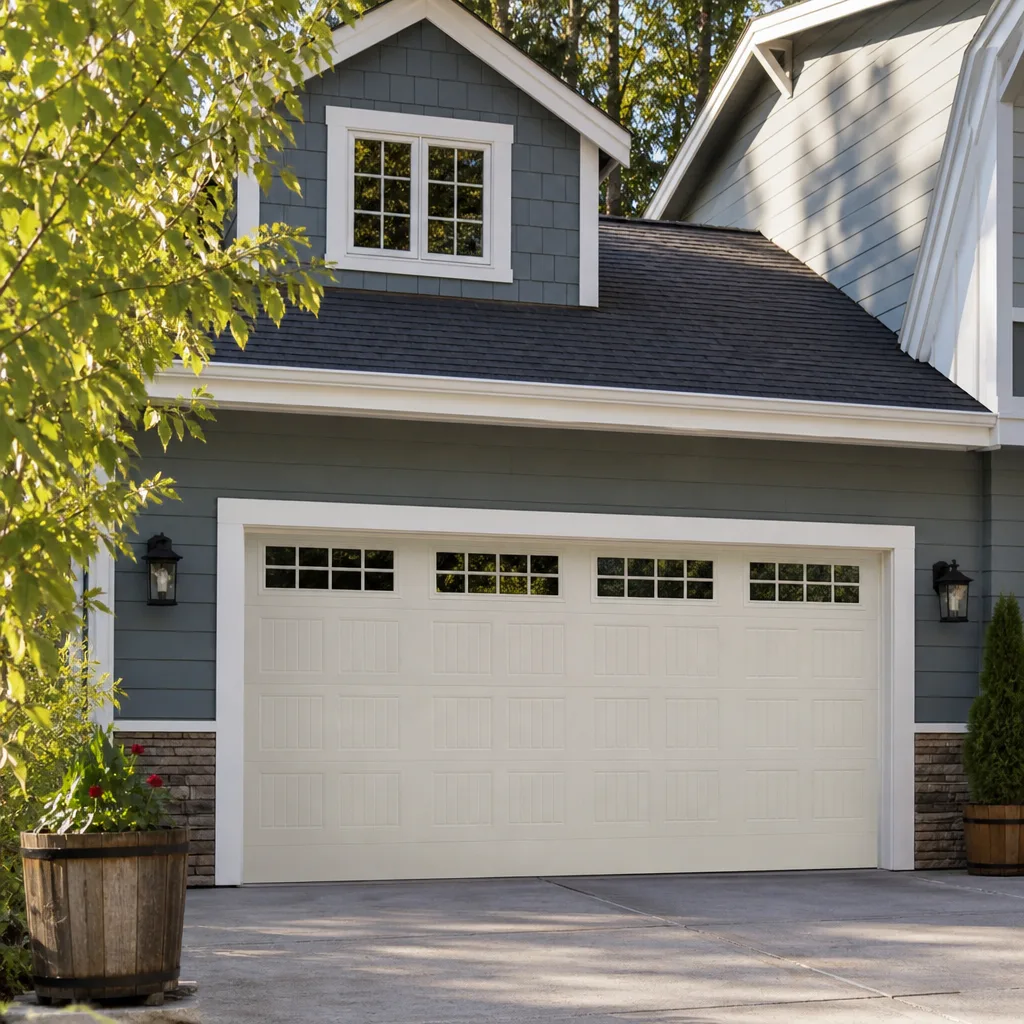
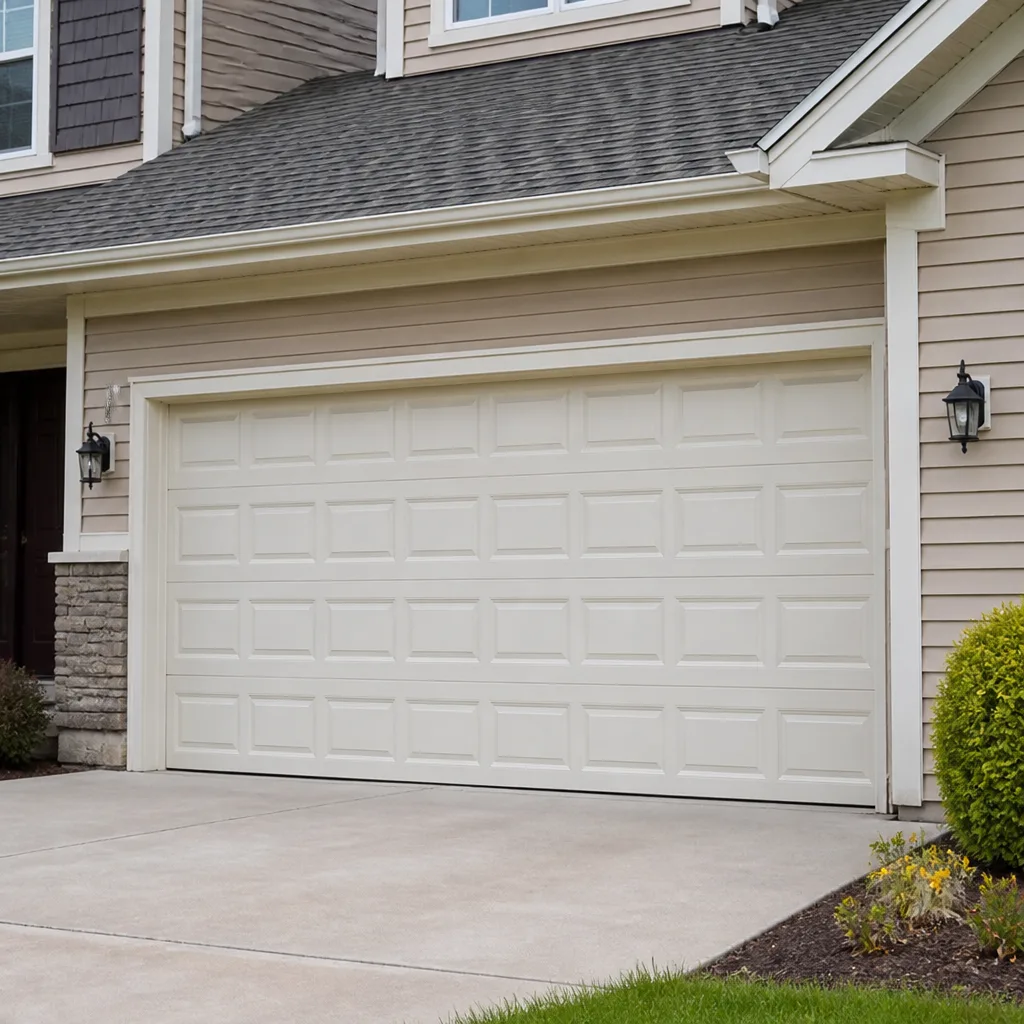 Raised-panel steel
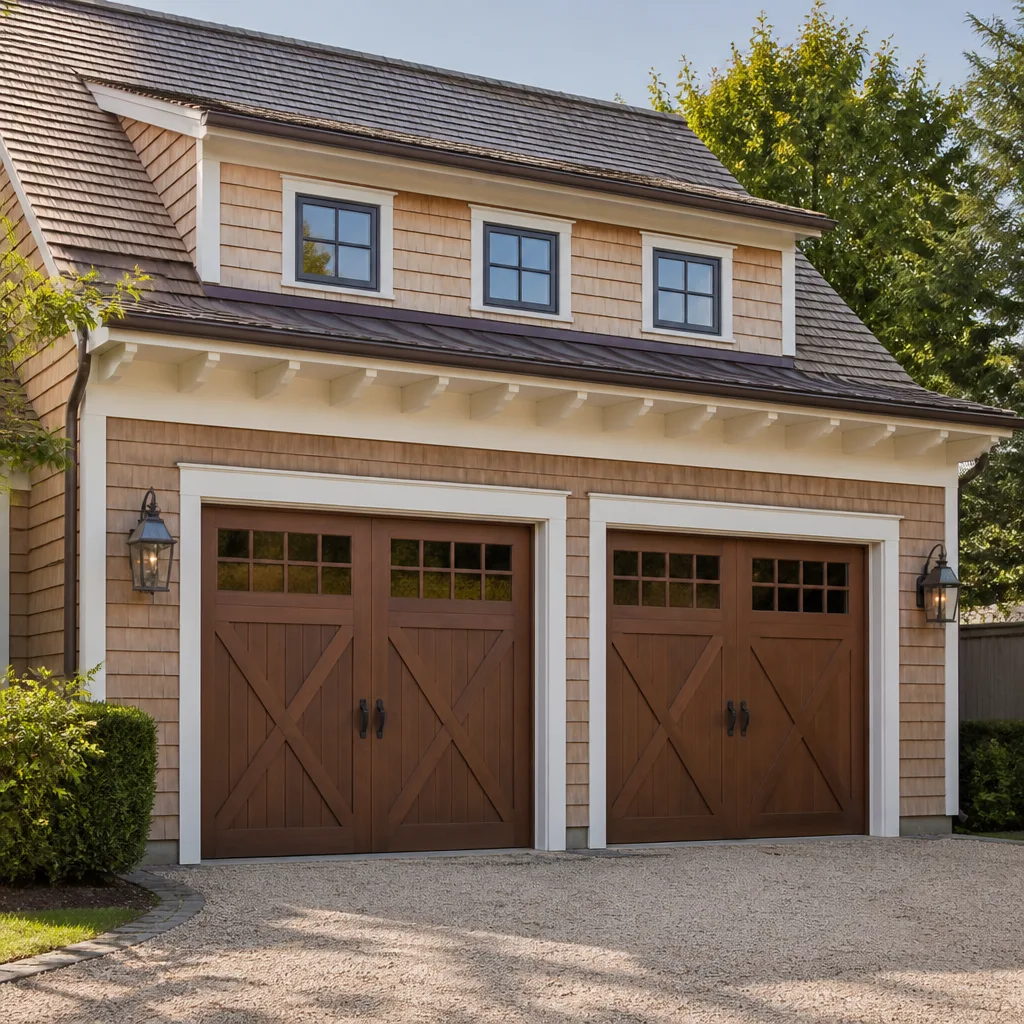 Carriage house
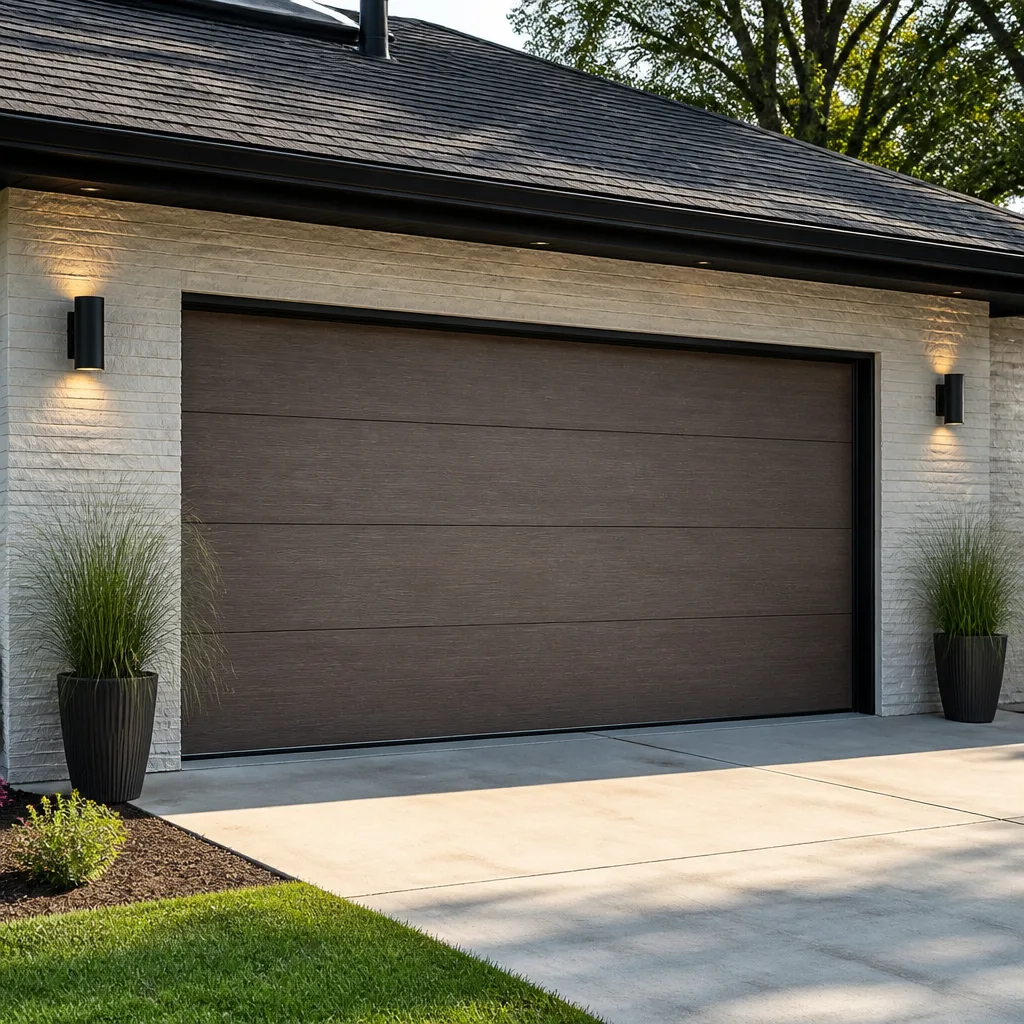 Modern flush
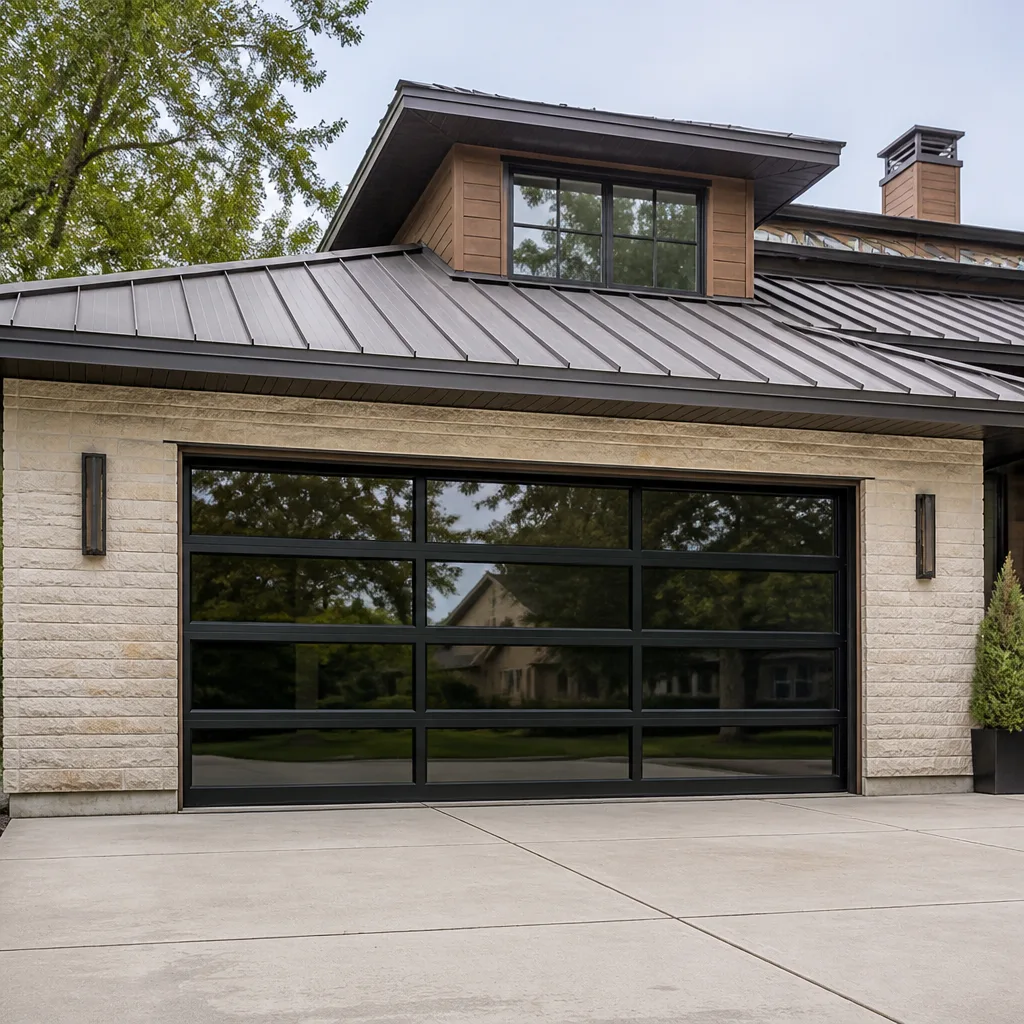 Full-view glass
 LiftMaster openers
 Chamberlain openers
Full 25-point door and opener safety check with every visit - springs, cables, rollers, tracks, and your LiftMaster or Chamberlain opener included
You get a price before we start. It does not change when the truck arrives.
Get your free estimateGarage Door Warning Signs: A Ocala Homeowner’s Reference Guide
Here’s something most Ocala homeowners don’t realize: a garage door that opens slightly slower than it did last month is not just “getting old.” It’s often the first measurable sign that a torsion spring is losing tension, and the window between “I noticed something” and “the door won’t open at all” is typically about six weeks. This guide maps the warning signs most people ignore, explains what’s actually happening inside the system when you see or hear them, and gives you a realistic timeline for each one, so you’ll know whether to schedule a checkup, call someone this week, or stop using the door tonight. For more guides & resources, visit our blog. If you live in Ocala, where summer humidity and afternoon storms put unique stress on door hardware, these details matter more than the generic advice you’ll find on manufacturer websites.
Quick Answer
A garage door needs attention when it makes a new or worsening noise, moves unevenly or slowly, hesitates at a point in its travel, leaves a visible gap at the floor or side seals, or shows cracks, sag, or bending on any panel. In Ocala, humidity can also cause swelling and sticking that mimics mechanical failure; that’s worth ruling out before you call a technician. Any sound or movement that appeared suddenly, or any visible damage to springs, cables, or panels, means the door should be stopped and inspected now, not next week.
Styles & brands we work with
Table of Contents
- The Ocala Sound Decoder: Grinding, Rattling, and Squealing
- Slow or Hesitating Movement: The Six-Week Signal
- Visual Signs on Panels: Gaps, Sagging, and Cracks
- Track and Roller Problems You Can Spot From the Ground
- Opener-Specific Warning Signs: When the Motor Is the Problem
- Humidity and Storm Season: Ocala-Specific Signs That Aren’t Mechanical
- Risk Timeline: Monitor It, Schedule It, or Stop Using It Today
- A 10-Minute Inspection You Can Do Yourself
The Ocala Sound Decoder: Grinding, Rattling, and Squealing
Garage door sounds are diagnostic data. The same symptom, a “grinding” noise, means very different things depending on where it comes from, and knowing the difference prevents you from replacing an opener when the real issue is a track problem, or vice versa. We’ve walked into garages all over Ocala where a homeowner had already ordered a new opener on a hunch, and the actual defect was a ten-minute roller fix.
Here’s how to decode the most common sounds by location:
- Grinding inside the opener housing almost always points to the drive gear, not the motor itself. Openers from LiftMaster, Chamberlain, and Genie use a plastic gear inside the powerhead that strips over years of use. The sound is a harsh, mechanical chew coming from the box on the ceiling. This is a repairable defect, and it will not fix itself.
- Grinding at the track or roller line is a metal-on-metal scrape, usually intermittent and worse in one portion of the door’s travel. The cause is a bad roller bearing, a roller that has lost its wheel, or a bent section of track. It indicates contact where contact shouldn’t exist.
- A deep, groaning rumble from the spring shaft above the door when the door moves is torsion spring friction. The spring is binding inside its coils or against the center bearing. It’s a warning that spring replacement is close, not a job to postpone.
- High-pitched squealing at the hinges or rollers is usually surface-level friction. Silicone lubricant on the rollers, hinges, and track contact points will often silence it. If the squeal remains after lubrication, a roller bearing has failed internally and needs replacement.
- Loose rattling from the door itself suggests hardware backing out: hinge bolts, track brackets, or panel fasteners. Ocala’s heat and high humidity accelerate the expansion and contraction cycles that loosen these bolts over time. Run a socket over visible fasteners once a season.
The important skill is to locate the sound before calling anyone. Stand inside the garage, pull the release handle so the door disconnects from the opener, and lift the door by hand. If the noise disappears when you lift manually, it’s the opener or the opener’s travel adjustment. If it’s still there, it’s the door hardware. That single test tells a technician exactly where to start looking.
Slow or Hesitating Movement: The Six-Week Signal
A door that takes noticeably longer to open than it did a few months ago is giving you usable lead time. The most common mechanical cause is a torsion spring losing tension. Springs are rated for a cycle life, usually 10,000 to 20,000 cycles depending on the grade, and when a spring nears the end of its life it doesn’t typically fail without warning. It starts by delivering less torque, which means the opener motor has to work harder, which means the door travels slower. Homeowners sometimes describe this as “the door feels heavier.”
If the slowness has come on gradually over a month or more, and nothing is visibly broken, you’re often still within the window where a spring can be replaced preventively rather than under emergency conditions. If the door hesitates at the same point every cycle, dips slightly when it starts up, or reverses when only a foot from the floor, the spring has weakened enough that the opener’s force settings are fighting the door rather than commanding it. That is the point at which you should stop using the door daily and schedule a service call. The difference between a planned spring replacement and an emergency one is usually the difference between a normal Tuesday and 9:00 on a Saturday night when your car is stuck inside.
We cover the repair side of this in detail on our Garage Door Repair in Ocala page, where we explain how spring replacement pricing is structured so you know exactly what you’re agreeing to before work starts.
Hesitation can also be caused by something as simple as a misaligned safety sensor or a travel limit that drifted out of adjustment, which is a different, far cheaper fix. A trained eye can tell the difference in under a minute, and that’s exactly the sort of diagnosis where brand familiarity matters. An opener from Craftsman and one from Genie will show the same symptoms but have different adjustment mechanisms and logic boards.
Visual Signs on Panels: Gaps, Sagging, and Cracks
The door itself tells you things the opener cannot. Panels from Clopay and other steel-panel manufacturers are built to hold their shape for decades, but they’ll show warning signs earlier than that when something in the surrounding structure or the supporting hardware changes.
Watch for these panel-level signals:
- A diagonal gap between two adjacent panels (you can see daylight through the seam when the door is closed) means a hinge is failing or the panel edge has begun to deform. The hinge is the cheaper fix; ignoring it buys a bent panel.
- Sagging in one section when the door is half open can indicate that the horizontal track on one side has settled or the door is out of level at the spring shaft. It is not, in most cases, a problem with the panel itself. The panel is a symptom, not the cause.
- Cracks forming at the top section near the strut, especially on a door facing afternoon sun, are a material fatigue signal common in Ocala’s heat. The steel expands during the day and contracts at night. Over years, that cycle works the metal until it cracks. Once a crack opens, water from summer storms enters the panel, the crack grows faster, and the section becomes unsupported.
- Gaps at the bottom seal where the door meets the slab are often mistaken for slab settlement when the cause is simpler: the track is out of vertical, the door is out of level, or the bottom rubber is worn through. Shine a light under the door at night and see if the gap is even. An even gap is weatherseal. An uneven gap is track level.
- A door that no longer seals evenly against the side jambs means the hinge stack has developed play. The door leans left or right. This puts uneven load on every roller and bearing, accelerating wear on the side the door is leaning toward.
One Ocala-specific note: doors on homes in the historic districts tend to sit on slabs that shift slightly with wet and dry seasons. Before assuming the door hardware is the issue, watch whether a bottom gap appears during the rainy season and mostly closes during dry months. If it does, the door is fine; the slab is moving. That’s a foundation question for a different trade, and a good garage door company will tell you that honestly rather than sell you a door you don’t need.
Track and Roller Problems You Can Spot From the Ground
You don’t need to touch anything to inspect the track and roller system. Most meaningful signs are visible from a standing position with a flashlight, and this is the quickest way to catch a problem in its cheapest stage.
Here’s a step-by-step look:
- Look down the track from the rear of the garage. The vertical track should be straight and the transition curve should be smooth. Any kink, flattening, or visible gap between the track and the wall bracket is a mechanical defect. In Ocala’s older homes, wall brackets can pull out of softened or weathered framing; the lag bolts lose bite and the track drifts out of position.
- Look at the rollers themselves. A roller should sit centered in the track with its wheel in contact with the track bed. If a roller’s wheel is worn to a flat spot, it will hop instead of roll, and you’ll feel the hop through the door as it moves. If a roller stem is tilting in its hinge, the hinge is worn and should be replaced with the roller at the same time.
- Listen to the rollers while someone else runs the door. A dry roller makes a soft scratch. A roller with a disintegrating nylon sleeve makes a click or a rattle. A roller whose ball bearings have failed makes a squeal that doesn’t respond to lubrication.
- Check the gap between the track and the door edges. It should be consistent from top to bottom. If the door is visibly closer to the track on one side at the top and farther at the bottom, the door is out of level at the spring shaft, and that will eventually bind the door in the track.
- Count how many rollers have fallen out of their track in the past year. If it has happened even once, the track is too wide for the rollers or the door has developed lateral play, and it will happen again. A roller that leaves the track turns a ten-dollar part into a door resting on one track at an angle.
Roller and track work is the kind of repair where seeing one small thing wrong early prevents a much larger bill later. It’s also the kind most homeowners can assess themselves in one evening with no special tools.
Opener-Specific Warning Signs: When the Motor Is the Problem
The opener and the door are two different systems that share a single job. Openers from the big three brands we service, LiftMaster, Chamberlain, and Genie, all fail in recognizable patterns, and knowing those patterns saves you from calling the wrong kind of repair entirely.
- The opener runs but the door doesn’t move. The most common cause on belt and chain drive units is a stripped drive gear inside the powerhead, followed by a broken belt or chain. The motor is fine; the transmission is not. This usually announces itself with a grinding sound that gets worse over a few days and then becomes a spinning sound with no movement at all.
- The door opens a few inches and reverses. This is usually the logic board reading an obstruction, a misaligned safety sensor, or a force setting that’s too low for the door’s current weight. If you’ve checked the sensors and nothing blocks them, the door’s balance or spring condition is worth checking before you replace the opener.
- The opener responds to the wall button but not the remote. That’s an RF or logic board issue, not a motor issue. Remotes from different eras use different frequencies and rolling code systems; not every replacement remote works with every aging opener, which is one reason we stock parts specific to each brand’s protocol.
- The opener light flashes and the unit beeps. On most modern openers from Chamberlain and LiftMaster, a flashing light after closing is a sensor communication error. Re-align the sender and receiver eyes first, then check the wires to the sensors. If the flash remains, the sensor itself is failing.
- The opener disconnects itself intermittently, meaning you find the door detached from the carriage for no reason. That’s the emergency release lever or the carriage assembly wearing out, and it can drop a door under power unless it’s caught. Any spontaneous disconnect means the opener should be taken out of service until the carriage assembly is replaced.
We handle opener diagnosis and Garage Door Opener Repair in Ocala as its own service, separate from door repair, because the failure modes and the parts inventory are different. The more specific you can be when you describe the opener’s behavior, the faster the problem gets isolated.
Humidity and Storm Season: Ocala-Specific Signs That Aren’t Mechanical
Ocala’s climate does things to garage door hardware that homeowners in drier regions never see. A door that sticks, drags, or groans in July can be suffering from water absorption, not a hardware defect, and that distinction matters because the fix is completely different.
Here’s what we see in our service area every summer:
- Wood and composite doors swell in high humidity. A Clopay wood composite or wood overlay door can absorb enough moisture in a wet Ocala summer to gain width at the panel edges. The door then rubs the stop molding or the track, and the homeowner hears a drag or a rub that sounds mechanical. The door will often return to normal width during the dry winter months. If the rub comes and goes with the seasons, the door is cycling with ambient moisture, which is normal, and the fix is stop molding adjustment, not a new door.
- Steel panel surfaces can develop condensation streaks that look like rust or adhesion failure. This is common on doors where the interior space stays humid and the panel skin is cooler. It’s cosmetic, not structural. If the streaks are uniform and no rust pitting is present, the panel is sound.
- Rollers, hinges, and springs corrode faster near salt air or in garages that trap humidity. In Ocala, the greater risk is humidity without air movement. A garage kept closed without ventilation becomes a humidity box, and hardware that would last fifteen years in a vented garage might last eight. Regreasing and inspection intervals need to shorten, not lengthen.
- Afternoon thunderstorms cause electrical behaviors that look like logic board failures. A nearby lightning strike or a power surge can knock out a receiver board or a capacitor on any Genie or Chamberlain opener without a surge protector. If the opener was working before the storm and isn’t after it, the storm is the prime suspect.
- The bottom seal holds water against the slab, accelerating slab spalling. That’s a slab issue, not a door issue, and it’s worth pointing out because water pooling against the threshold is often blamed on the door when the real cause is a low spot in the slab at the opening.
The practical lesson: if the symptom arrived with the weather, don’t assume the door is broken. Check the environmental factors first. Humidity-driven drag, seasonal swelling, and storm-surge electrical failures all have distinct presentations, and a garage door company based in Ocala will have seen enough of each to make that call in minutes.
Risk Timeline: Monitor It, Schedule It, or Stop Using It Today
This is the triage section. Every warning sign in this guide falls into one of three categories, and knowing which category you’re in prevents both needless panic and risky inaction.
Monitor It (safe to observe for weeks)
- Seasonal swelling or rubbing that comes with humid weather and leaves with dry weather
- A high-pitched squeal at rollers or hinges that responds to silicone lubricant
- Slow or erratic remote range that occurs only during or immediately after thunderstorms
- Condensation streaks on painted steel panels that are not rusting
- Minor hardware rattling from bolts that need seasonal tightening
Schedule It (service within days to two weeks)
- The door is noticeably slower than it was a month ago, with no visible cause
- A grinding sound inside the opener housing while the motor runs
- A bottom gap that is uneven from side to side, indicating track or level drift
- A roller that has worn flat or that hops during travel
- The door hesitates at a specific point, opens a few inches and reverses, or dips on startup
- The opener disconnects from the carriage on its own, even once
Stop Using the Door Today (do not operate again until inspected)
- The torsion spring above the door is visibly separated into two pieces, or you hear a loud bang from the spring area and the door no longer moves
- A lift cable is frayed, hanging loose from the drum, or no longer tensioned
- The door has come off one track and is resting at an angle
- A panel has cracked through, particularly at the top section where the opener pulls
- The door falls faster than normal when closing, or drops several inches when you pull the release handle
One thing we tell every Ocala homeowner: when a spring breaks, do not attempt to lift the door yourself, and do not keep using the opener. The door’s full weight, which can be 150 to 300 pounds, is now unassisted, and the cables will not hold it once the spring energy is gone. Call a professional, the same way you’d call one for any high-tension system.
A 10-Minute Inspection You Can Do Yourself
You can run this inspection in the time it takes to unload groceries, and it will catch most of the problems in this guide before they become failures. No tools required.
- Close the door and look at the bottom gap. Even or uneven? Even is the seal. Uneven is a level or track issue.
- Look at the springs above the door with the door closed. If you have a torsion system, look for a visible separation or a gap between coils. If you have extension springs along the sides, look for one that’s stretched or hanging differently than its twin. Do not touch either type.
- Look at the cables on both sides. They should be taut and wound tightly on the drums. Frays, loose strands, or slack are the warning signs.
- Open the door halfway and step back. Does the door sit level? Does any panel sag or lean? A door that’s out of level is putting uneven load on everything else.
- Disconnect the opener with the release handle and lift the door manually. It should lift smoothly with moderate effort, stay put at halfway, and the rollers should roll, not slide or hop. If the door is heavy, the spring is doing less work than it should. If the door drops, the spring is doing almost none.
- Reconnect the opener and run the door once. Listen. The sound you hear now, compared to a month ago, is the earliest warning system you have. If it has changed, it’s telling you where to look.
Write down anything that seems off, even if it seems small. When a technician arrives and you can say “the door feels heavier and there’s a click at the halfway point,” the diagnosis starts from your observation instead of from scratch.
Symptom-to-Cause Reference Table
Here’s the mapping that ties each symptom to its most likely mechanical cause and the urgency level we described above:
| Symptom | Most Likely Cause | Urgency |
|---|---|---|
| Door opens slowly, gradually worsening | Torsion spring losing tension | Schedule within 2 weeks |
| Loud bang, door won’t open | Broken torsion spring | Stop using, call today |
| Grinding inside opener housing | Stripped drive gear | Schedule within days |
| Grinding at track | Bad roller | Schedule within 2 weeks |
| Squeal at roller or hinge | Dry or failed bearing | Monitor after lubricating |
| Door sticks in humid months only | Panel swelling | Monitor, adjust stop if persistent |
| Opener runs, door doesn’t move | Broken belt, chain, or gear | Stop using opener, schedule repair |
| Door reverses near floor | Sensor misalignment or force setting | Check sensors, then schedule if persists |
| Diagonal gap between panels | Failed hinge | Schedule within days |
| Uneven bottom gap | Track out of level | Schedule within 2 weeks |
Warning Signs by Brand: What We See Most Often
Because we service specific systems rather than repairing generically, we can tell you what we see most often on each major brand. This isn’t a knock on any manufacturer; it’s just pattern recognition.
LiftMaster and Chamberlain units, which share much of the same engineering, most commonly present with drive gear failures around the 8- to 12-year mark and with logic board failures after power surges. The mechanical components themselves are durable; it’s the transmission and electronics that age first.
Genie openers tend to wear their belts and trolleys differently; the failure we see most frequently is the carriage assembly separating from the rail, plus capacitor issues after storms in Ocala’s summer surge season. The brand’s newer smart units also have sensor protocols that are sensitive to alignment drift over time.
On the door side, Clopay panels are built to hold up well in Florida’s humidity, but the struts and hinges will show fatigue first on doors that face western sun exposure. The panel itself is rarely the first thing to go; the connecting hardware is.
This is why we built our service around brand-specific knowledge. A Genie opener and a Chamberlain opener with the same symptom often have different actual causes, and if the person in your garage doesn’t know which one you have, they’re guessing. If you’re planning a full replacement instead of another repair cycle, our Garage Door Installation in Ocala page covers how we match a new door and opener system to the house rather than just swapping panels.
Why Catching These Signs Early Matters More in Ocala
Ocala’s climate compresses maintenance timelines. The same door that lasts twenty years in a dry climate may last twelve to fifteen here without attentive upkeep, simply because of humidity, heat cycling, and storm-related electrical stress. That’s not a reason to replace your door more often; it’s a reason to inspect it more often.
Homes in Ocala’s newer subdivisions along the southwest corridor tend to have slab-on-grade construction that shifts with the wet and dry seasons, which means level and alignment need more frequent checks than doors on older pier foundations. Meanwhile, homes in the tree-canopied neighborhoods around the historic areas see more organic debris in the tracks, and that debris, usually leaves and pollen that work into the roller path in spring, creates a grinding sound that is easily mistaken for a mechanical problem. Cleaning the tracks fixes it.
Property managers with multiple units in Ocala’s rental neighborhoods should treat garage door inspections as seasonal, not annual, line items. A door that fails at one rental property is a phone call from a tenant at an inconvenient hour; the same door caught during a scheduled inspection is a one-hour visit.
See the difference
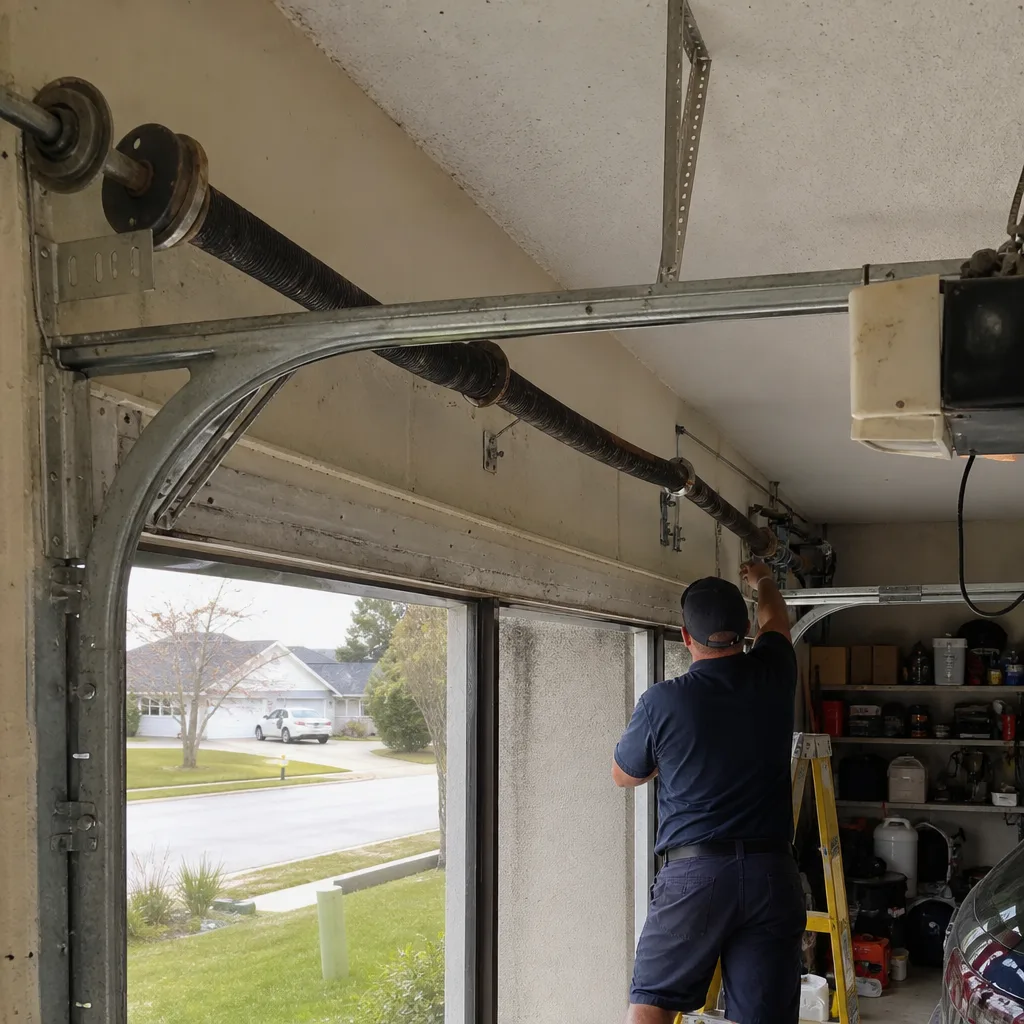 Before
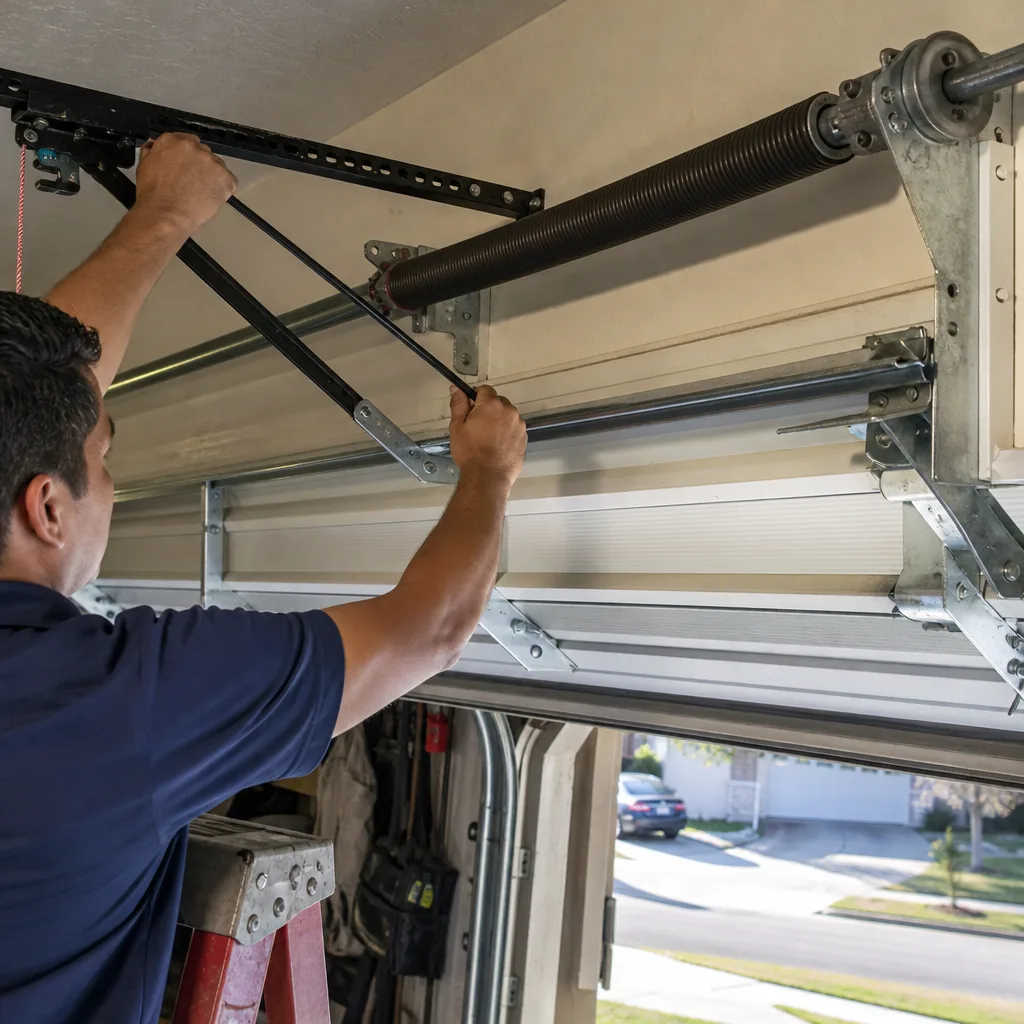 After
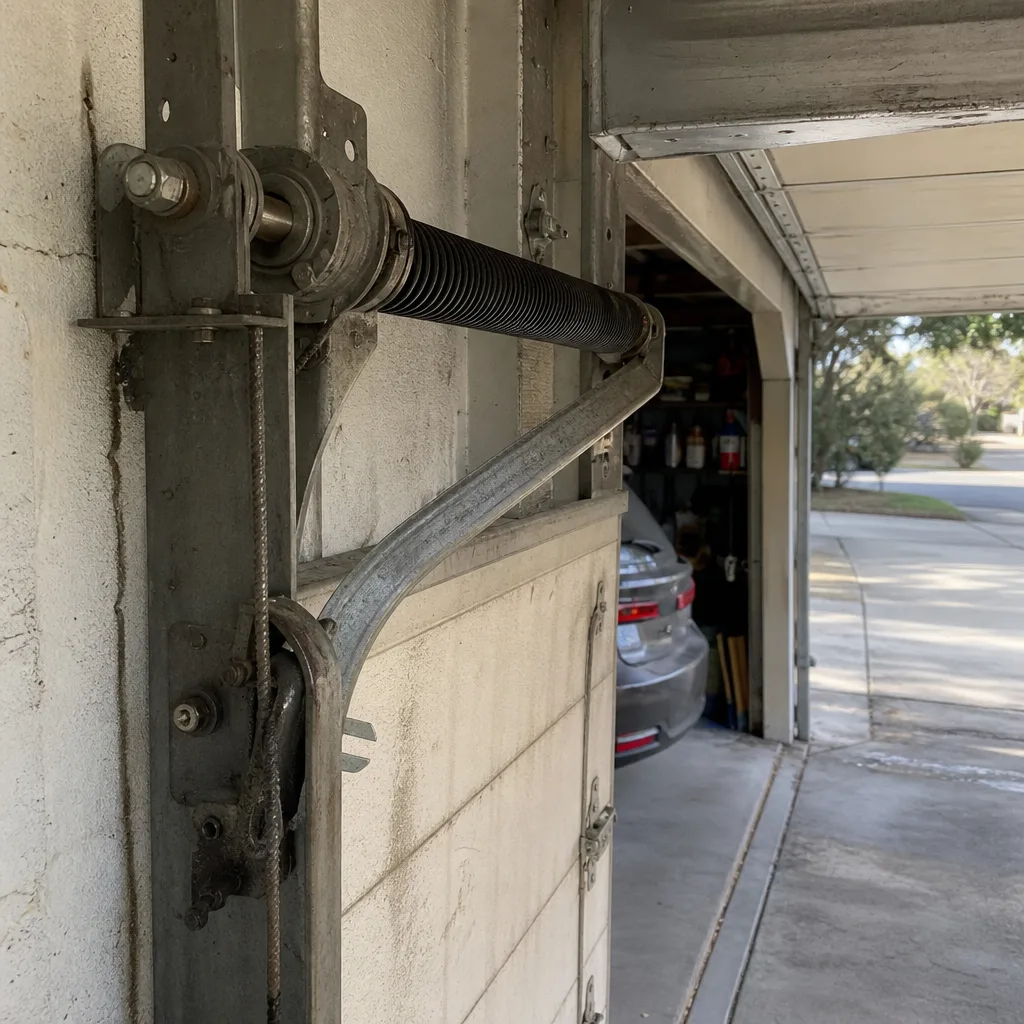 Before
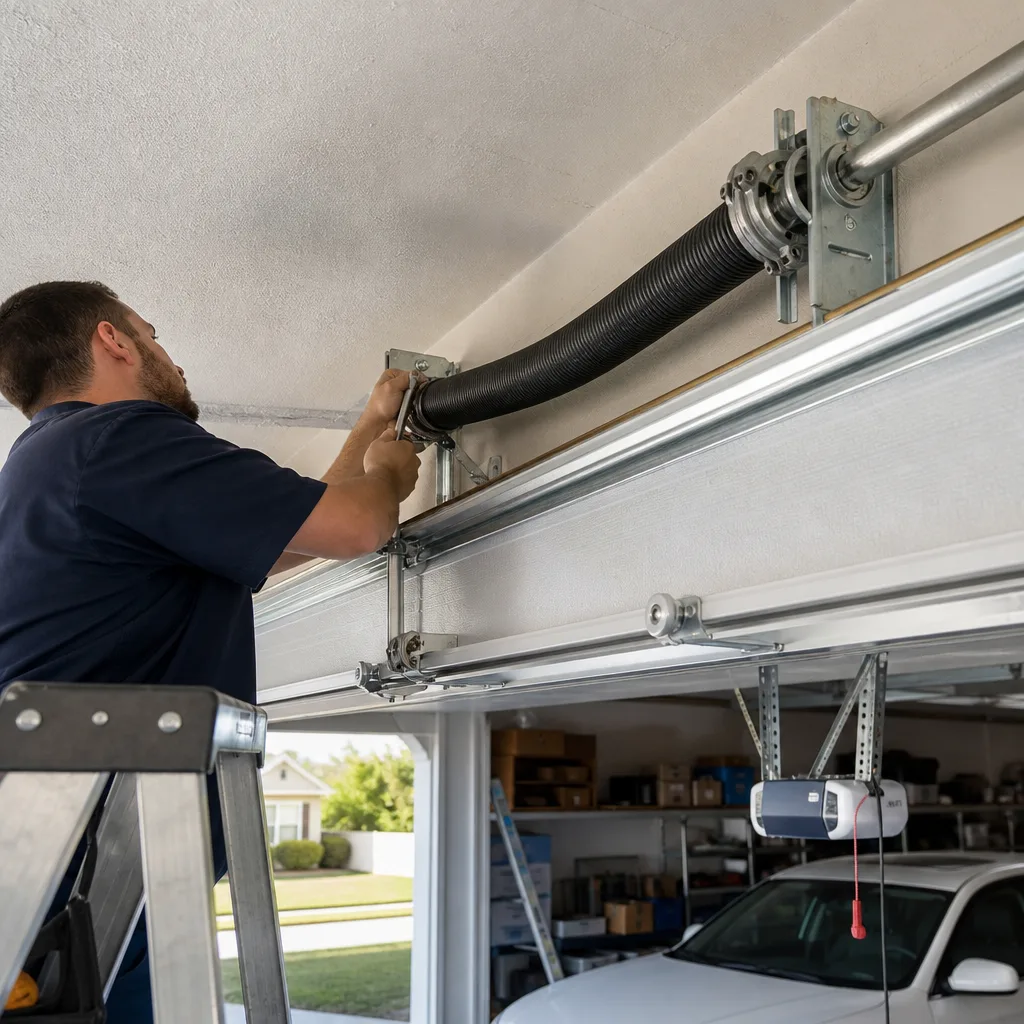 After
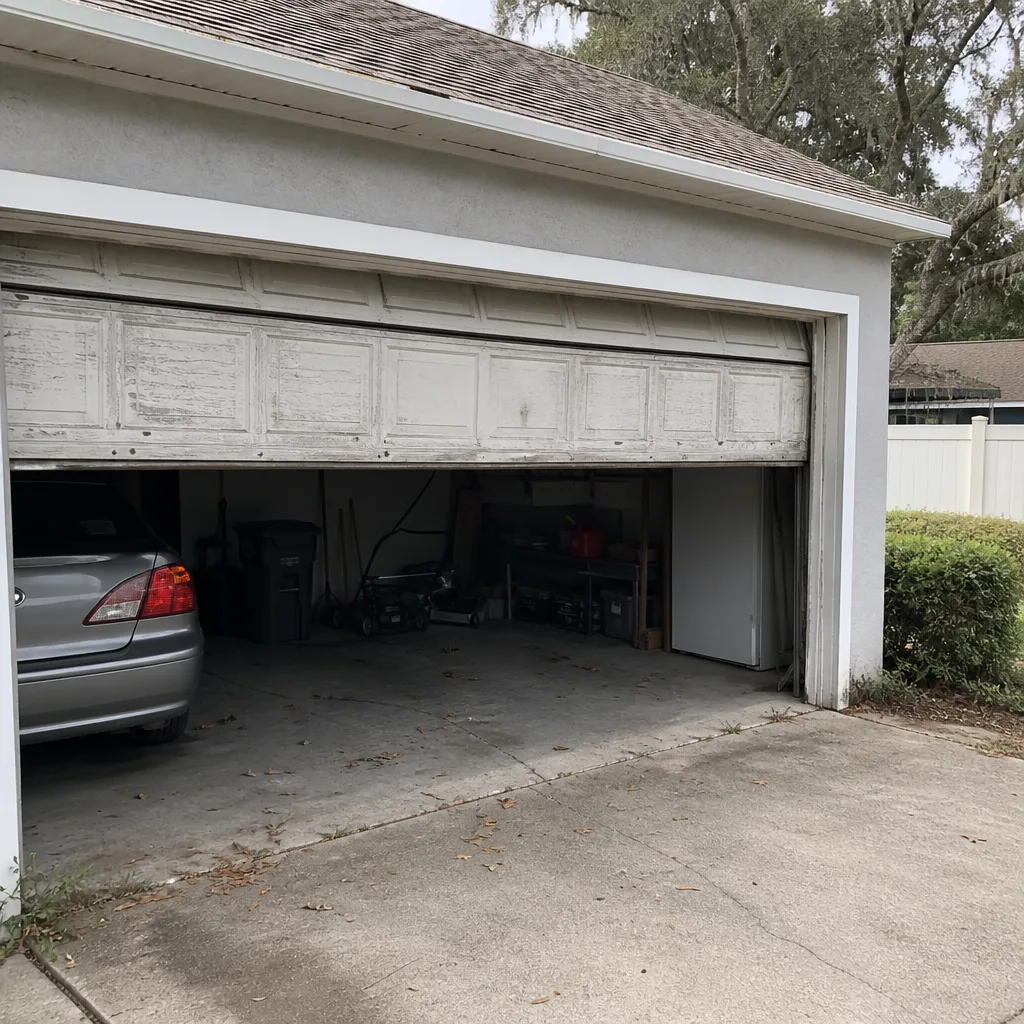 Before
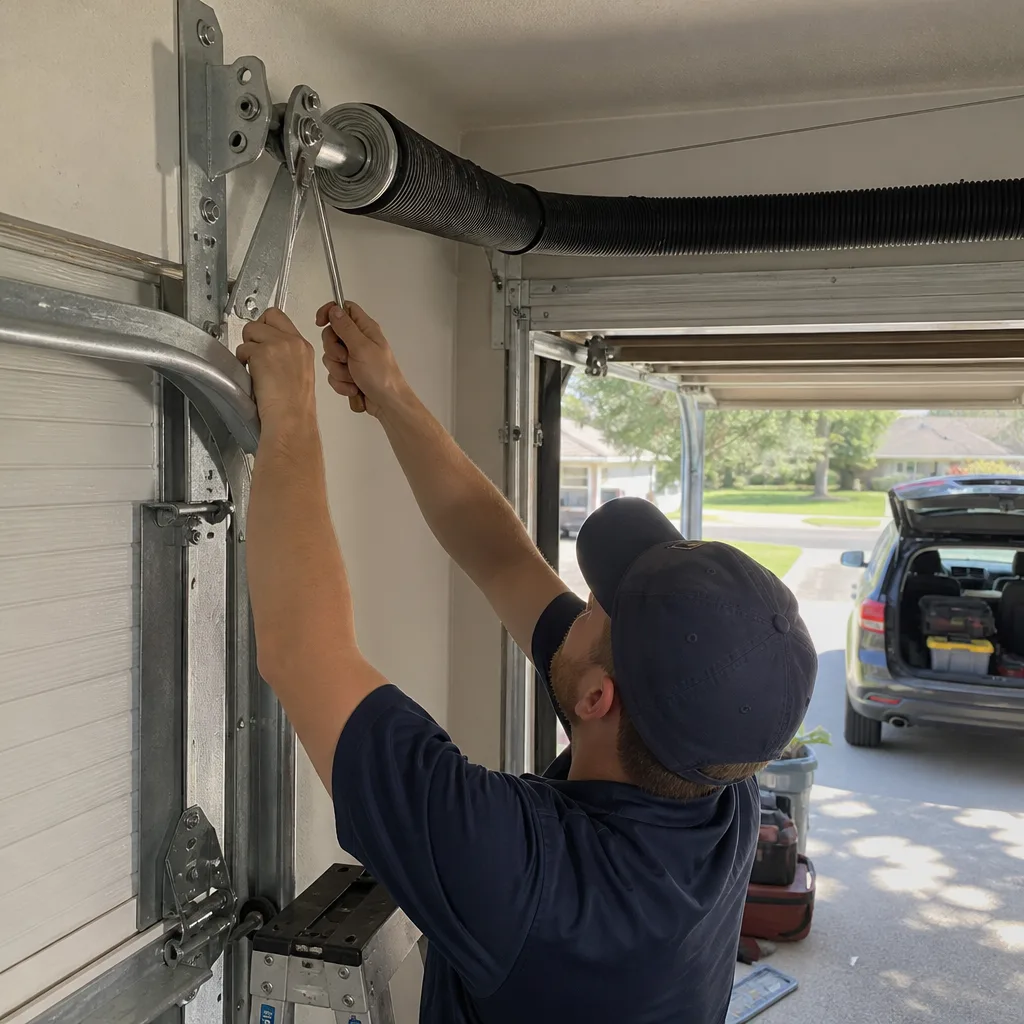 After
Common Mistakes to Avoid
- Greasing the tracks thinking it will fix a noise. Tracks should be clean and dry, not greased. Grease in a track catches Ocala’s dust and pollen, creates a paste, and makes the problem worse. Lubricant belongs on rollers and hinges, not on the track bed.
- Ignoring a slow door because “it still opens.” A slow door is a door telling you a spring is on its way out. The cost of replacing a spring on your schedule is lower than replacing it on a Sunday night, and the damage a broken spring can do to cables and panels adds to the final bill.
- Replacing the opener when the door itself is the problem. This happens all the time. The door binds, the opener stalls, and the homeowner assumes the motor is weak. Before replacing an opener, disconnect it and lift the door manually. If the door is the problem, a new opener won’t fix it.
- Adjusting spring tension by hand. Torsion springs are under enough tension to cause serious injury when mishandled. We don’t give DIY instructions for spring work, and neither should you attempt it. This is one of the few repairs where the right answer is always to call someone trained.
- Waiting to replace cracked weatherseal because it’s cosmetic. A torn bottom seal lets humidity, rainwater, and then insects into the garage. In Ocala’s climate, that means more moisture against the slab, more panel corrosion, and more critters in the door’s hardware.
- Using the door after a spring has broken. Once the spring lets go, the door’s weight is entirely on the cables and the opener, which is not designed to hold it. A second failure compounds the first.
- Failing to test the safety reversal after adjusting anything. Even an hourly adjustment of the force setting can change how the door responds to an obstruction. Put a board or a brick under the door path and confirm it reverses before letting kids or pets near the opening again.
When to Call a Professional
Call a professional the moment you see a frayed cable, a separated spring, a door off its track, or a cracked panel at the top section. Those conditions are not monitorable and not fixable with household tools. Call within days for a grinding opener gear, a door that hesitates every cycle, or a track that’s visibly out of alignment; those are expensive failures if they’re left to run. Call for a seasonal inspection if you can’t remember the last time anyone touched the hardware, or if you’ve owned the home for more than five years and never thought about the garage door at all. Key Step Garage Door Repair offers free estimates in Ocala. Call (855) 795-2118 to schedule one.
Frequently Asked Questions
A torsion spring about to fail usually gives two to six weeks of warning: the door opens more slowly, feels heavier when you lift it manually, and hesitates at a specific point in its travel. A spring that has already broken makes a loud bang, leaves a visible separation in the coil, and the door will not open under its own power. If you see any of these signs in your Ocala garage, stop using the door and call (855) 795-2118 for an inspection. We quote the repair price before any work starts.
Seasonal sticking in Ocala is almost always caused by humidity absorption in wood or composite door panels. The door swells when the air is wet and rubs against the stop molding or track, then contracts again in drier weather. The fix is usually an adjustment to the stop molding, not a new door. If the sticking happens year-round, the cause is more likely to be track alignment or a roller problem.
A bad roller produces a squeal, a click, or a hop that you can feel through the door, depending on which part of the roller has failed. A dry roller makes a soft scratching sound. A roller with a failed ball bearing makes a metallic squeal that does not improve with lubrication. A roller whose nylon sleeve has disintegrated makes a rattle or a clicking sound as the door passes over it. Rollers are inexpensive to replace compared with the door damage a failed one can cause.
Yes, and this is one of the more common emergency calls we handle in Ocala. The process involves lifting the door back onto the track, checking every roller and hinge for damage, and determining why it jumped the track in the first place, which is often a track that has drifted out of vertical or a roller that lost its wheel. The door should not be operated until this is done, because trying to force it back onto the track with the opener usually bends the track and turns a simple repair into a track replacement.
Spring replacement in Ocala typically falls in the $200 to $380 range depending on the spring type, cycle rating, and whether it’s a single or double spring system. The price is quoted before we start the work, so you’ll never be surprised when the invoice arrives. High-cycle springs cost more up front but last significantly longer, which matters in a climate where doors see more daily cycles from the humidity and heat. For an exact price, call (855) 795-2118 and we’ll work it up based on what’s actually on your door.
That depends on two factors: the failure mode and the opener’s age. A stripped drive gear on a 10-year-old LiftMaster or Chamberlain unit is usually a fixable repair that buys several more years. A logic board failure on a 15-year-old unit is often the tipping point where replacement makes more sense than repair, because the board cost exceeds the value of the remaining life. We’ll give you the repair cost and the replacement cost side by side and let the numbers make the case either way. We don’t push replacement when a repair will do.
The Bottom Line
Your garage door gives you more warning than you think. The noises, the slowness, the gaps, the hesitation are all data points, and once you know what each one means, you also know how long you have to act. In Ocala, where humidity, heat, and storm season push every timeline tighter, the homeowner who inspects seasonally and respects the early signals is the one who avoids the midnight emergency. Watch the door. Listen to it. Work the inspection into your seasonal routine. And when a sign says “stop,” the only safe response is to stop and make the call. For a free estimate or a same-visit diagnosis, call Key Step Garage Door Repair at (855) 795-2118.
Written by the team at Key Step Garage Door Repair, serving Ocala since 2013.